Category Archives: Haiku

Rain Damage

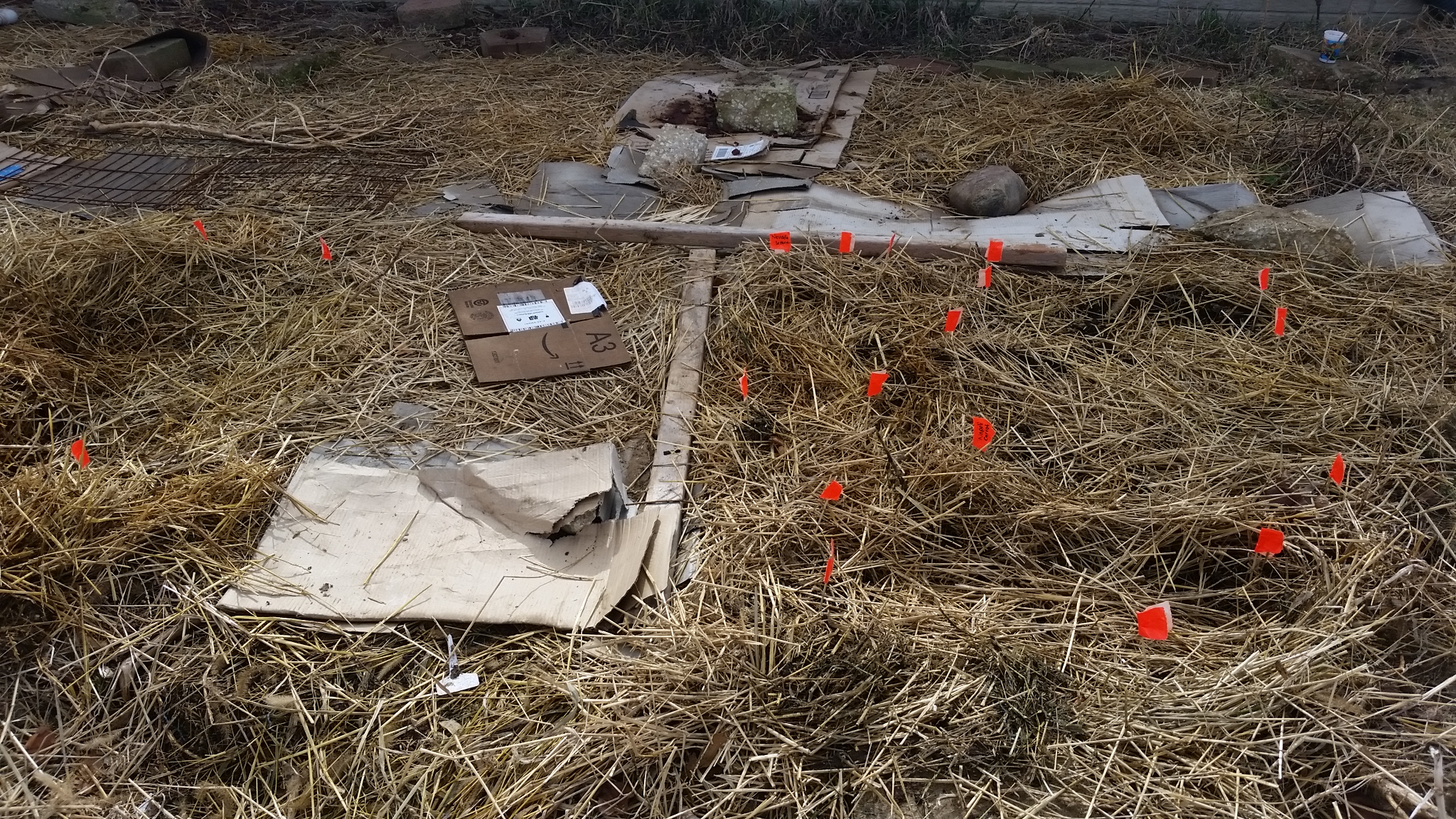
Mulch does a great job retaining moisture in the soil. It’s why we try to heavily mulch around all of our plants and trees, and why our spades so easily lift the soil.

But…too much water can be detrimental to plant growth and root development.

Over the past week or so, we’ve accumulated more than 4 inches of rain in a very short time.

All this rain has been great for the swales and pond, but almost too much for our kiwi and my sole lavender plant.

The leaves are turning black and curling inward. We are not sure exactly what is going on. It could be fungal or bacterial or signs of root rot from all the moisture in the ground.

Plants need oxygen, water and sunlight but due to all of the rain, all of the air holes that are normally present in good soil are full of water.

It could be something fungal or bacterial, but I don’t think so. If that were the case, it would be spreading faster than it is.
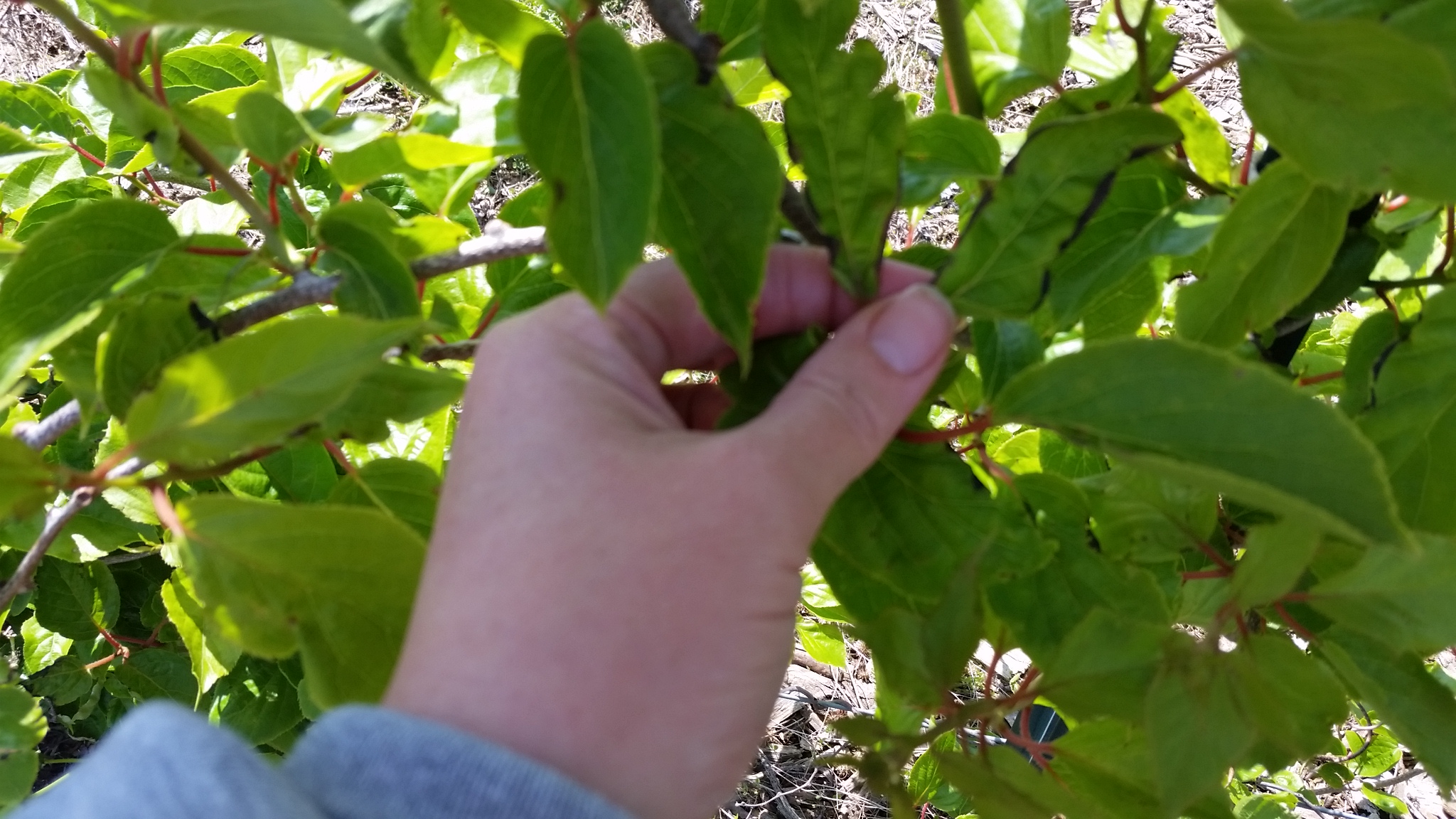
Also, the same symptom is affecting my lavender that is too far away for a fungus to spread leaf to leaf.

We are worried, but not overly so. I’d really just like to figure out what is causing these blackened edges.

The kiwi fruit continues to develop and looks healthy, but it would sure be a shame if we weren’t able to finally harvest the fruit.

We’ve been patiently waiting for four years to taste that first kiwi…and I’m not all that patient.

Dark blackened edges
Curling leaves, rolling inward
Due to soaking rains

A Frog’s Life

One cold, windy and sunny day, Joe got up and wanted to grow some frogs.

“Mom, can we collect some tadpoles from the pond and grow our own frogs?”

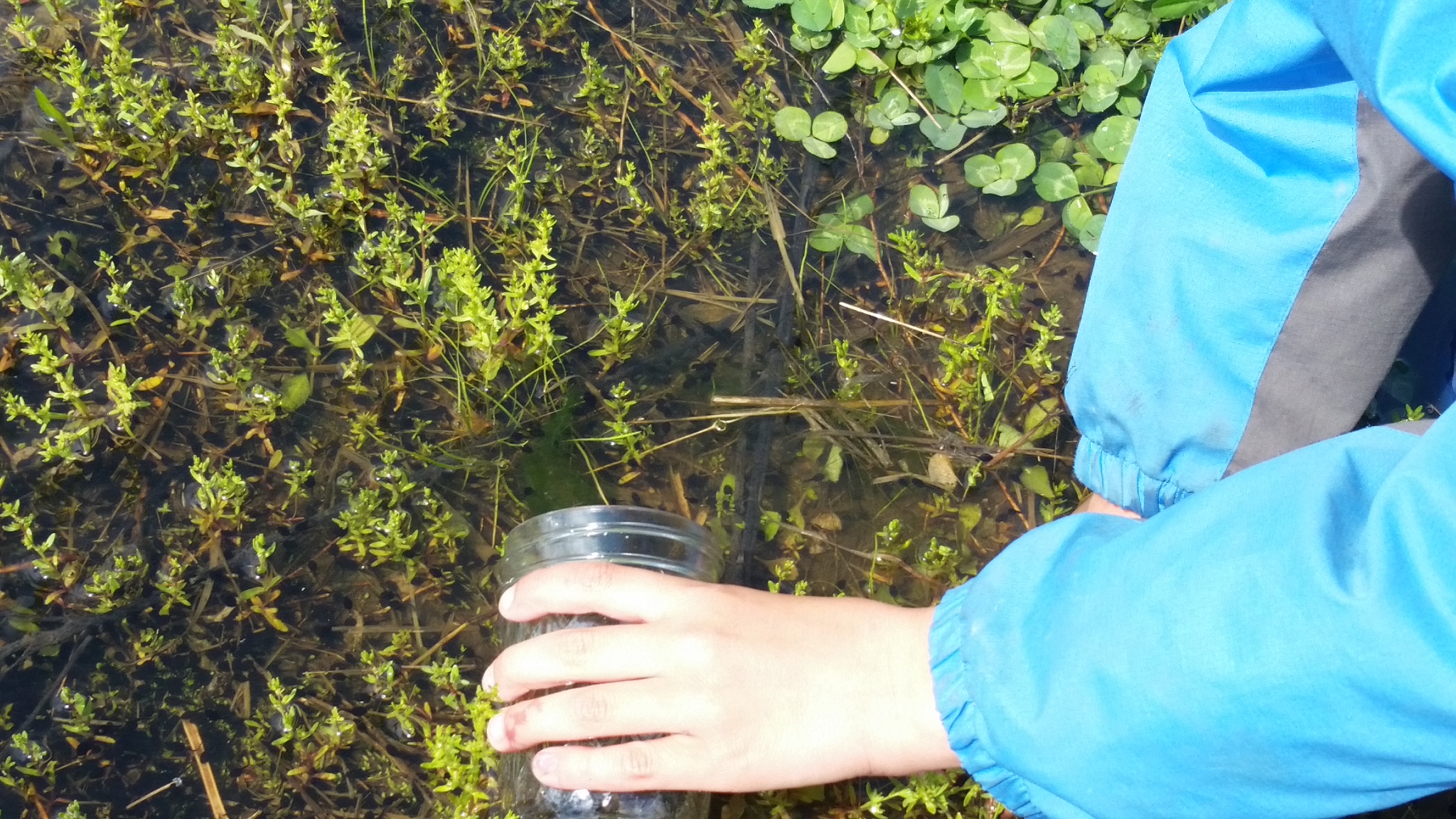
High off the success of hatching our own eggs, we put are mud boots on, grabbed a glass jar and trekked out to the pond to collect a few tadpoles.

“We might not see many since it’s so cold,” I told Joe.

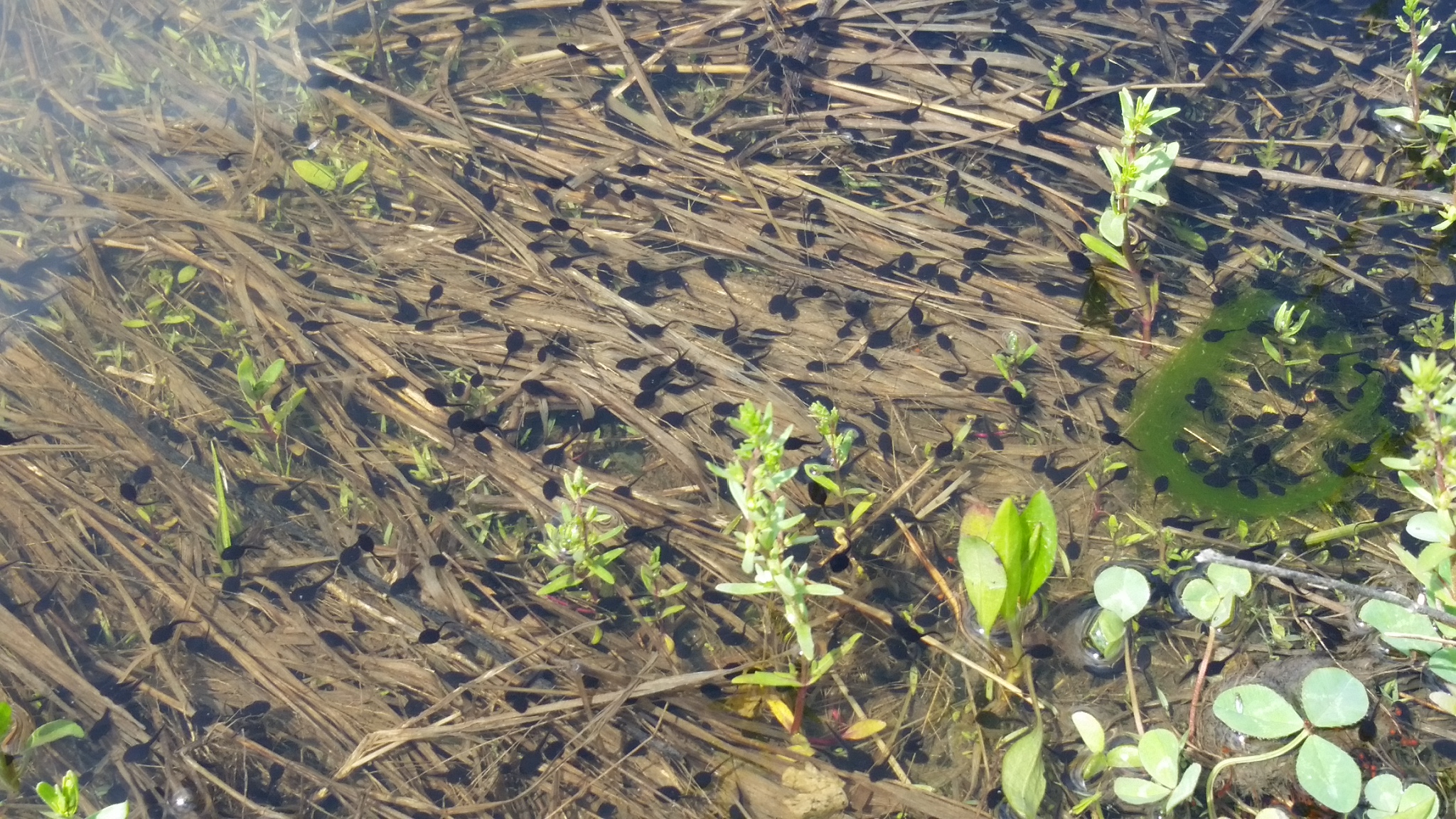
We saw just a few more than I thought we would.

“Our pond is going to have all these frogs!?”

“Well, not all of them will make it,” I said.

“Oh yeah,” Joe said. “Predators.”

Joe wanted to collect a jar-full, but I convinced him that we should start with 5.

He dipped the jar into the shallow end and carefully lifted it out.

We ended up with 10.

The boys wanted to rush back inside and put them in the fish tank. I wasn’t so sure that Bubbles and Fannytail would appreciate that, so we went in and researched how to care for tadpoles.

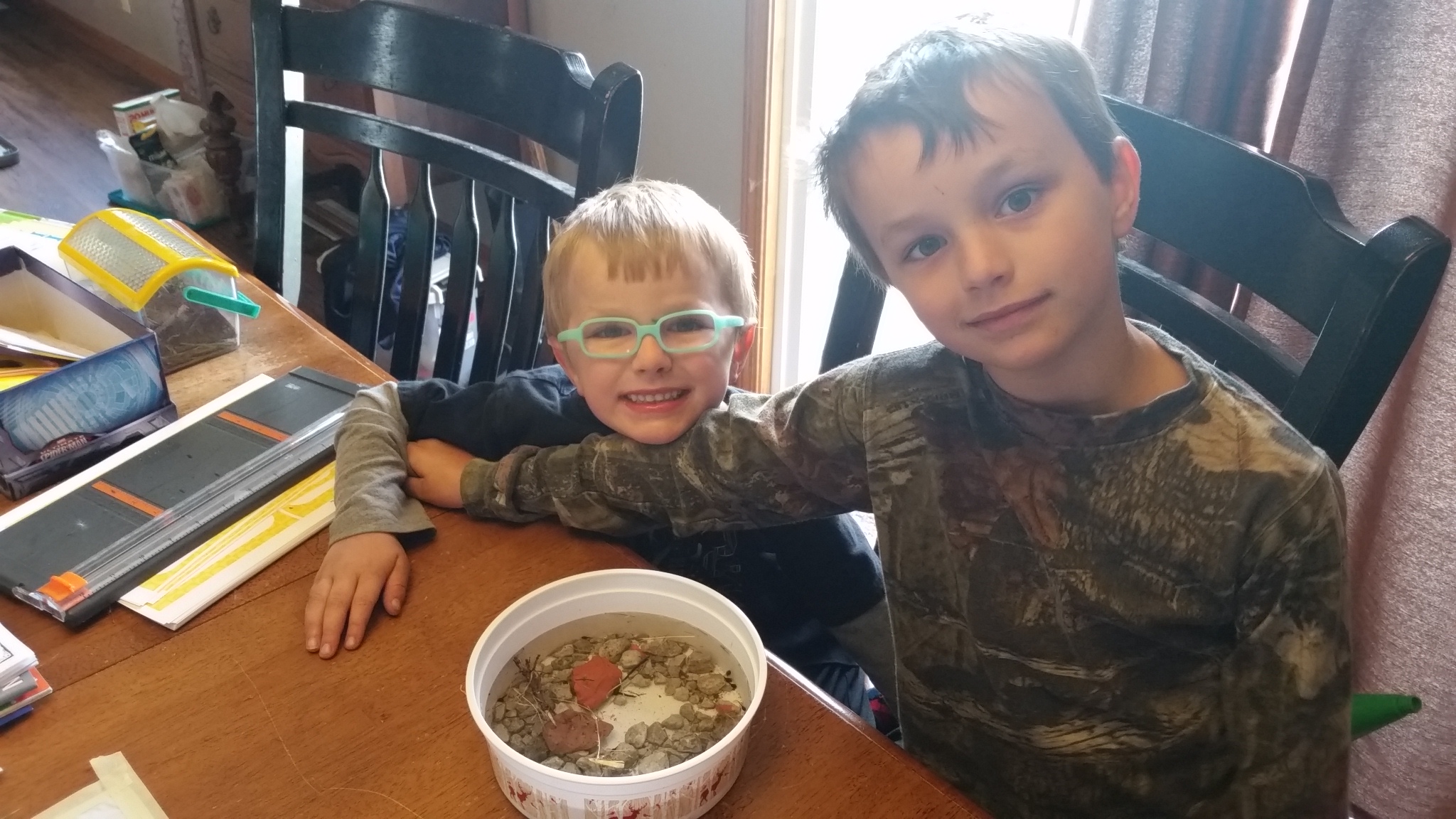
We picked a shallow container and covered the bottom with gravel. Jake picked out a few bigger rocks for when the tadpoles grow into froglets.

Then we filled it about halfway up with some of our filtered water and poured the 10 tadpoles into their new home.

A couple of the sites we looked at said that they would eat fish food. Since we already had it on hand, that is what we sprinkled in for now. It’s not an ideal diet for frogs, so I ordered some frog food.

It takes 12-16 weeks for the tadpoles to develop into frogs. We are not sure how old these little guys are so we may see frogs sooner…or later.

Tadpoles in a jar
Metamorphose into frogs
In a month or 4

Second Step: Patio Pavers

We’ve taken the next step in Operation Greenhouse Transport.

We’ve labeled the poles and posts, now it is time to get started pulling up the pavers and transferring them to our house.

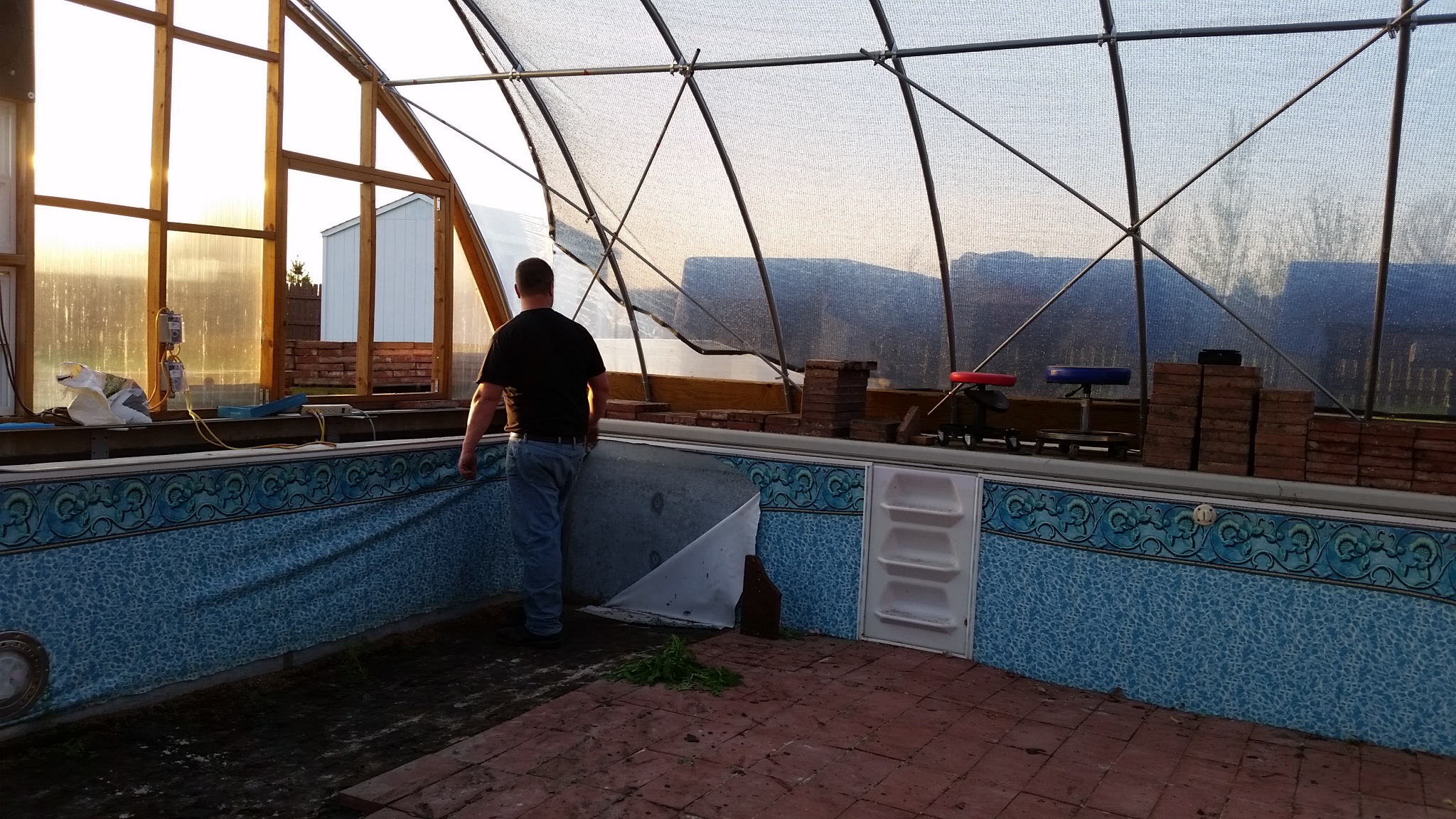
Even though I am SO excited that we are getting a greenhouse…I was dreading this part. Pavers cover the ENTIRE floor of the inground pool the greenhouse was built on.

The. Entire. Floor.

We trudged over to the neighbor’s to get started. The boys in tow.

“Should I bring my tools?” asked Joe.

“I don’t think we’ll need them for this step buddy.”

Once inside, I stifled sigh.

This was going to be a big job. It was going to take a long time.

Once we got started though, it went pretty quickly. We got into a rhythm.

The boys and I pulled up the pavers and scraped the dirt and sand off with putty knives so they would stack easily. Ray did the heavy lifting and hauled them over to stack them on the ledge of the pool.

Our neighbor opened up one of the sides, and Ray handed the pavers out to him to put on a couple of pallets we brought over.

By the time we left, we had removed about half the pavers. Half!

I headed home to start dinner and Ray stayed a little longer to chat with the neighbor and pull up a few more pavers.

The boys and I were tired and dirty, but we felt a sense of satisfaction with our work.

“Well, I guess I didn’t need my tools,” said Joe.

The greenhouse is close
And we will transport it soon
Excited for fall

Pretty and Useful

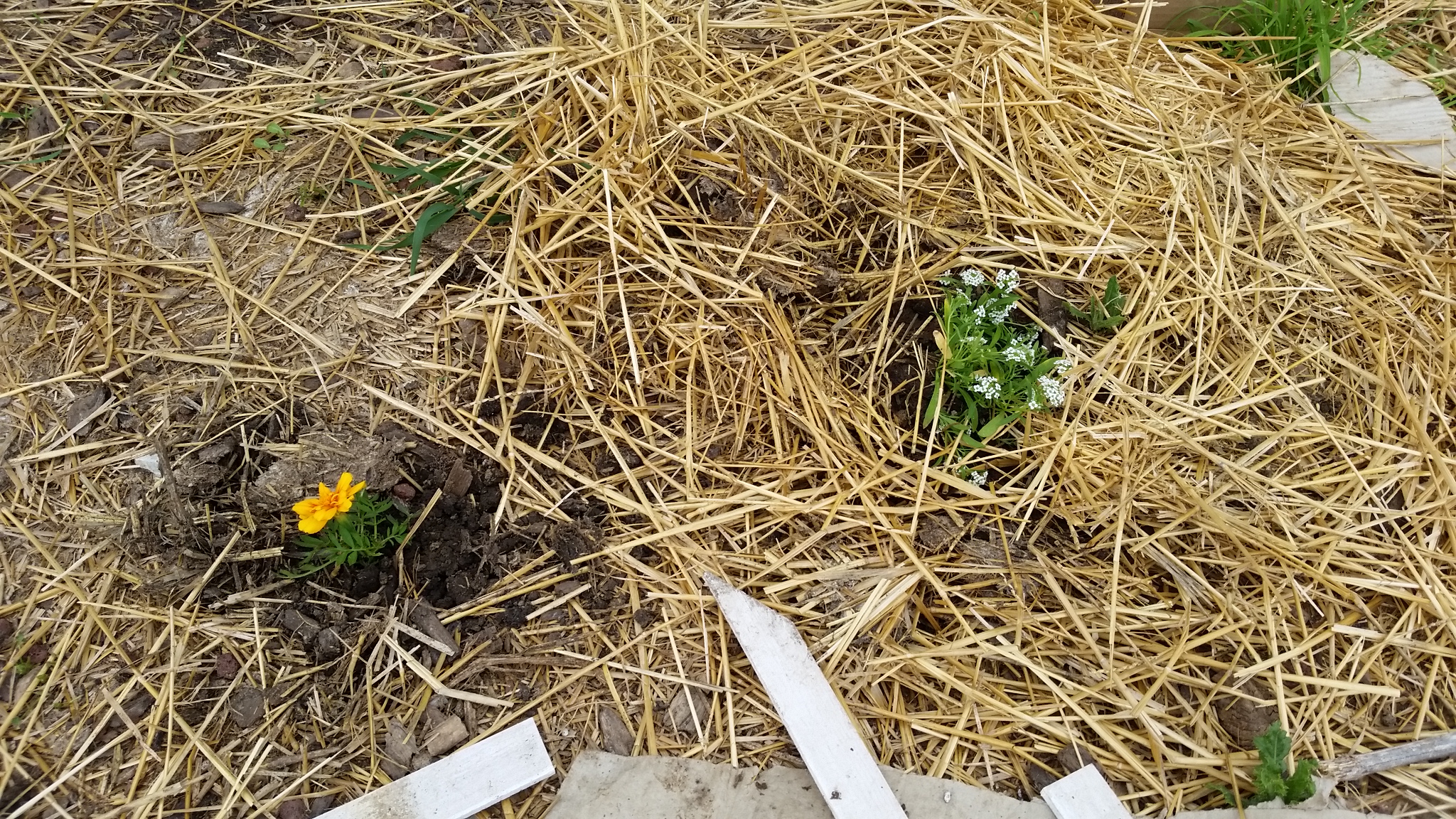
I’ve added a few more flowers to the garden. Today I planted marigolds, alyssum and salvia. At $1.50 a six-pack, I couldn’t resist.

Not only are all of these flowers pretty, they are also useful to detract pests and attract beneficials.

The marigold’s job is to keep bean beetles, squash bugs, thrips, tomato hornworms, and whiteflies away from my produce. Also, I like the splash of deep yellow breaking up all the green in the garden.

I’d never encountered a thrip or a whitefly, so I hope they continue to stay away from the garden. Thrips suck the life out of plants and munch on the fruit. Ick.

Whiteflies are teeny tiny and feed on the undersides of leaves. I don’t think we’ve had a problem with this and I want to keep it that way.

The alyssum smells good, smothers weeds and attracts the aphid-eating flower fly, which looks more like a bee than a fly. What more could I ask for from a flower?

I tried to plant salvia from seed last year, but had no luck. It’s job is to attract butterflies and look beautiful. It is also said to attract hummingbirds and we have a few that hang out at our house.

I planted two in every section of the herb spiral and one or two in each section of the kitchen garden. I’ll also put marigold seeds down, but for some reason I cannot get many of them to grow. At least not quickly enough to be of any use.

I did get a pretty big marigold to grow from seed in the herb spiral last year. I let it go to seed so hopefully I’ll have another one this year.

Flowers so gorgeous
A natural pesticide
Pretty and useful

Juveniles

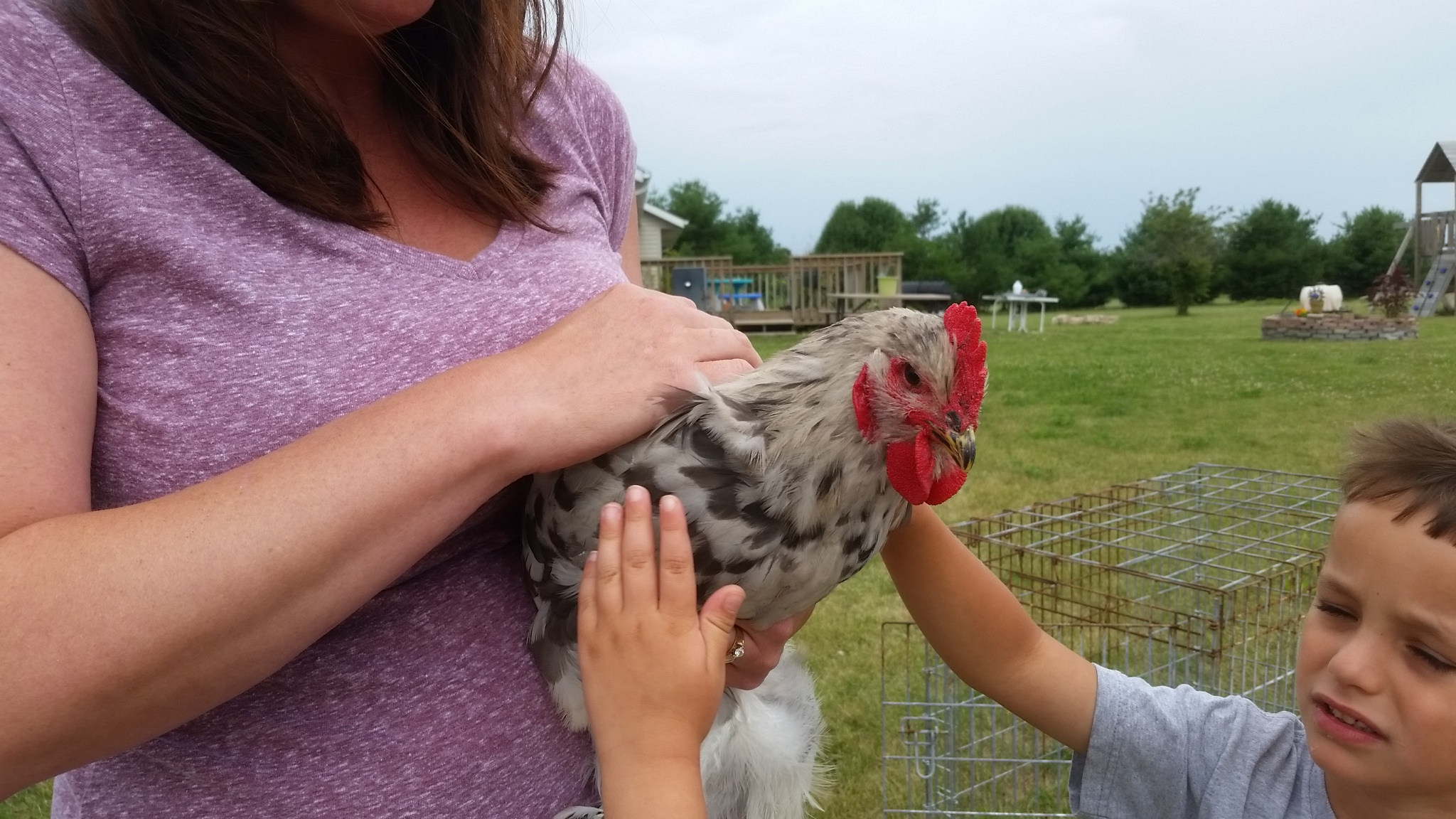
The teenage chickens are hormonal.

Their pecks are starting to bite a bit and they are getting on each other’s nerves.

If Cheep Cheep makes the mistake of trying to eat at the same time as Yellow Feather, fighting breaks out.

If Fluffy takes a drink too close to Flappy, a battle begins.

And if Fin tries to cuddle up with Sir Hubert McFeatherington…the gloves come off and the pecking gets even more aggressive.

They definitely have some of their mothers’ traits. Some of them are calm, cool and collected, but the two that I think are roosters are angry juveniles fighting for the alpha position.

Enter the chicken whisperers.

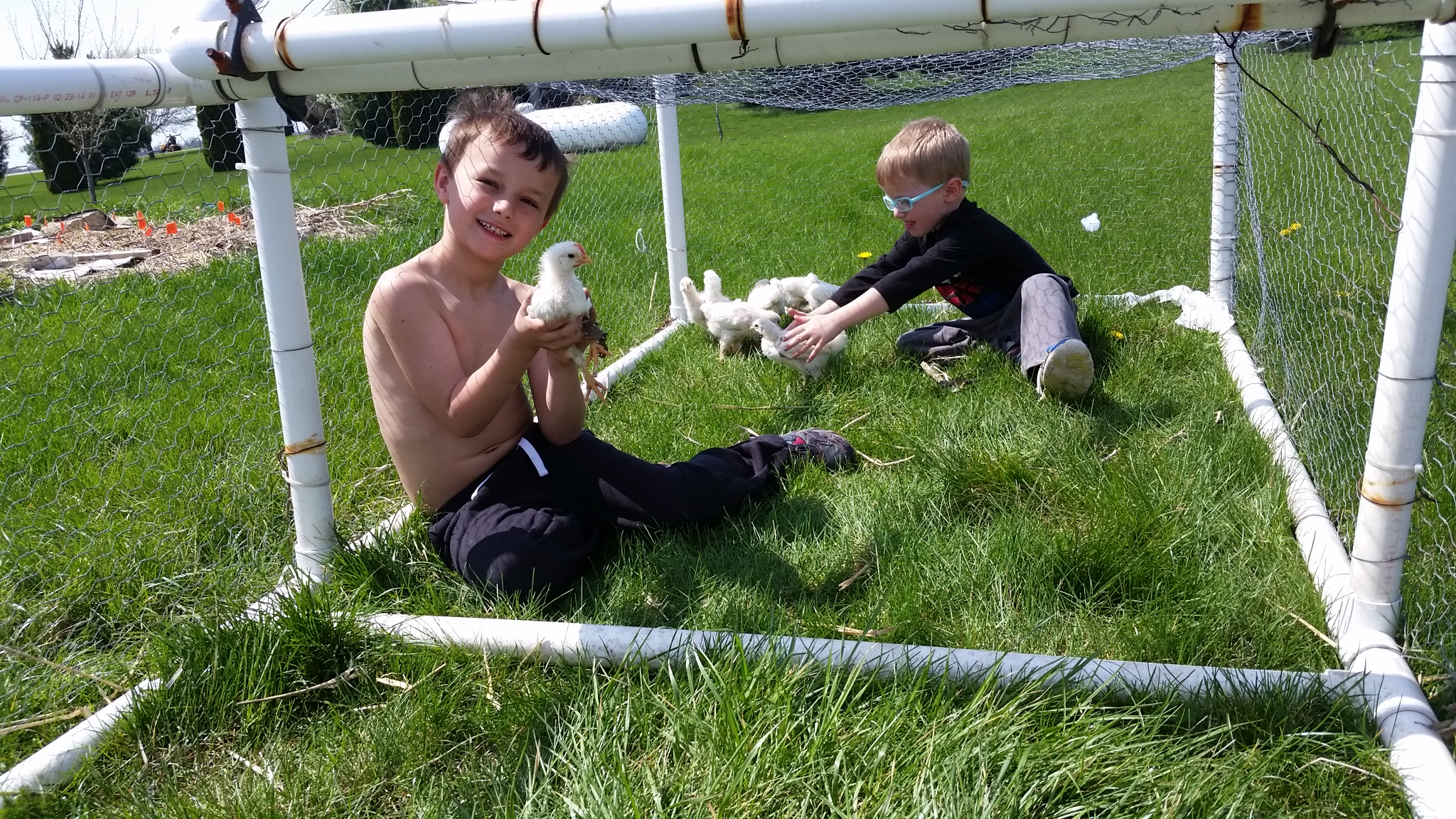
Since it is such a nice day, we decided to bring them out to their run for a little fresh air and sunshine.

I don’t know if it because they had more room, or because the chicken whisperers were in the run with them, but they were instantly calmer and spent the time exploring their new surroundings and climbing all over the boys.

I dread putting them all back in their dank tank in the garage. They seem so happy hopping and flapping around the run, and the boys love being in there with them.

But they sure did get a treat today.

Two boys control them
Softly soothing with whispers
Held gently with love

Crazy Chick Growth

We let the chicks out the other day and in only 4 days, they’ve grown and are losing their fuzz and getting their feathers.

April 1

They shed the fuzz and the feathers are slowly coming in so they are starting to look a bit bedraggled.

April 4

It is amazing how quickly they grow. In just under 2 weeks, they are easily double the size they were when we moved them from the incubator to their new home.

At 15-22 weeks they become pullets until they start laying eggs. Then, they graduate to hens.

March 23

We aren’t sure if these girls will be good layers or not. Their Pearl White Leghorn mom(s) are one of the best laying breeds. But they also have DNA from Pecky who is a Blue Cochin.

Cochins are really more of a show bird and lay around 1…per week. Yikes.

I came in the school room the other day and one of the chicks was walking around outside the tote.

At first, I thought that it had jumped on top of the waterer to get out. But when I looked in the tote, I saw the chicks jumping on each other and then trying to jump out. I guess they were giving each other a boost up.

Teamwork at its finest.

Go team chicken go!
Give each other a boost up!
Don’t poop on the floor!

Bees Like Dandelions

Dandelions.

Weed or wildflower?

Good or bad?

Love ’em or hate ’em?

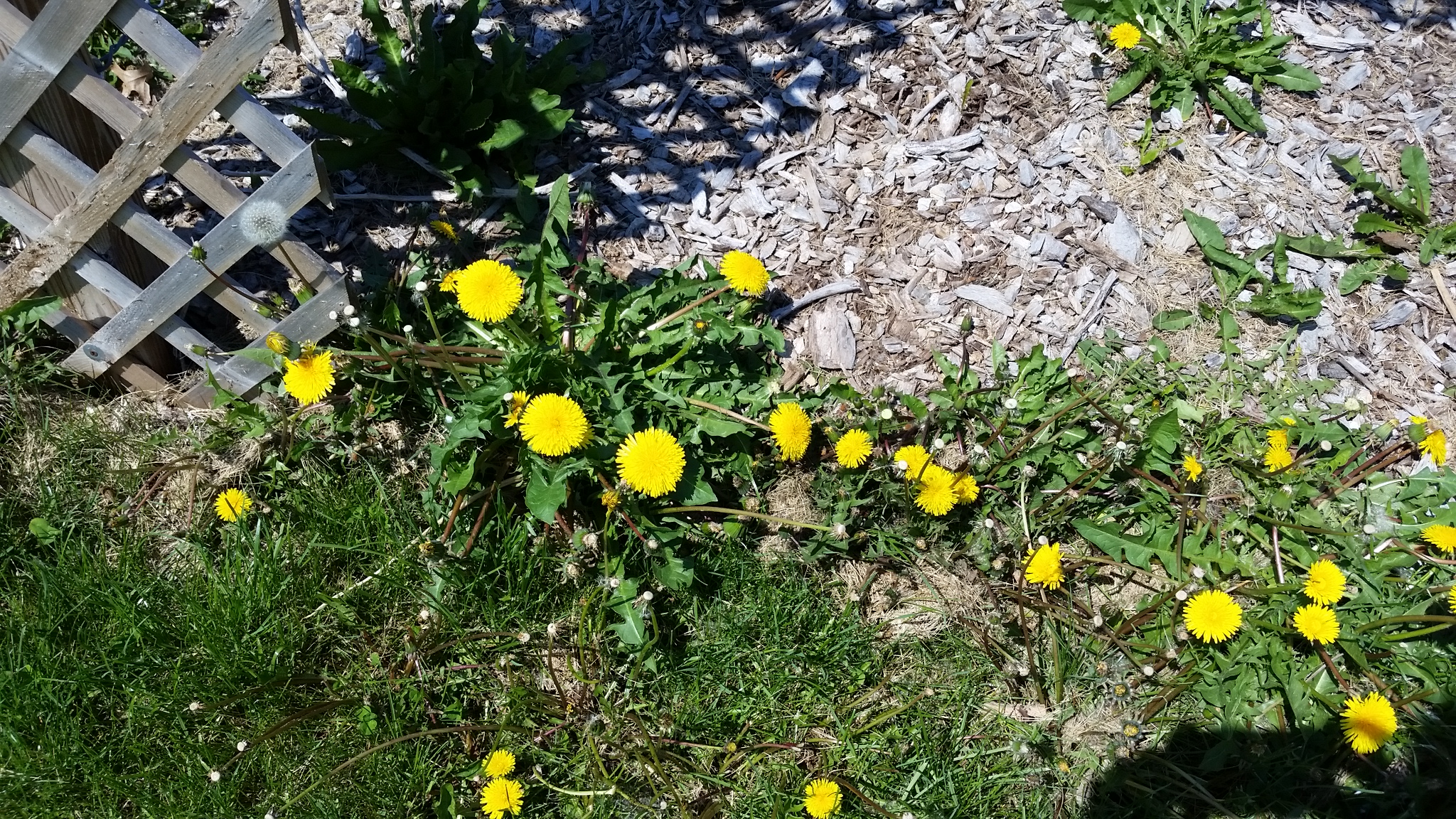
When Ray and I bought our first house, we were determined to have a bright green yard. The dots of yellow dandelions were annoying because, afterall, dandelions are a noxious weed that must be eradicated. Right?

We wanted that perfect manicured lawn, just like our neighbors had and just like lawn care companies told us we should have.

Then we moved to a bigger lot. We wanted to put a garden in, so we started listening to garden podcasts. We started to wonder why we didn’t like dandelions. Why did we want perfect green grass? Why were they so bad?

The more research we did, the more we discovered that the only reason we didn’t like them or want them in our yard was because “they” said dandelions are bad. Whoever “they” are.

So we let them be and our yard looked beautiful.

Dandelions remind me of carnations and marigolds. My boys call them sunflowers because of their bright yellow hue.

They are medicinal.

They are edible…every part.

I like seeing a sea of yellow across my yard.

I like getting dandelion bouquets, picked so carefully and lovingly, from my boys.

I like dandelions.

And what’s more, bees like them too.

Bees need a diverse diet and cannot survive solely on dandelions, but they are one of the first food sources in the Spring. Their bright yellow color tells bees that winter is over.

Bees come for the dandelions and discover other plants and flowers that provide them with a rich diet they need to survive, make honey and raise a healthy brood of bees.

And let’s not forget the joy of making a wish…

Dandelions are good
They are wildflowers, not weeds
I love them so much

Feathers and Fluffballs

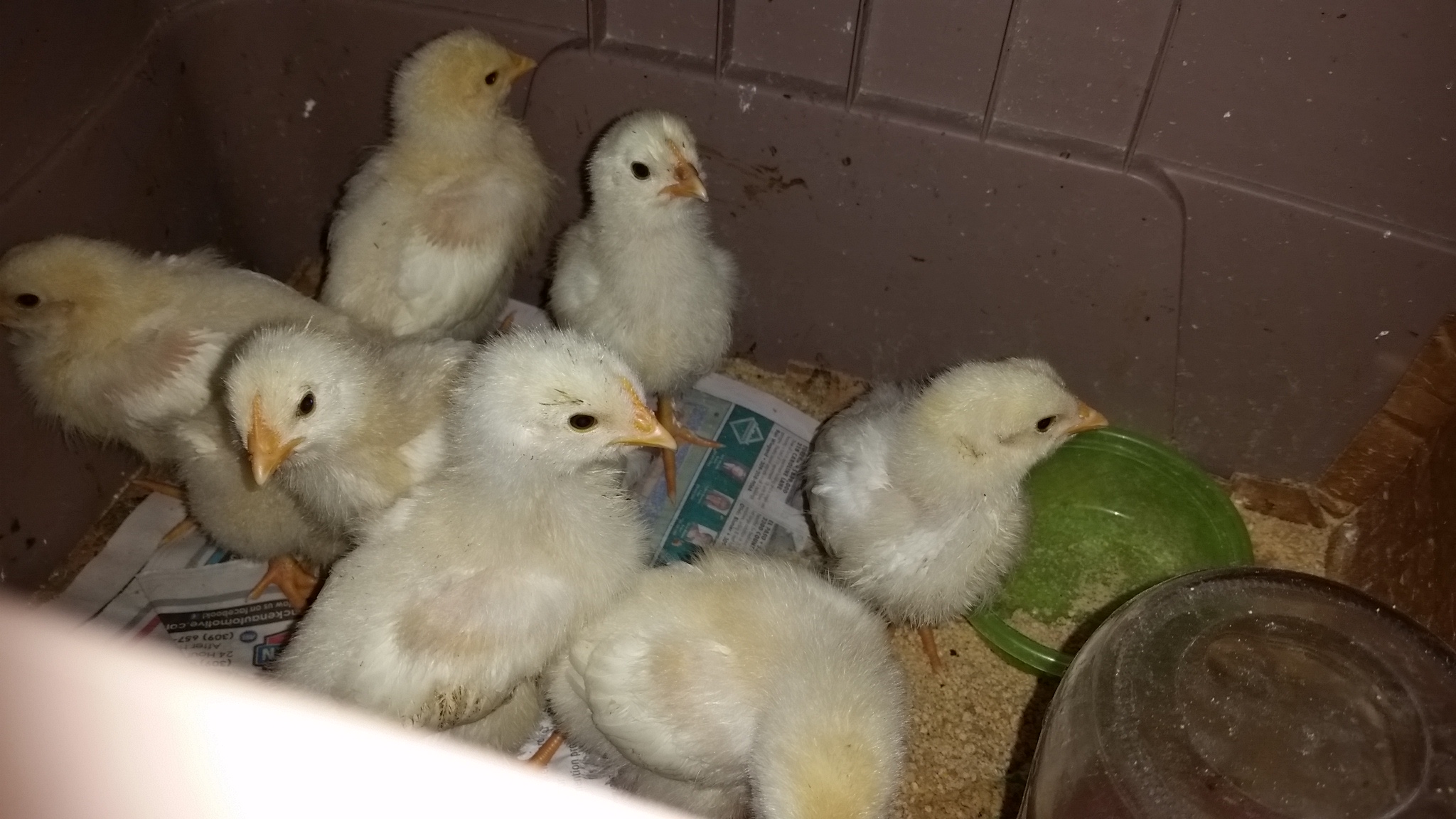
We’ve had a whirlwind few days with chicks hatching and cheeping day and night.

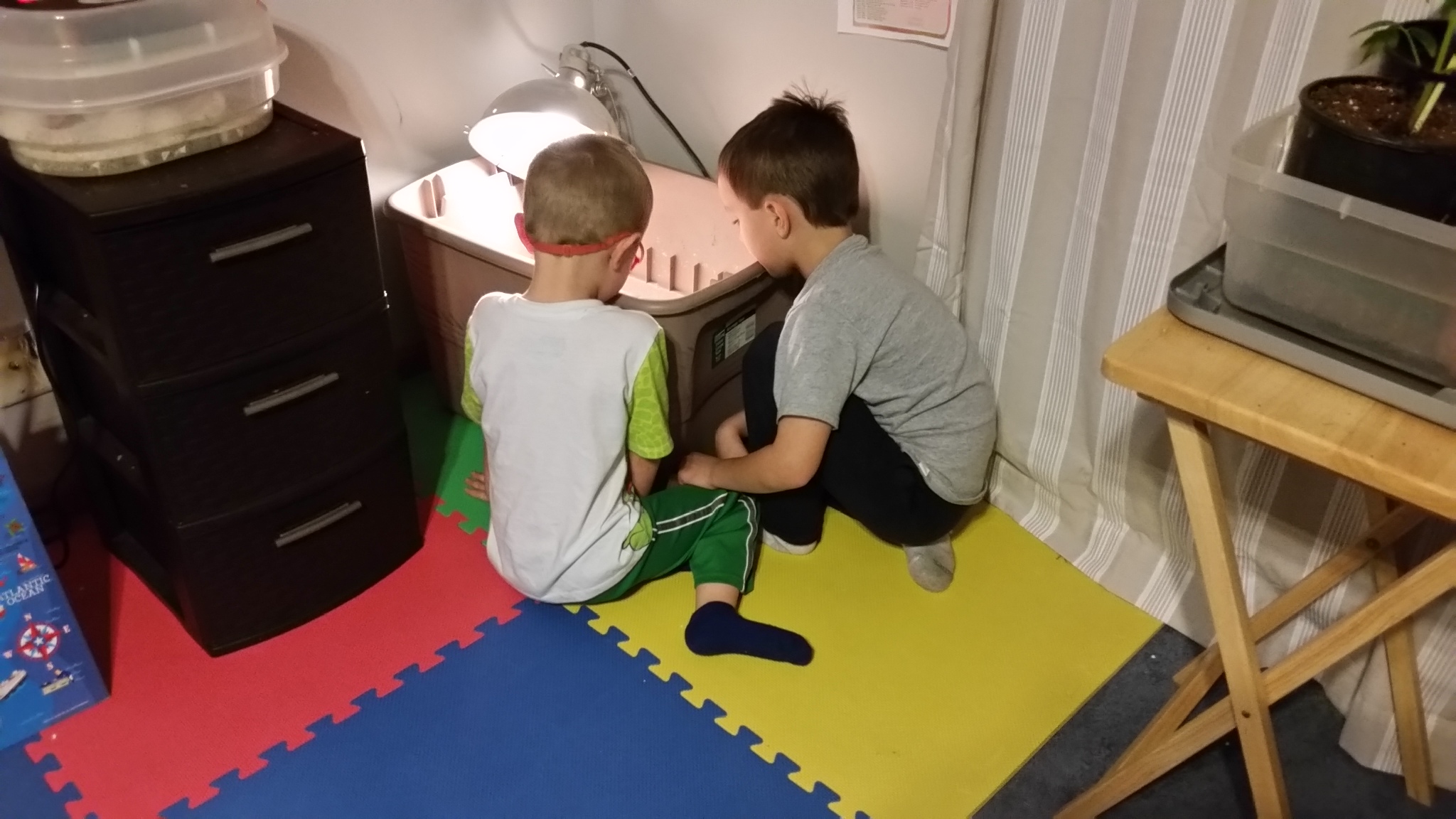
Seven eggs had hatched fully by the end of Tuesday. It was getting a little crowded in the incubator, so we decided to risk  the 8th egg in order to get the other chicks in their new home, under a heat lamp and with food and water.

The incubator is temperature and humidity controlled to mimic the warmth of a mother hen sitting on her eggs. Once the egg has a pip, a small opening for the chick to work its way out, opening the incubator exposes the egg to dry air.

Drying the pip could make it more difficult for the chick to break through the egg without assistance.

The final egg had pipped before we opened the incubator, so we knew the risks.

After we had settled all of the chicks, we sprayed the sides of the incubator down with water to try and keep the humidity in and put the lid back on…and waited.

In the wee hours, the final egg hatched and a scraggly, wet little chick stumbled into the empty shells on clumsy claws. We let its feathers dry out a bit, before moving it with the others.

The boys and my nieces have named them all…although the names have changed frequently since we moved them.

Here’s the final list…for now.

Yellow Feather
Nita
Cheep Cheep
Sir Hubert McFeatherington
Fluffy
Fin
Cheepy
Flappy

A few of them have a couple gray dots like their father and they all have big feet with feathers on their legs.

This has been an exciting and amazing project for the boys. Joe has been so careful and gentle with the chicks and the eggs. He lets us know when it is time to leave the room so “the chicks can sleep”.

We’ve also learned a lot about the chicken…from anatomy to the lifecycle to how the chicks are able to go a few days without food and water.

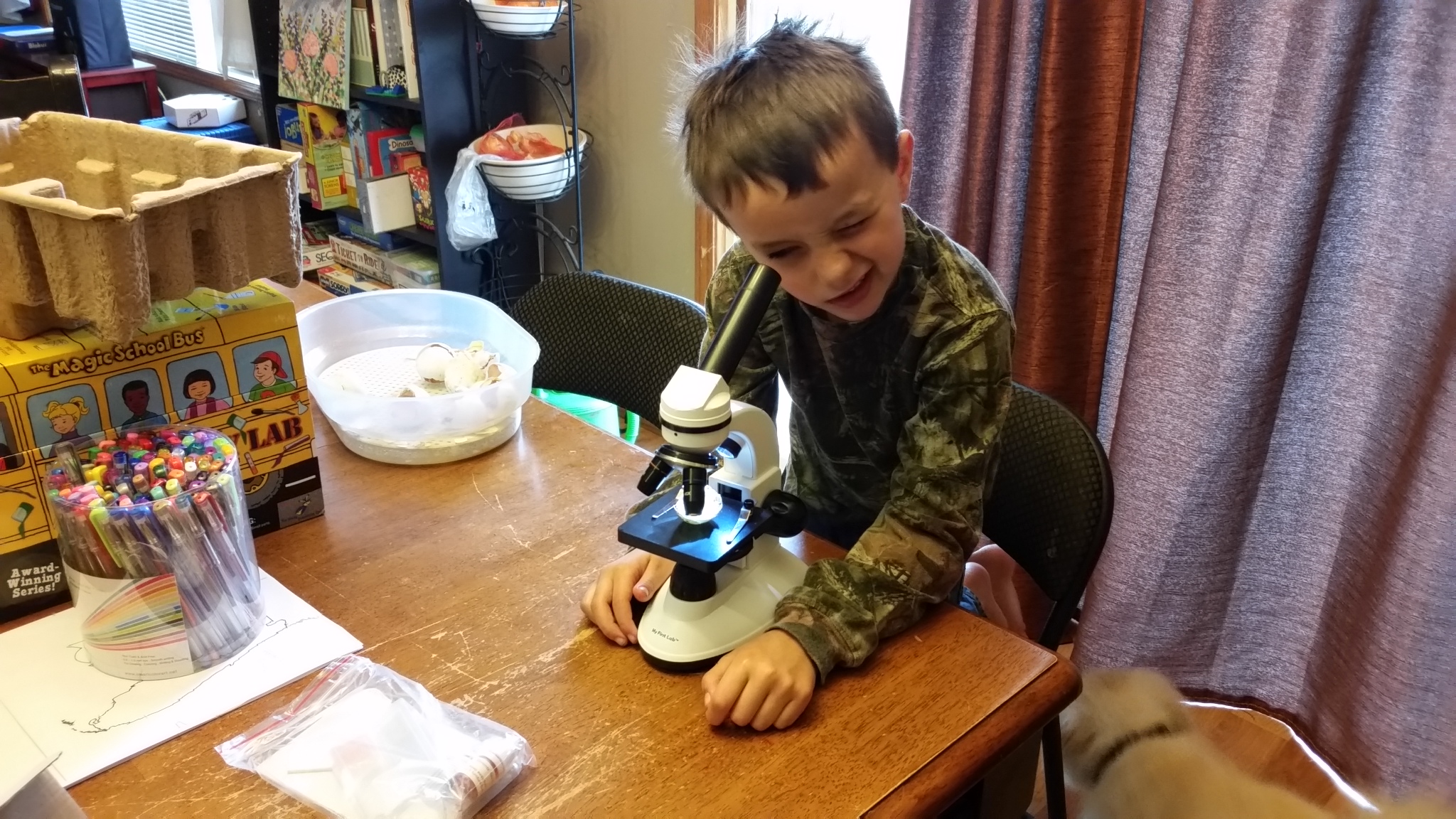
I think the best part was when I asked Joe if he wanted to look at a piece of shell under the microscope.

While we were oohing and aahing over the little yellow fluffballs, my niece asked me “what if they are all roosters?”

Hmm. I didn’t consider that eventuality. Didn’t I order all hens? I’m sure Pecky and I talked about it, didn’t we?

Feathers and fluffballs
Yellow chicks with small gray dots
I hope they’re all hens

Hatching Our Own: Step 1

This week, we will start incubating the fertilized eggs we’ve been collecting.

Pecky and 5 hens have been separated for just 2 weeks. We gave them about a week to get settled and then started to collect the eggs for incubation rather than eating.

wp-1488219109756.jpg

Once we have 12 and I’ve tested the incubator, we will be ready to start the process.

wp-1488218029962.jpg

The incubator I ordered holds 9-12 eggs, automatically turns the eggs and keeps the temperature and humidity at the right spot…at least that is what is advertised. I’ll have to report back on the success.

The boys and I are very excited to get this started. Every time I collect the eggs from “Pecky’s Girls”, they ask if there are baby chicks in them yet.

We’ve talked about the life-cycle of a chicken, but we will delve deeper as we go through the process.

Pecky and his girls
Separated from the flock
A science project

Risking It

The weather has been so nice lately.

Nice enough to spend the morning outside wandering around the homestead.

Nice enough for the boys spend time digging for worms, playing tag and practicing hockey.

Nice enough for me risk it and start sowing seeds in the garden.

wp-1487704264962.jpg

The last frost dates for Central Illinois is somewhere between the 14th and 21st of April so I probably should have waited.

But the soil is ready!

The worms are squirming!

The birds are chirping!

Since everything else on the homestead is confused by this weather, I’m throwing my hat in the ring and taking a chance.

wp-1487704843933.jpg

I planted cabbage, lettuce and carrots. These are cool weather tolerant, so even if it does freeze again, I’ll be able to take measures to protect them from most of the cold.

I hope.

Warm, sunny, breezy
Birds chirping and worms squirming
Did I hear a frog?