Category Archives: Haiku

Cool Breeze, Bright Sun

On this gorgeous day, Joe and I were hard at work in the back yard. The breeze was soft and cool and the sun was bright.

We picked a spot for the apple tree we are going to plant. At first, Joe wanted to plant it right in the middle of the yard, but then decided that it would be better to plant it with the mulberry trees.

Joe collected 7 eggs while I watered the chickens.
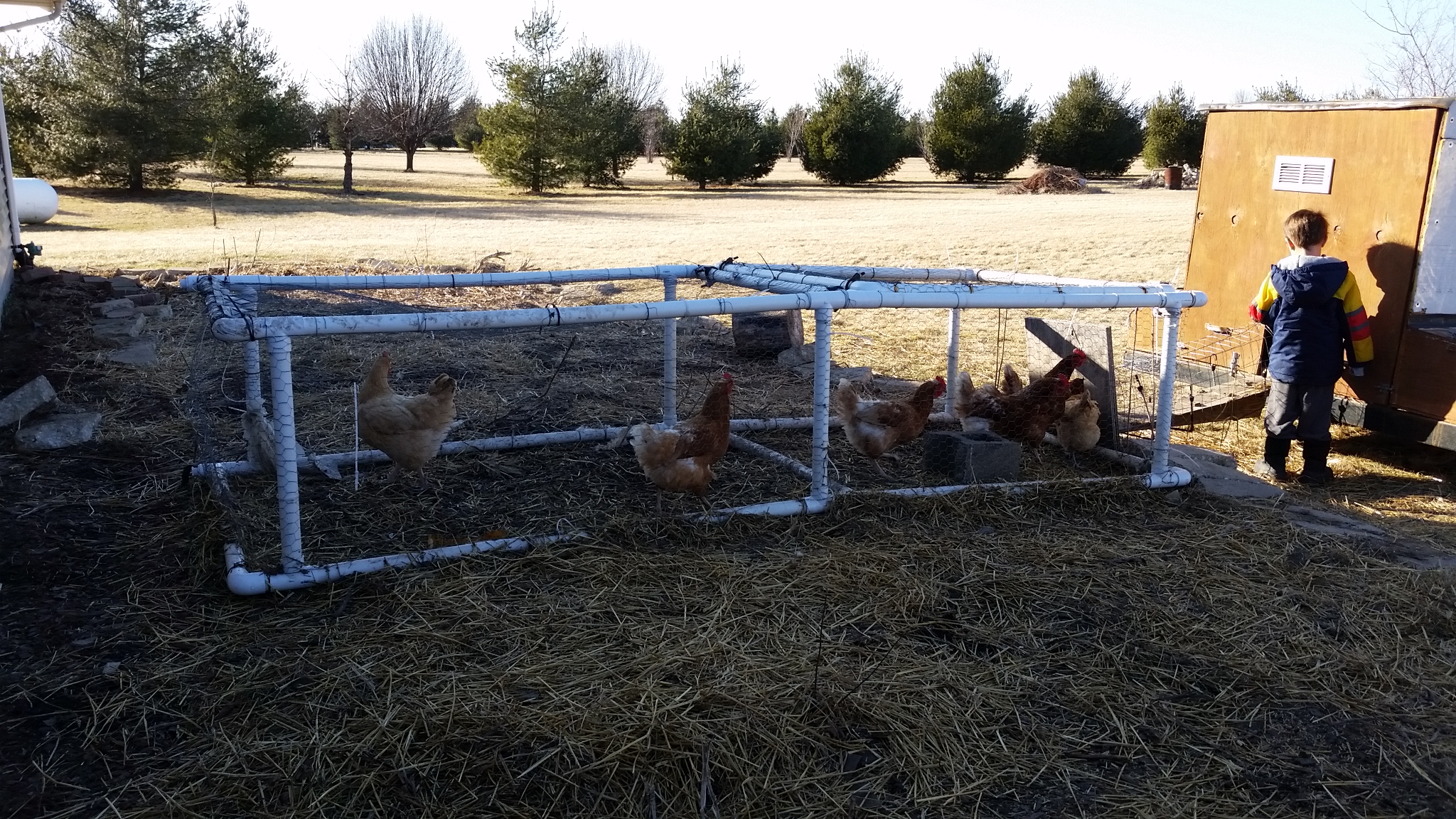
20160227_155129.jpg

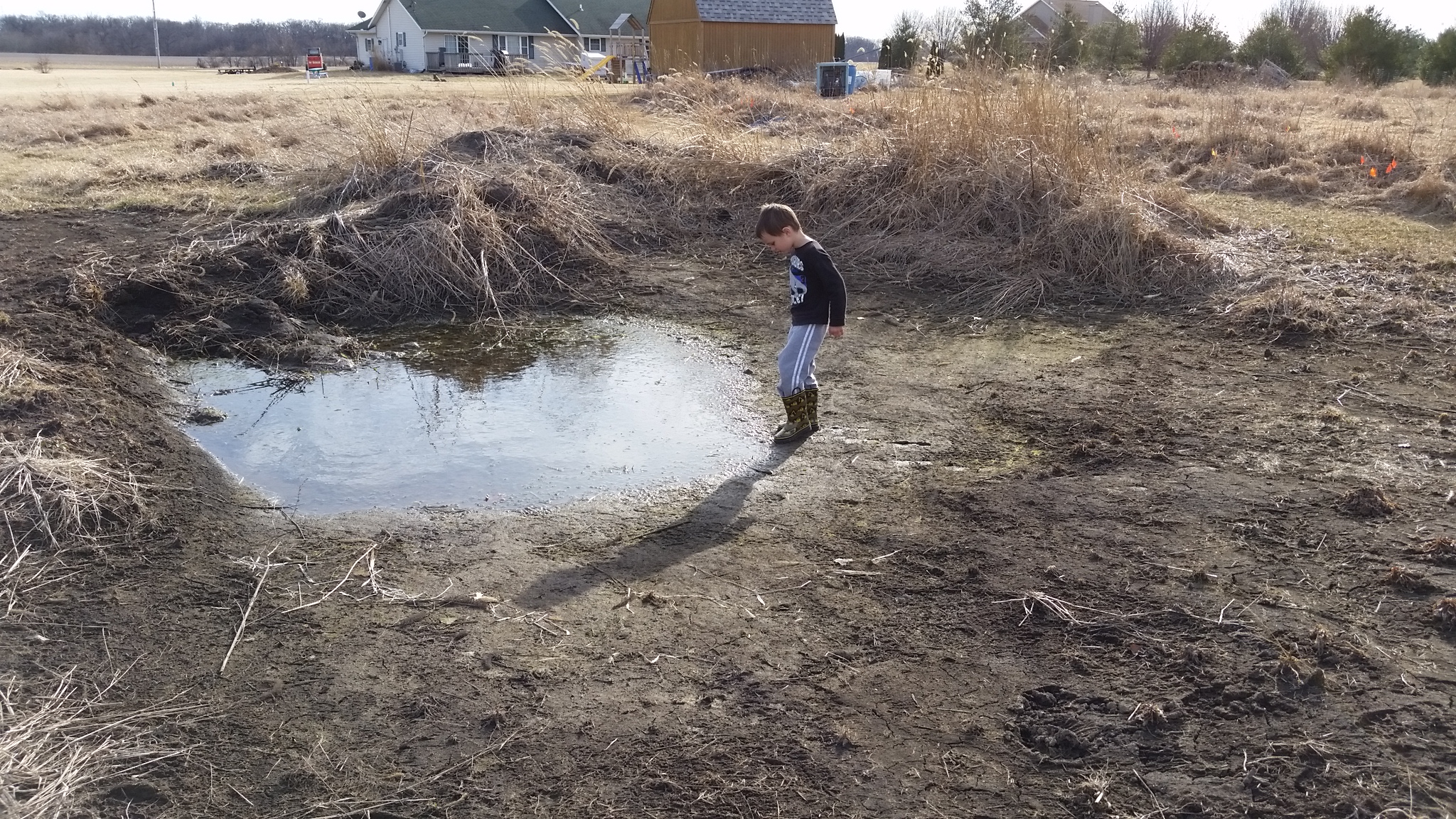
Then, we walked through the swales to check out wind damage and searched for life in the ponds.

20160229_152710.jpg

Joe and I both saw a goldfish jump. I tried to get footage but it stayed hidden under the moss at the bottom of the pond.

Joe even tried splashing the water with a stick to get it to come out. Odd that didn’t work.
20160229_152759.jpg

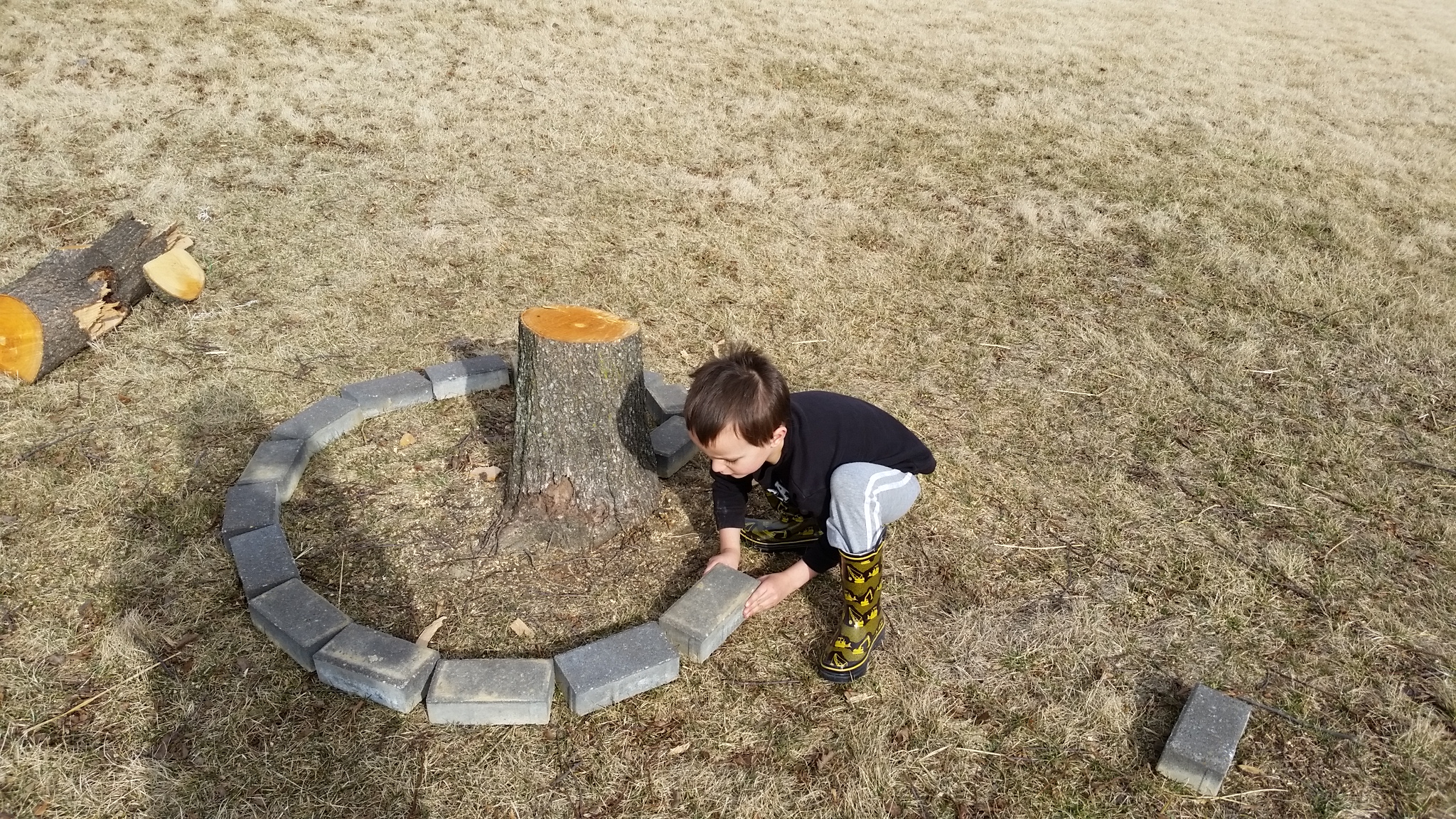
Next, we carted bricks to the stump of the climbing tree and created the outline for the herb spiral.

20160229_150125.jpg

20160229_150330.jpg

Joe was proud of his hard work and excited to show daddy.

“He’s really going to like this Mommy. Because I helped.”

20160229_152436.jpg

A sunny, bright day
Wind hardly stirring the grass
Spring is almost here

In the Heat of Winter

A few days ago, I took the boys to the zoo.

The zoo. In February.

zoo1

Almost all of the animals were out playing. The zebras chased the rhinos. The rhinos playfully fought each other and the giraffes were basking in the sun.

zoo2

It was gorgeous.

Windy, but warm. A wonderful day to be outside.

When I got home and saw my winter garden I noticed how dry the soil looked. I watered the containers and started to worry a bit.

Will the freeze-thaw-freeze ruin any chance for the seeds to sprout?

I thought about all the volunteers we get in May and June. They do just fine and are often even stronger than the starts I transplant in late Spring.

I thought about all the plants, trees, weeds and grasses that grow from seed every year with no help from a grow light, gardener or greenhouse.

I thought about Nature.

It works.

It does a fine job.

It doesn’t need our help, it just needs us to get out of the way.

The seeds I started will freeze and thaw.

Many will not sprout in the Spring, but just like in Nature…there will be a few survivors to carry on.

Freeze thaw, freeze and thaw
Wintering in the bright sun
Nature tending seeds

Winter Garden Round 1

Today, armed with a spade, a sharpie, a pen knife and some duct tape the boys and I started our winter garden.

20160208_092902.jpg

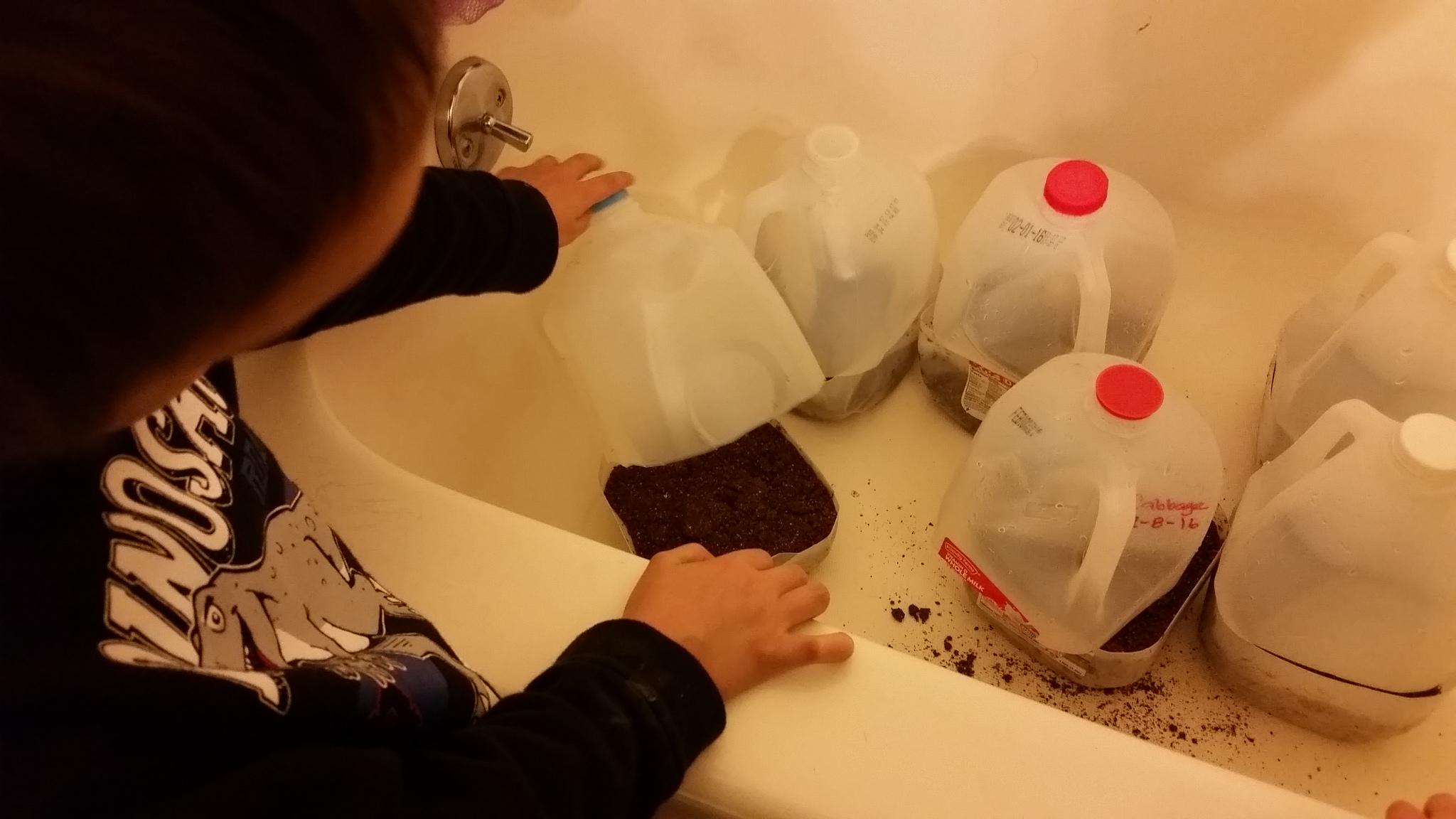
We have been saving milk jugs to use as our ‘mini greenhouses’. We punched drainage holes with the screw driver and used the pen knife to cut the jugs in half, being careful to leave one corner as a hinge.

Voila! Mini greenhouses from re-purposed materials.

Once the greenhouses were finished, we filled the bottom with a seed starting soil mix I purchased from a local nursery, thoroughly watered the mix and set the jugs in the bathtub to drain.

20160208_161314.jpg

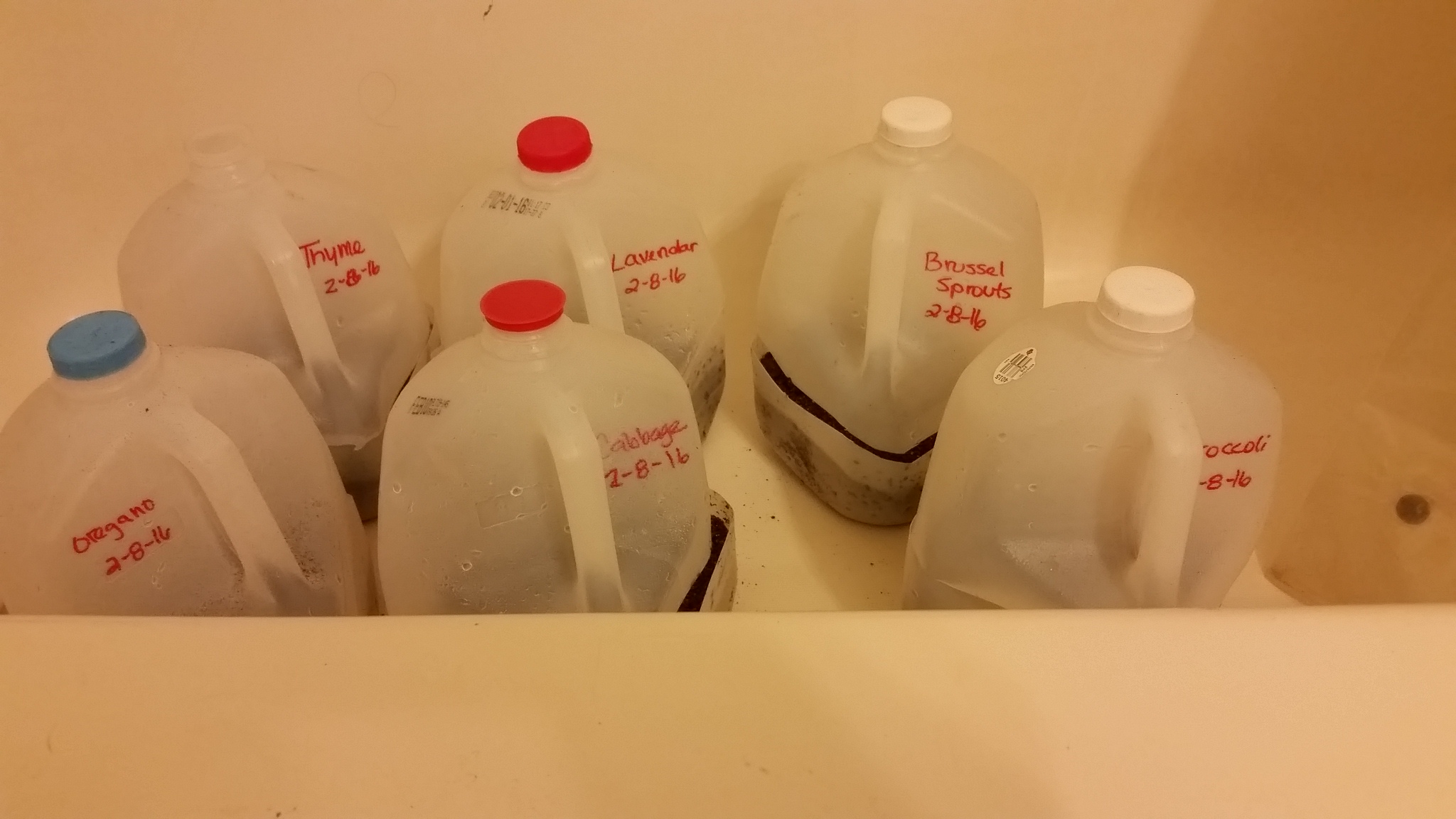
After the water drained and the soil was thoroughly dampened, we planted Brussels sprouts, broccoli, cabbage, sage, oregano, thyme and lavender.

20160208_161612.jpg

Finally, we removed the caps and secured top with a strip of duct tape.  All jugs will go in a tote with holes drilled for drainage and then outside on our deck.

We still need to start kale, spinach and lettuce this month.

I guess it’s time to drink more milk.

Sowing seeds indoors
Jugs reused for winter greens
Rigged out with duct tape

Gentle Hands

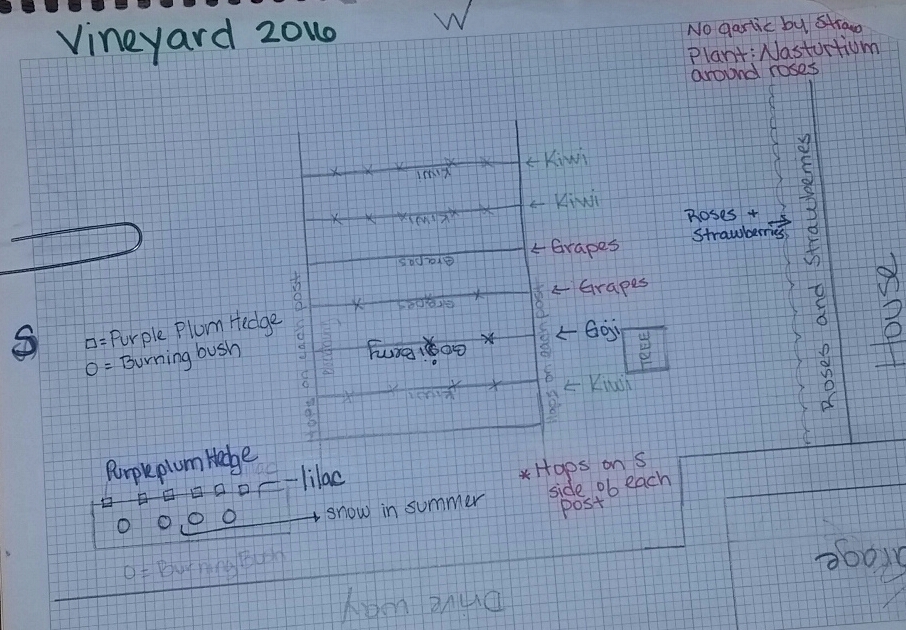
The same windstorm that destroyed the climbing tree and leveled the autumn olive also damaged in the vineyard.

Luckily, no vines were harmed in the roaring of this windstorm. Only a few metal supports slipped off the posts causing the thatching was lean over a little. Whew!

I’ve ordered three Einset Seedless grapes to plant in the row next to the wine grapes. The variety we planted two years ago did not make it through the winter.

This year, with any luck, we’ll have fruit from the kiwi and the grapes will once again ripen.

20160202_083308-1.jpg

The wire we’ve been using with both the kiwi and grapes is not enough to support the heavy vines that will be even heavier when bearing fruit. So we’ll be adding stronger supports this year.

Unless something else pops up, I think we’ll use cattle panels as our replacement. They probably won’t be easy on the eyes at first, but they will do the job and once the vines are grown the vineyard will be a beautiful paradise of kiwi, hops, grapes and goji berries.

We’ll need to carefully untangle the vines and delicately twine them around the new supports.

This will require a gentle hand and a patient temperament.

Let’s see how this goes
Gentle patience is required
Untangling vines


Wind Damage

The autumn olive saga continues with even more tragedy.

While the winter has not been brutal, we have had a few days of crazy winds and one horribly destructive ice storm.

We lost our only climbing tree.

20151228_150550-1.jpg

I thought that this was the extent of the damage…until I saw the fedge.

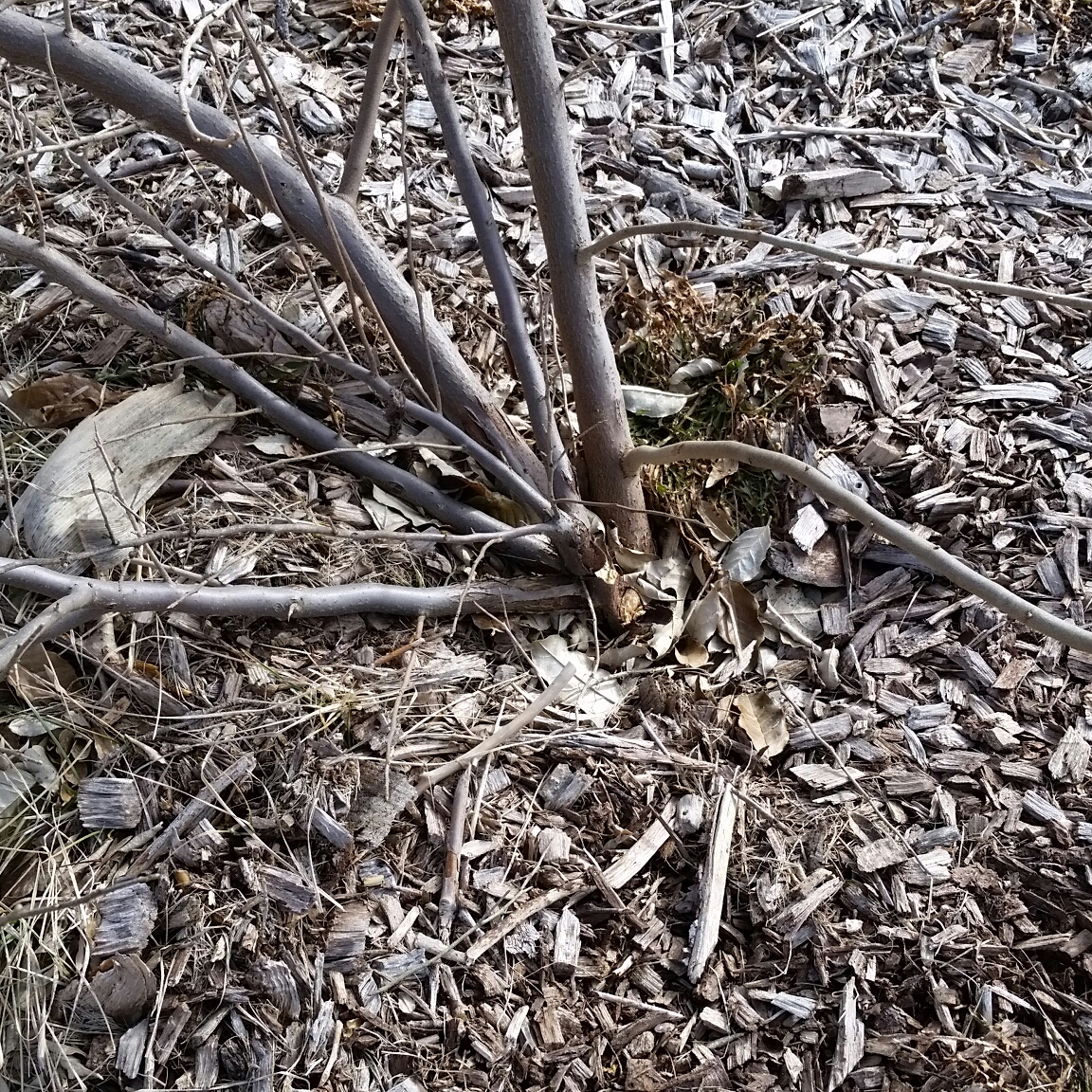
Our two surviving autumn olives had been viciously attacked by ice and wind. One was nothing more than a pile of sticks. The other was bent and looks about ready to snap at the base.

Spring and pruning may save them, but I have little hope. We have most likely lost them both.

20160128_123947-1.jpg

The base of the plant is almost ready to snap. We’ll prune and cut away some dead branches in the hope we can save it.

20160128_123830-1.jpg

The other one is beyond hope. It’s a pile of sticks we’ll use for kindling.

I’m crushed. Four years of growth obliterated by an ice storm and raging wind.

We had finally picked fruit from them and now we have to start all over.

And yet…we’ve learned that no matter how much you plan, how much you protect and how much you nurture…sometimes things just don’t work out.

So, rather than wallowing in disappointment and self-pity, you cut out the damage and start all over again armed with the lessons you’ve learned.

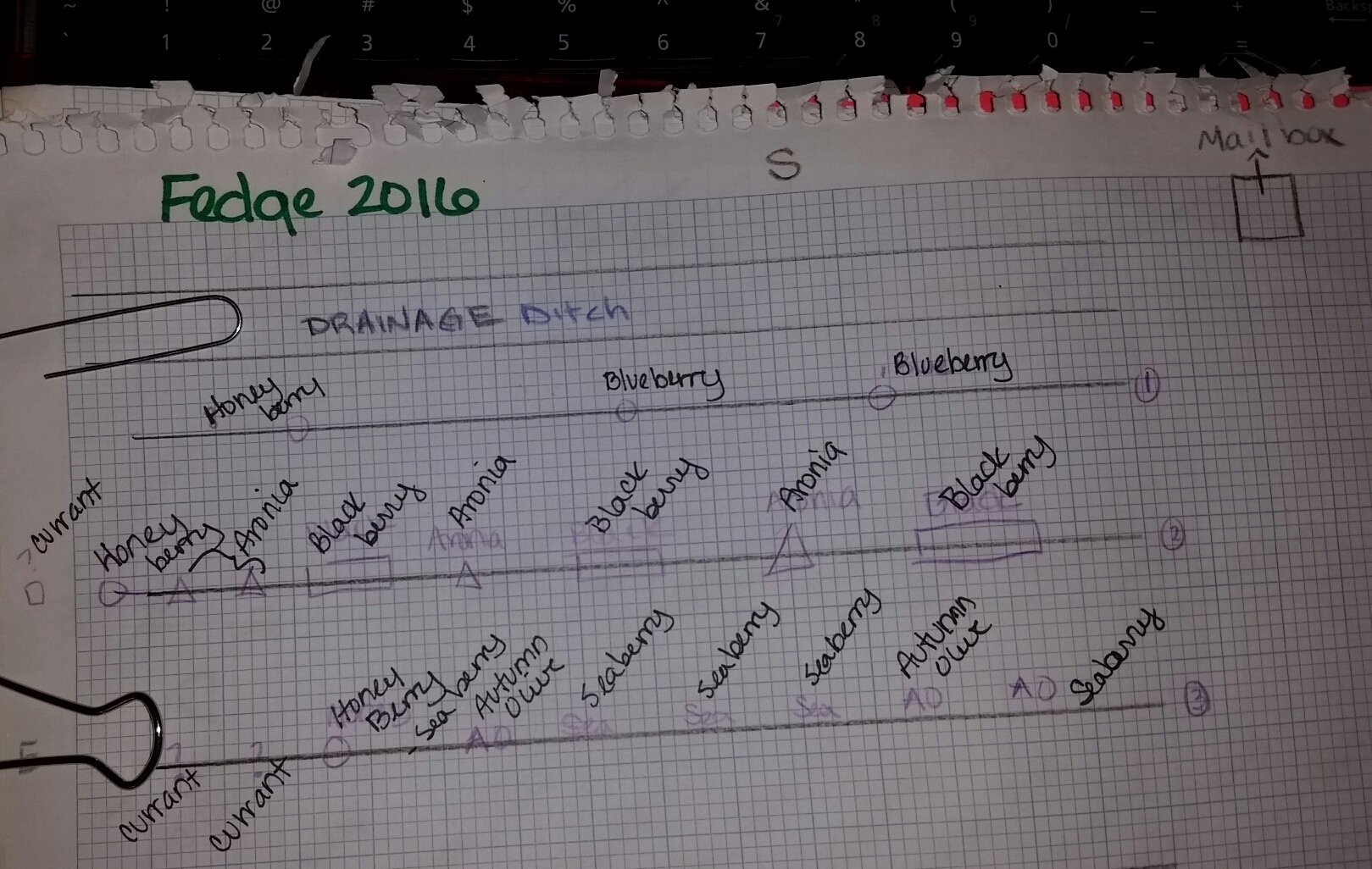
After boo-hooing for a few minutes, I mapped out the fedge, took a few notes and ordered two more autumn olives.

20160128_131218-1.jpg

Take that brutal wind!
Take that cold and heartless ice!
The fedge will live on!

Taking Inventory

One brisk but sunny day, while the boys played and Ray changed the chickens, I mapped out the swales.

20160123_153020-1.jpg

20160123_153044.jpg

I walked up one side.

Then down another.

I sketched.

I scribbled.

I knew what most trees and shrubs were…but I guessed on a few.

20160123_153129-1.jpg

At the end of my stroll, I had a map and inventory of both our swales.

  • 11 Cherry trees
  • 6 Apple trees
  • 11 Raspberry
  • Mint in 2 spots
  • Comfrey throughout the south swale
  • 2 Rhubarb on the north side of the south swale
  • A variety of oaks and willows in the north swale
  • A walnut tree
  • 2 Mulberry trees

20160123_160018-1.jpg

I’m sure we’ll plant a few more trees this year, but we will be focusing our efforts in three areas:

  • Pest control
  • Propagation
  • Pruning

Pest Control
We’ll use companion planting to control pests and attract beneficials. We’ll plant garlic and nasturtium around the fruit trees to repel aphids, ants and mosquitos. Mint will go everywhere to help control ants, mice and moths.

And our milkweed and other wildflowers will continue to attract bees, butterflies and beneficials of all kinds.

Propagation
We’ll try propagating the cherry and apple trees and we’ll continue to spread out the raspberries and blackberries.

I’m hoping to successfully propagate mulberry trees this year. They grow fast and are considered one of the easiest plants to propagate.

Pruning
I’d like to learn to prune the rose bushes as well as the trees.

Proper pruning is so much more than just lopping off a branch here or snipping a leaf there. Guessing can seriously damage or even kill trees.

There are so many variables to take into consideration before you start cutting. Why are you pruning? What sun exposure is the tree getting?

I have a lot to learn before I just go out and start chopping.

The swales are now mapped
So many more trees than I thought
So much more to do

And We’re Off!

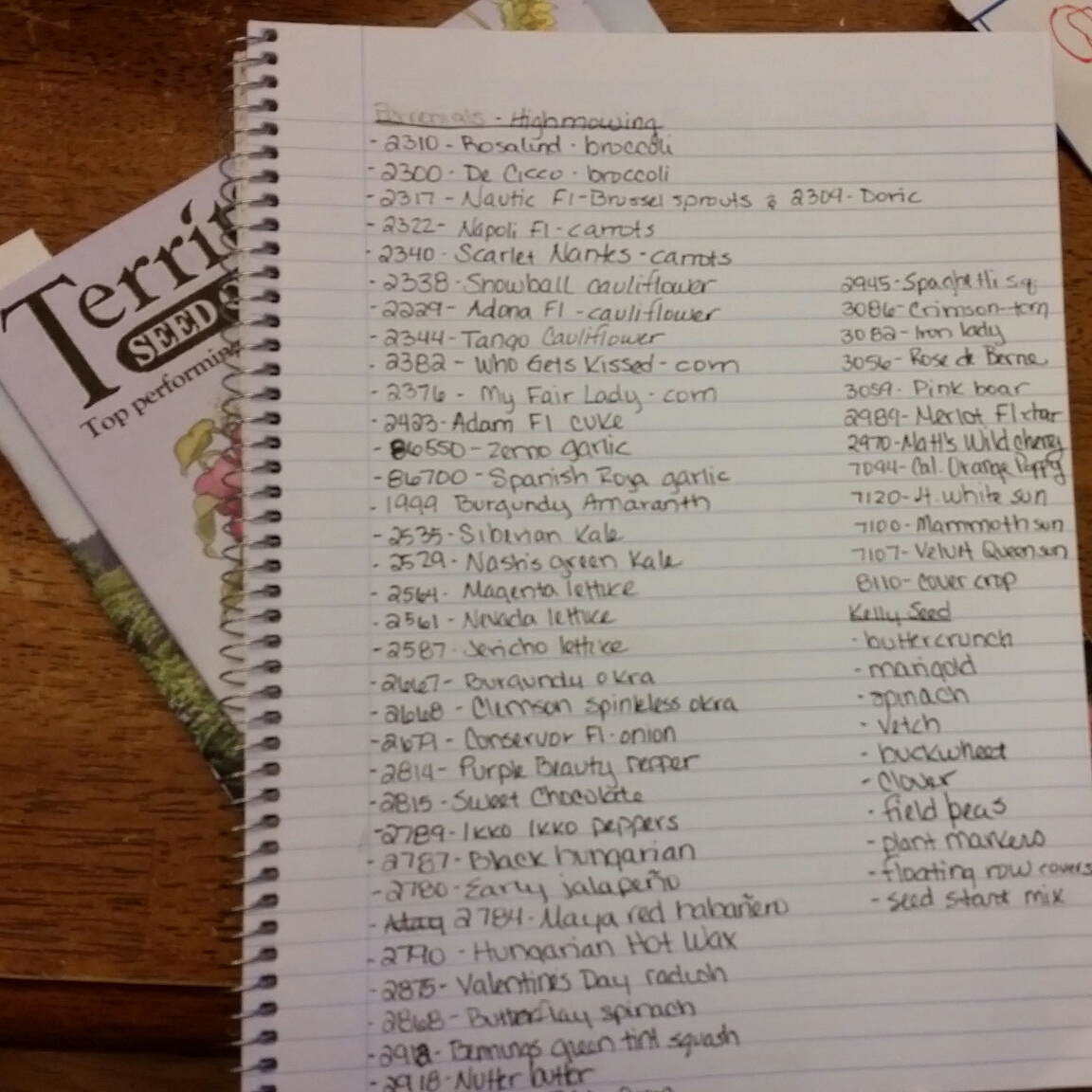
The seeds, at least the first shipment, have arrived! I have gone through them all, sorting them by variety, then putting them in the order they should be started.

20160120_100202-1.jpg

This weekend, I’ll run to Kelly Seed and pick up the rest of my materials for starting seeds.

But first…the schedule.

January-February
Spinach
Kale
Brussels sprouts
Peas
Broccoli
Thyme
Sage
Oregano
Cilantro
Lavender

March
Marigolds
Nasturtium
Lettuce (numerous varieties)
Carrots
Celery
Basil
Rosemary
Parsley
Peppers
Okra
Tomatoes
Amaranth

April
Corn
Cucumbers
Peppers
Melons
Squash
Pumpkins
Tomatoes

I’ll start all seeds listed above in jugs, bottles, ice cream tubs…pretty much any recycled container I can get my hands on.

As I mentioned in a previous post, this is a test and I plan to start a few flats inside as well.

Even though there are tons and tons of gardeners in the blogosphere who have great success with this method, there is no guarantee that this gardener will have success.

This gardener is just learning.

I will also direct sow some seeds from the above list as well as others as soon as the ground can easily be worked.

Direct Sow
Squash
Watermelon
Pumpkins
Corn
Carrots
Marigolds
Nasturtium
Lettuce
Amaranth
Onions
Chamomile
Parsley
Shallots
Radishes
Sweet potatoes
Chives

I’m sure my back deck will be a sea of milk jugs. All the new varieties of tomatoes and peppers alone will fill up several jugs.

I can’t wait!

20160121_143938-1.jpg

The schedule is done
The seeds sit on my table
Ready, set…let’s go!

A Trellis for the Squash

I’ve learned a lot over the past three years.

I’ve learned that squash bugs are evil creatures that will destroy squash beds if I don’t remove eggs one, or two times a day.

I’ve learned that Japanese beetles and aphids suck the life out of any green leaf on the property.

I’ve learned that beans, Brussels sprouts and cucumbers refuse to grow for me.

I’ve learned that getting upset and sulking when something doesn’t work out as planned is really, really, really, counterproductive.

But this year will be different because of all the lessons I’ve learned.

And, perhaps the most important lesson is to make real, sometimes drastic, changes based on those lessons.

Starting with the back garden.

20160119_121627.jpg

One of the major changes/new approaches I will implement this year is trellising.

Rather than planting the squash so that it runs all over the ground, slithering and choking other plants, I’ll build a trellis.

Squash is, obviously, heavy. Zucchinis and smaller squashes will have no problem with climbing and hanging from a trellis, but heavier fruits like butternut, pumpkins and watermelon will need “hammocks” made from nylons or old t-shirts.

I’m not sure what type of trellis I am going to build, but am leaning toward an A-Frame using either pallets, 2x4s or livestock panels.

There are tens of thousands or pictures and posts in the gardening blogosphere showing the success of this method. It works…at least, it’s worked for others.

Will it work for me? It’s worth a try.

And when (or if) it does?

Take that you squash bugs!
The battle lines have been drawn
Revenge, oh so sweet

wpid-20150819_180725-1.jpg

Medicinal Herb Spiral

For several years, I’ve wanted to build an herb spiral. I’ve wanted to create a beautiful addition to our garden and provide fresh herbs for cooking and curing.

Now that our climbing tree has been destroyed by a wicked ice storm, I have the perfect spot to put it.

20151228_150550-1.jpg

An herb spiral is a method of vertical gardening and has several benefits over gardening in a bed.

  • Saves space
  • Provides microclimates
  • Makes pest control easier
  • Makes harvesting easier
  • Allows a higher crop yield in a limited space
  • Makes companion planting easier
  • Creates a beautiful ‘show garden’

I want my spiral to be both culinary and medicinal.

I’ll plant chamomile and use it to make a medicinal tea to soothe an upset stomach or help with sleep.

I’ll use rosemary to make a tasty pasta sauce or cure a headache.

I’ll make a delicious salsa with cilantro and lower my blood sugar.

Below are a few more herbs I’d like to plant in my spiral.

  • Basil (Culinary)
  • Chamomile (Medicinal and Tea)
  • Echinacea (Medicinal and Tea)
  • Cilantro (Culinary)
  • Lavendar (Medicinal and Tea)
  • Parsley (Medicinal and Culinary)
  • Rosemary (Medicinal and Culinary)
  • Sage (Medicinal and Culinary)
  • Thyme (Medicinal and Culinary)
  • Marigold (Medicinal)
  • Mints: Peppermint, lemon balm, bee balm

Mints are the super herb. They help with everything from headaches and digestion to skin care and weight loss.

However…they have a tendency to take over.

We already have chocolate mint creeping throughout the vineyard and lemon balm taking over the kitchen garden, so these will go in pots on the deck or in the swale.

Herbs are not the only plant that do well in a vertical garden.

Tomatoes, peas, beans…any climbing plant work well on a trellis and almost any vegetable, including squash, will thrive in containers.

Maybe I’ll try trellising my squash this year.

Maybe it will make battling the squash bugs easier.

Maybe we won’t get squash bugs at all.

Herbs in the garden
Fragrant, beautiful, tasty
A spiral of health

Homestead Goals 2016

We always, always, always set more goals than we possibly have the time and the energy to get to.

And, we always, always always feel that we are failing when we don’t get to all of them. We feel that we let the season slip by without really getting anything done.

Until…the season ends and we look back at all we have done on the homestead, when we see the forest instead of just the trees, we always, always, always feel pride in all that we accomplished.

I’m sure that this year, even though I will try not to, I will feel discouraged when I don’t get everything on my list done or even started. But I’m confident that when we look back in the Fall…I will once again feel proud of our progress.

This years goals:

  • Get the carrots in the ground earlier so that we actually have more than a few to harvest.
  • Make sure to plan for pests like slugs, cabbage worms, Japanese Beetles and squash bugs so that they don’t get away from me and take over.
  • Really take the time to fertilize with natural and organic materials. I’ve already started by scattering calcium-rich powdered egg shells.
  • Pull and/or transplant volunteer tomatoes, borage, dill and squash so that the kitchen garden doesn’t turn into a jungle of tomatoes, dill, borage and squash…even though the boys loved it.
  • Rework the vineyard so that, when we get kiwi, we will have a strong enough system to support the weight. I’m thinking cattle panels or something similar. The kiwi at full production will be too heavy for the gauge of wire we are currently using.
  • Get brussel sprouts grow. I’m not sure why I’m having such a problem getting them to even sprout.
  • Keep those dreaded deer away from my fedge, my vineyard and my trees in the swale. By any means possible.
  • Learn more about pruning trees.
  • Grow a medicinal herb garden.

But first, I have to get my schedule going, order materials and start my seeds.

20160111_105107-1.jpg

Ready, set…go!

Let the fun begin
Order the seeds and supplies
Time to get started