Category Archives: Poetry

Stripes

Last year, we slowly moved the chickens from the pasture to the kitchen garden. We started in August and moved them every few days until we were ready for them to do their work.

wp-1472578178207.jpg

At first, we didn’t notice it. The grass had yet to recover from their trampling and tilling. Sometimes we’d left them t0o long in one spot, so it was awhile before the grass grew back.

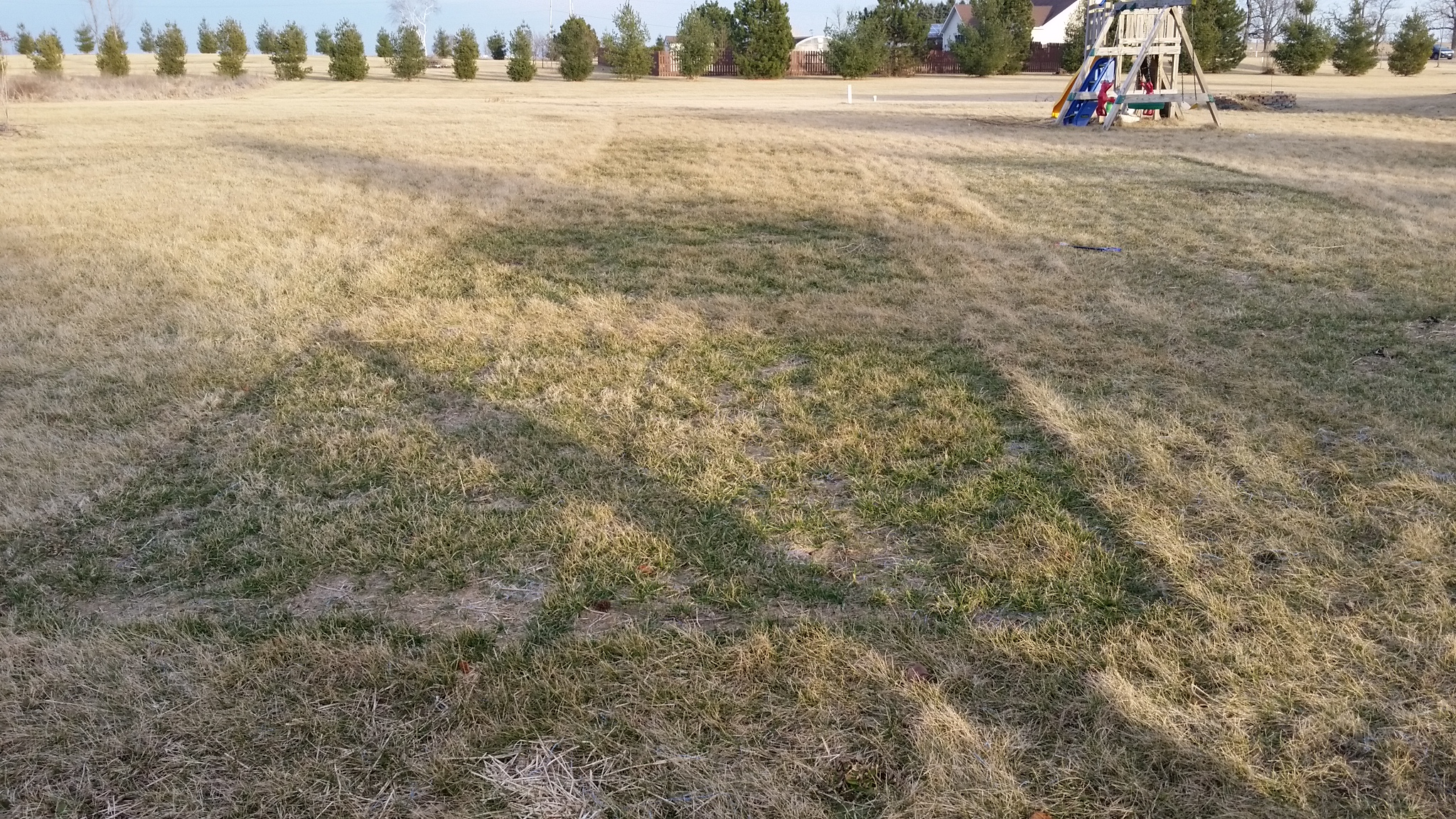
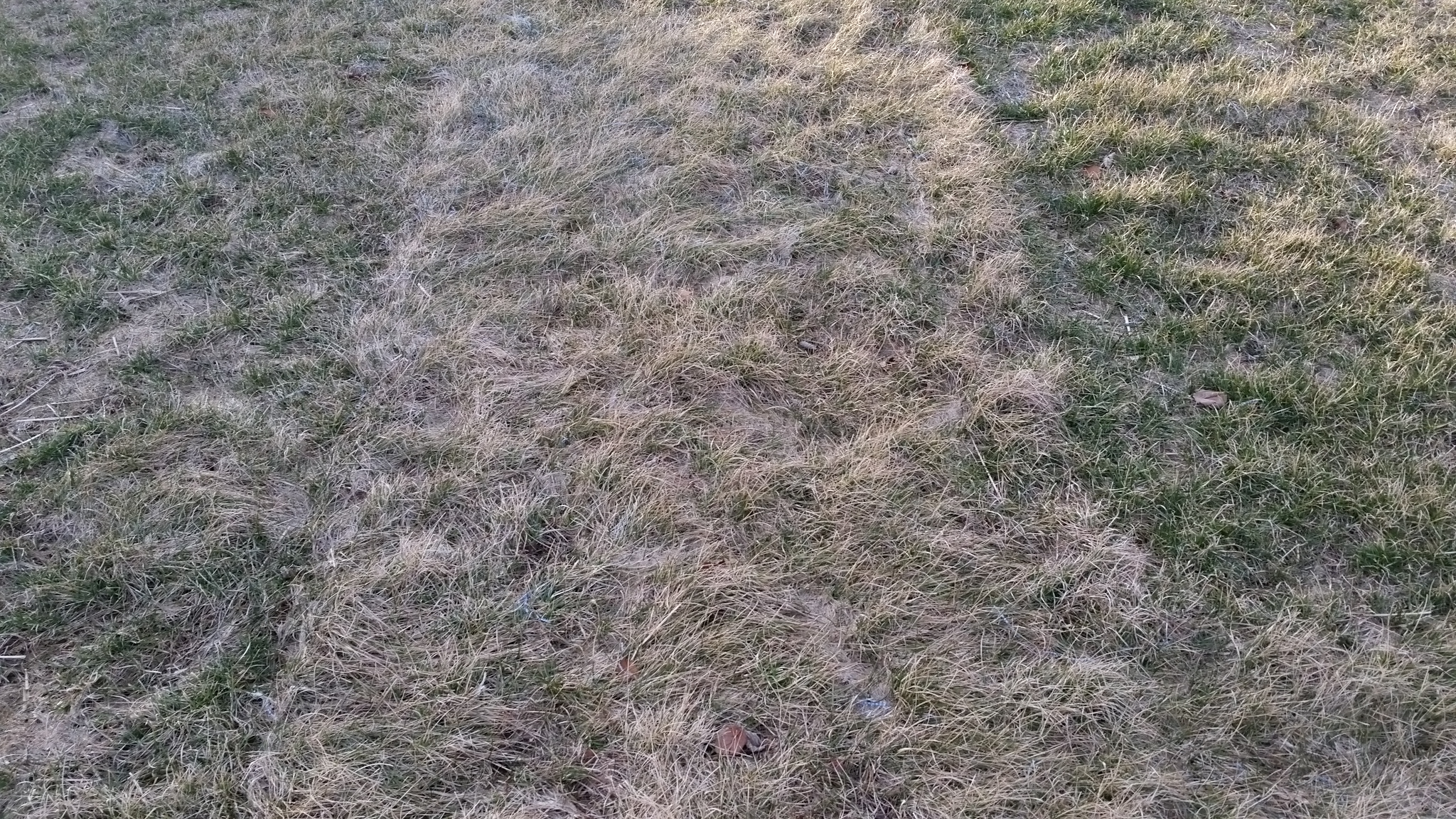
Then, one day, Ray looked out over the yard and saw it. A green path from the pasture to the kitchen garden. The path the chickens had created. It looked like one big, vibrant green, curving stripe.

wp-1487348168507.jpg
I wish we had taken pictures at the time. It is still visible, although faint in this brown, gray winter grass.

If we didn’t know the effect the chickens had on our soil before, we had concrete proof now.

wp-1487348168504.jpg

Animals, be they chickens, goats, rabbits or cows, are very beneficial to the garden, the homestead and life in general.

We saw a bright green stripe
Winding through the yard
From chicken feet and claws
Scratching without pause

The Fedge, the Vineyard and the Swale

It’s not that we neglected the fedge and the fruit trees we planted.

It’s not that we let them fend for themselves.

It’s not that we intentionally meant to let the weeds and grass all but take over.

wp-1470063208067.jpg

We just focused so much of our energy on fighting Japanese beetles.

We were just so excited to harvest all the new fruits that popped up.

wp-1470773240344.jpg

We were just so focused on planting new trees.

20160424_150209.jpg

I know, I know. Excuses, excuses.

Yet, in spite of our neglect…the trees survived. The fedge produced. The vineyard thrived.

20160624_095214.jpg

This year, we are focusing on maintaining the fedge, pruning the trees and propagating, well, anything we can.

We are also determined to transplant all the seaberry and aronia that ran riot in the fedge. There are at least 8 new seaberry plants and 3 new aronia that raced under the ground and sprang up through a thick layer of mulch as if to say, “Ta-da! Here we are!”

wp-1470066922121.jpg

We will also try to throw down seeds, plant nitrogen rich perennials and overtake the grasses that cover the swales. It will be a race. Survival of the fittest with the advantage given to the plants we want to take over.

Mint? Throw it down.

Seaberries? Plant them everywhere.

Raspberries? Absolutely.

I didn’t sketch anything up. Maybe it’s the wrong method, but rather than plan out exactly where everything will go, I plan to just get in there and plant, plant, plant where I see there is room.

I will be strategic of course. We don’t want to overcrowd the trees or any of the raspberries and comfrey we have already planted. As I plant, I’ll have my clipboard with last year’s final sketch so I can mark what we planted where.

20160413_130431.jpg

That’s the plan. Pruning and transplanting happens early to mid March and we’ll start throwing down seeds in mid to late April.

Let’s get seeds and rooting hormone ordered.

Let’s get the pruning shears sharpened.

Let’s get ready.

Finally we’re moving
Ahead and not behind
Finally we’ll get ‘er done
I’m in that frame of mind

We’ll order seeds and hormones
We’ll sharpen all the tools
I’m ready to get started
Let’s go! Let’s bend some rules!

An Opossum Poem

The sound of the door
Sliding’ cross the track
Is soft and just a whisper
But heard by both our cats

A gray streak from the pasture
A dark blur from the yard
Both streaming to the backdoor
Both sprint and run so hard

Sometimes we move too slowly
Both sneaky cats get in
We find them in the basement
Sleeping chin to chin

I let them lounge a little
Especially if it’s cold
I scratch their ears and pet them
A fuzzy cat to hold

They’re great at hunting critters
They’re swell at catching birds
But face them with a ‘possum?
They’re neither seen nor heard

One snuck into the hen house
And filled the girls with dread
The cats were sleeping on the job
All snuggled in their bed

You’d think they would be sorry
You’d think they’d show regret
But they just meow as if to say
“What did you expect?”

The Expert

You have to approach her slowly
Try not to let her see you
Sneak quietly behind her
And maybe tiptoe too

You have to crouch behind her
And softly say her name
And when she starts to walk away
You POUNCE like it’s a game

Then hold her close beside you
And pet her ’til she’s calm
That’s how you catch a chicken
Yep, I’m the expert, Mom!

wp-1479498584869.jpg

Winter Prep

In Winter, most of the garden chores involve cleaning up to prepare for the Spring. Even though the chickens are doing most of that work for us, we still have a few tasks to make sure the soil is soft and ready for planting.

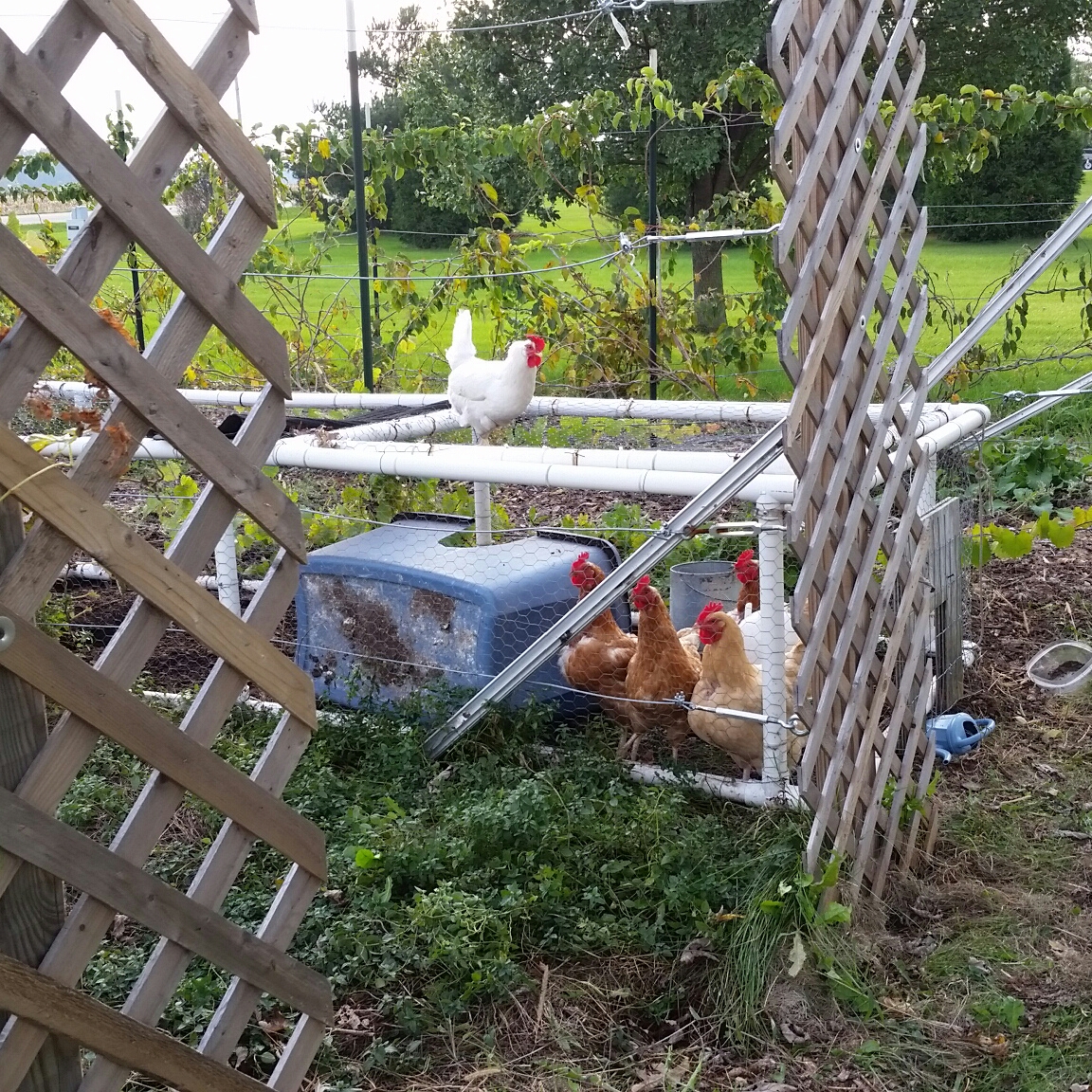
We moved the chickens over yesterday. The girls had done their job tearing up the soil, destroying pests like cabbage worms and squash bugs and fertilizing their first stop in the kitchen garden.

wp-1480345990030.jpg

We covered the spot with a thick layer of straw to keep the soil warm. The ground will freeze, but when the Spring thaw starts, we want to retain as much moisture as we can to keep our soil healthy.

wp-1480285931923.jpg

Since my winter sowing project did not work out well last year, I’m going to try direct sowing the cool season and a few root veggies now.

wp-1480347332515.jpg

If anything comes up before the cold really sets in, I’ll use the upside down milk jug tops I have to insulate the seedlings against the cold.

I also plan to give winter sowing in milk jugs another go this year. Although, with this unseasonably warm December I may have the same problems I had last year.

Other winter chores include pruning and cleaning up weeds around the trees and insulating the perennials against the cold.

We have not had a hard freeze yet, but it is coming soon. In the next few days, I’ll get the rest of this done and sit back and wait for my seed catalogs to start rolling in so I can start planning for 2017.

I’ll plant my winter garden
I’ll hope for it to grow
I’ll watch for little seedlings
Protect them from the snow

I hope the cold won’t kill them
I hope I will succeed
I hope my winter garden
Suppresses summer weeds

Crisp

Sparkling in the sunlight
The frosty, glittering ground
The chickens now are ready
For cold and wind to sound

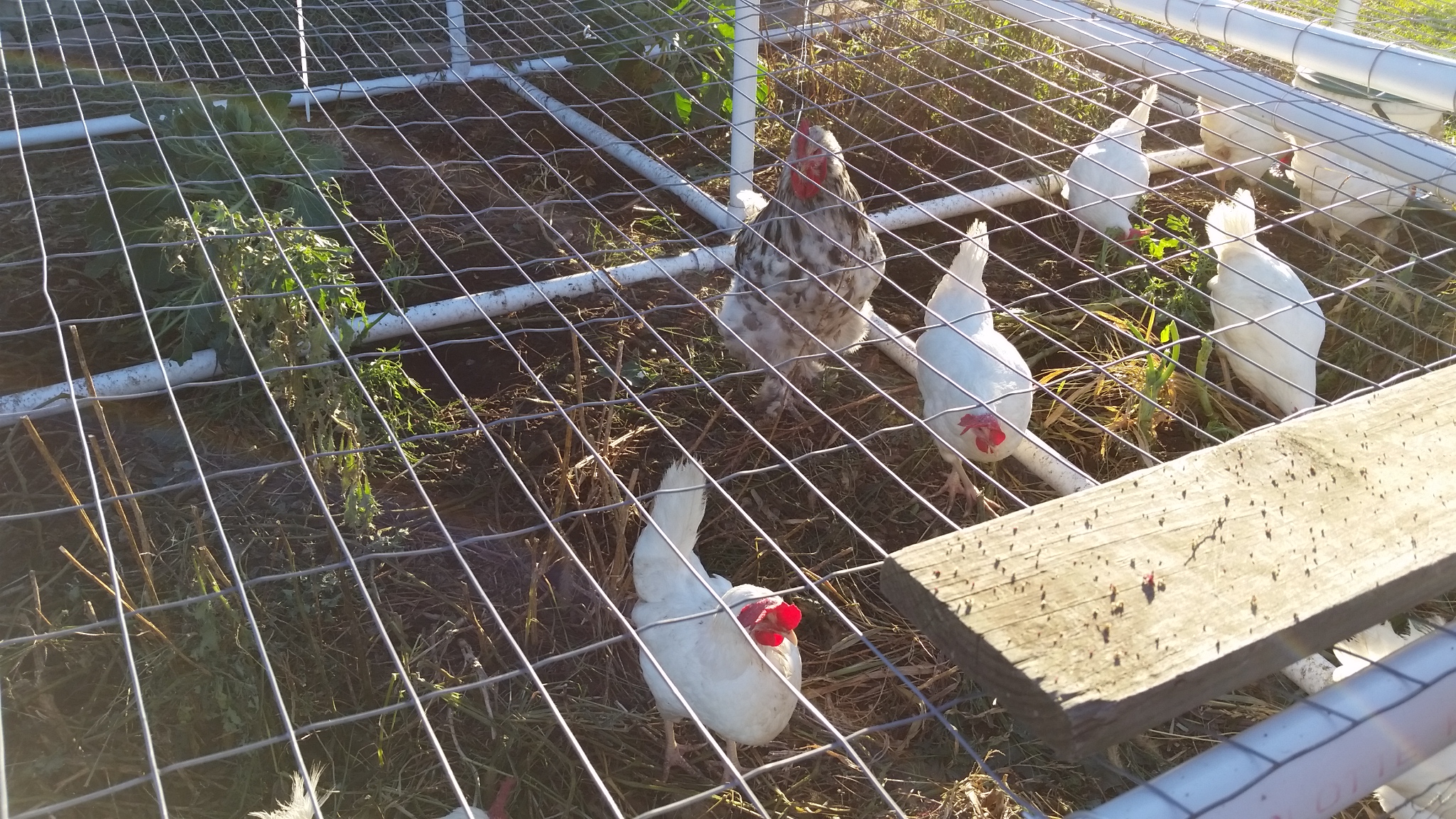
They moved into the garden
To do their very best
They scratch and shuffle all around
Eating weeds and pests

wp-1479702033602.jpg

They’re now outside our window
And each and every morn
Pecky has confused our light
And crows before the dawn

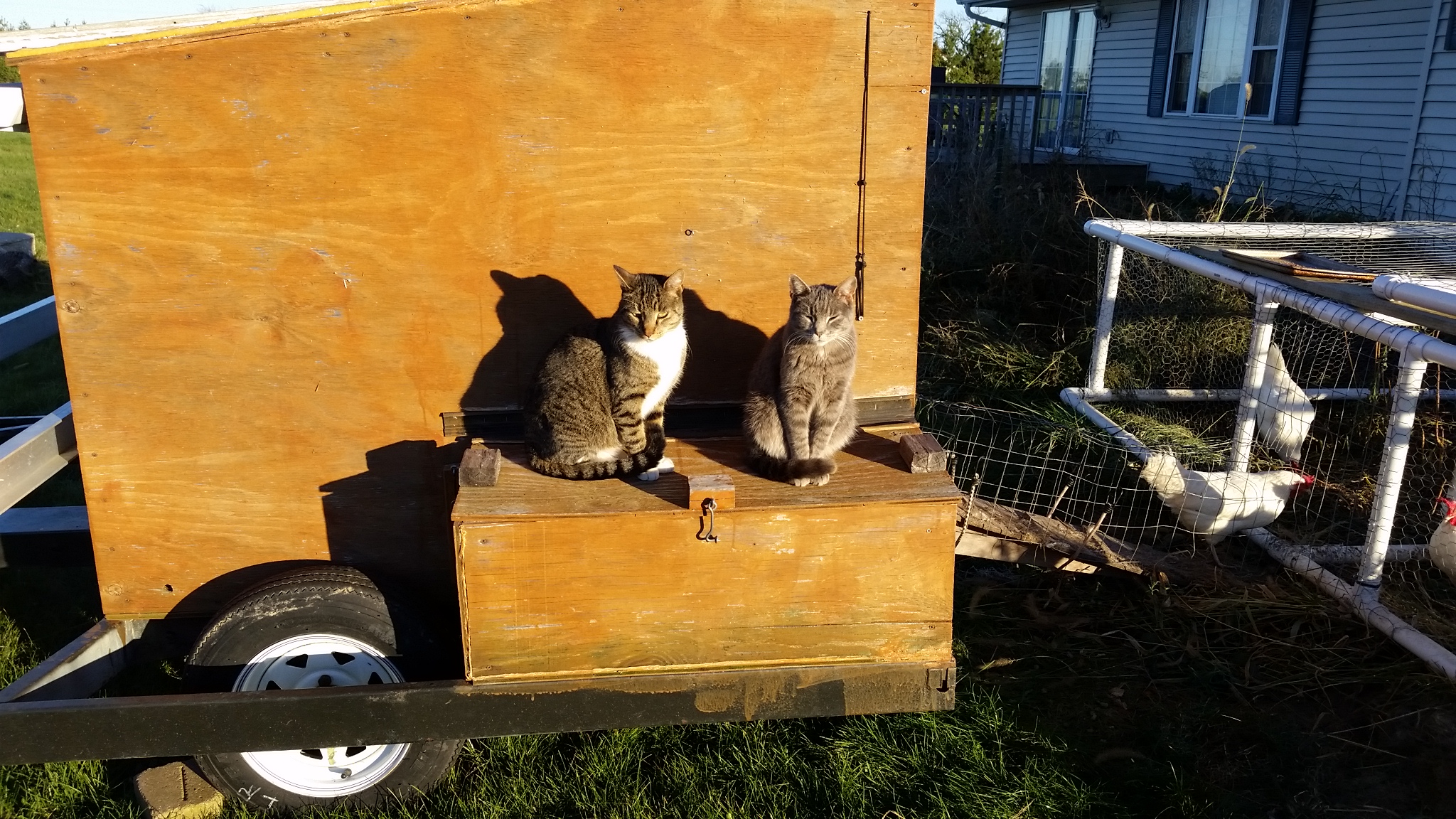
The cats both like their new spot
As guardians of the flock
They bask in warm, soft sunlight
Ignoring ruffled bawks

wp-1479742743339.jpg

The sky is bright and blue now
But soon it will be gray
And snow will fall so softly
Crisp winter’s here to stay


Nature’s Nurses

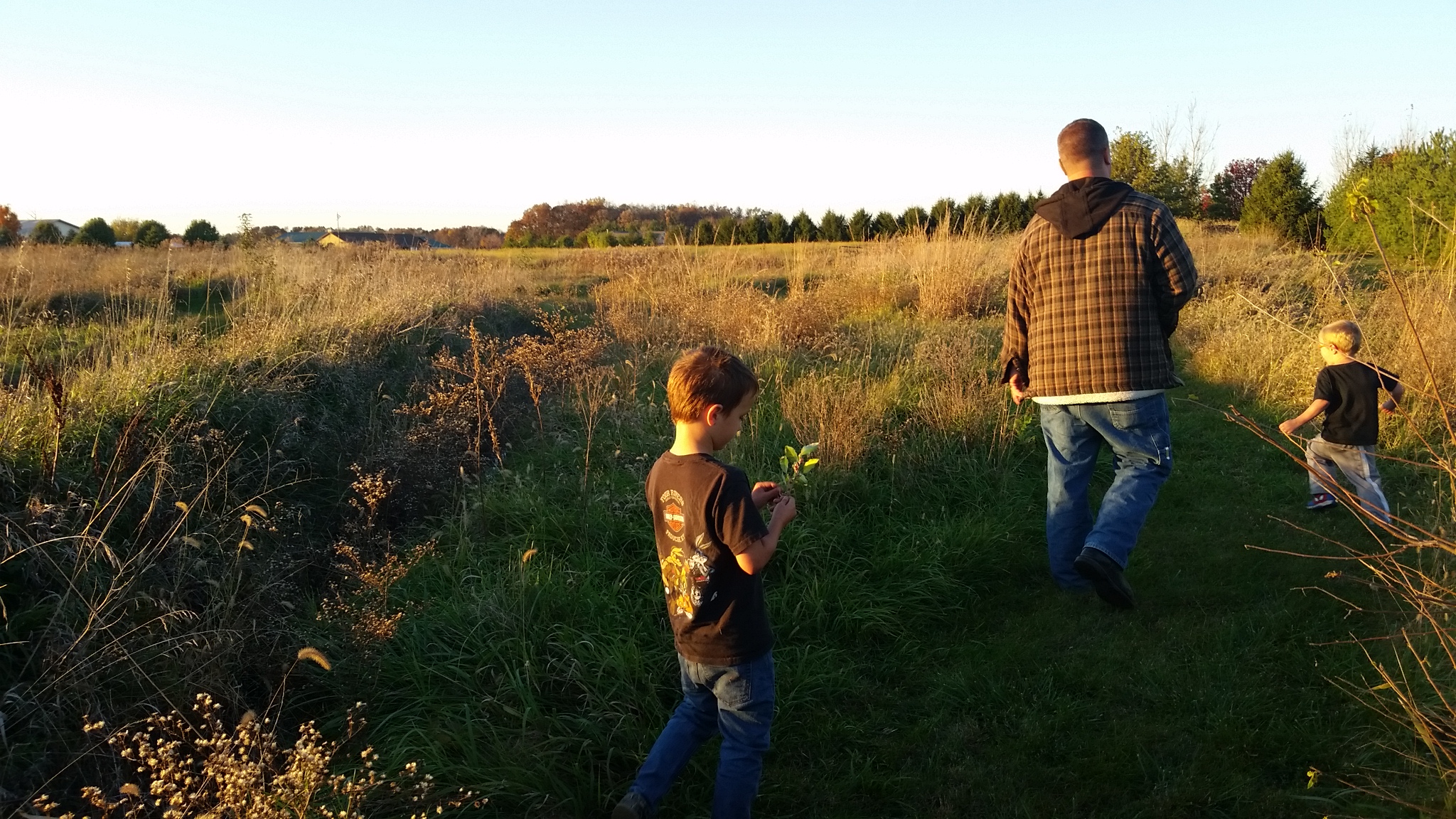
Ray and the boys each picked a handful of Autumn olives yesterday and went for a walk in the swales.

wp-1478530262648.jpg

It was twilight and gorgeous. I walked along with them snapping pictures and enjoying breeze, the warmth, the sun and the peace.

wp-1478533117104.jpg

They munched on the berries as they walked and spit the seeds out between the trees we’d planted.

“What are you doing Joe?”

“We are planting trees!”

wp-1478530262643.jpg

Planting trees by spitting seeds may sound crazy…perhaps it is. But how do trees grow in a forest with no one to dig holes and plant?

Seeds drop to the ground. Birds and beasts spread them around.

Sure, some of them grow and some of them don’t, but no shovel is needed to grow a tree.

wp-1478528182386.jpg

Why would we want Autumn olives to grow willy-nilly in the swales?

One, they grow fast and spread even faster. We are slowly trying to cover the berms with plants and shrubs we can use for three purposes: food to eat, nutrients for the other trees and protection from erosion.

Two, they are packed with nitrogen and will enrich the soil. The roots fix nitrogen feeding other trees and shrubs nearby. We are working to nurse the soil on our property, to restore this disturbed soil to a rich and fertile landscape, perfect for growing food for our family.

Three, they taste great and are packed with nutrients, antioxidants and vitamins A, C, and E. They have more lycopene than tomatoes. Roughly 15 times more in fact. Lycopene has been associated with preventing certain diseases such as breast, prostate and skin cancer.

We aren’t just planting autumn olives. We’ve also transplanted seaberries and raspberries. We’ve planted comfrey and mint and plan to throw down more borage in the spring.

We are building our food forest one seed at a time.

wp-1478530262700.jpg

Nature’s nurses planted
All throughout our land
Maybe they’ll grow tall and spread
And nurse our soil back from the dead

We’ve started the process
To repair and restore
We’re giving it our very best
And letting Nature do the rest

Colder

The days are getting colder
The air is crisp and cool
The hens are getting older
To keep them would be cruel

Soon winter winds will roll in
Snow falling close behind
We’ll only keep a few hens
To keep warm and confined

We started with the old gals
We sent them on their way
Then we retired our dear pal
Poor Blue’s seen her last day

Please try not to feel sad
Blue was a lovely hen
But finding eggs that smell bad
Well...I won’t do that again

We’re keeping dear old Pecky
To hatch eggs for next year
That rooster is so lucky
That he is in the clear

The chickens have been helpful
The eggs they laid were great
And now they will be useful
Supplying us with meat

 wp-1477943468011.jpg

Harvest in the Fall

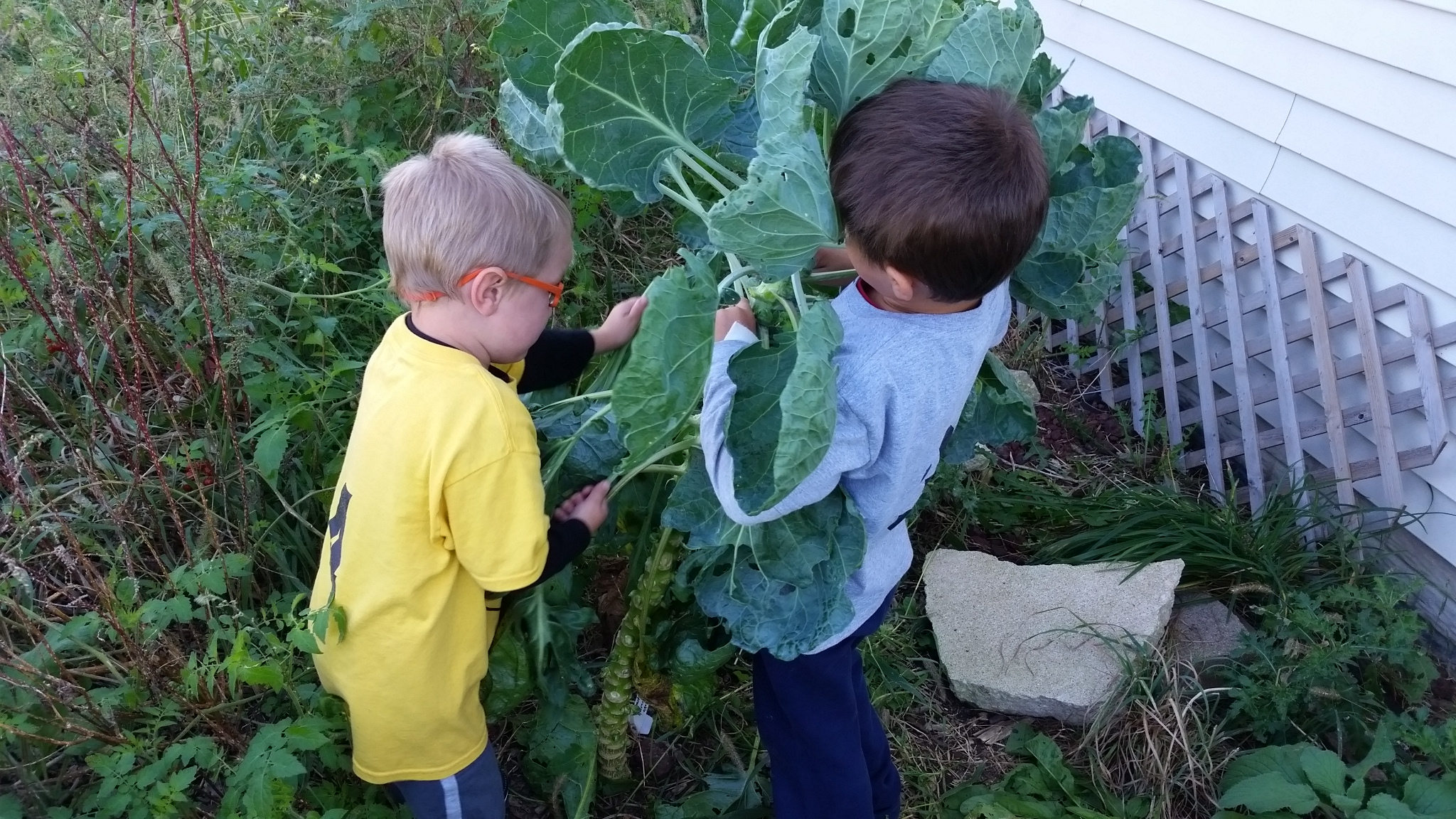
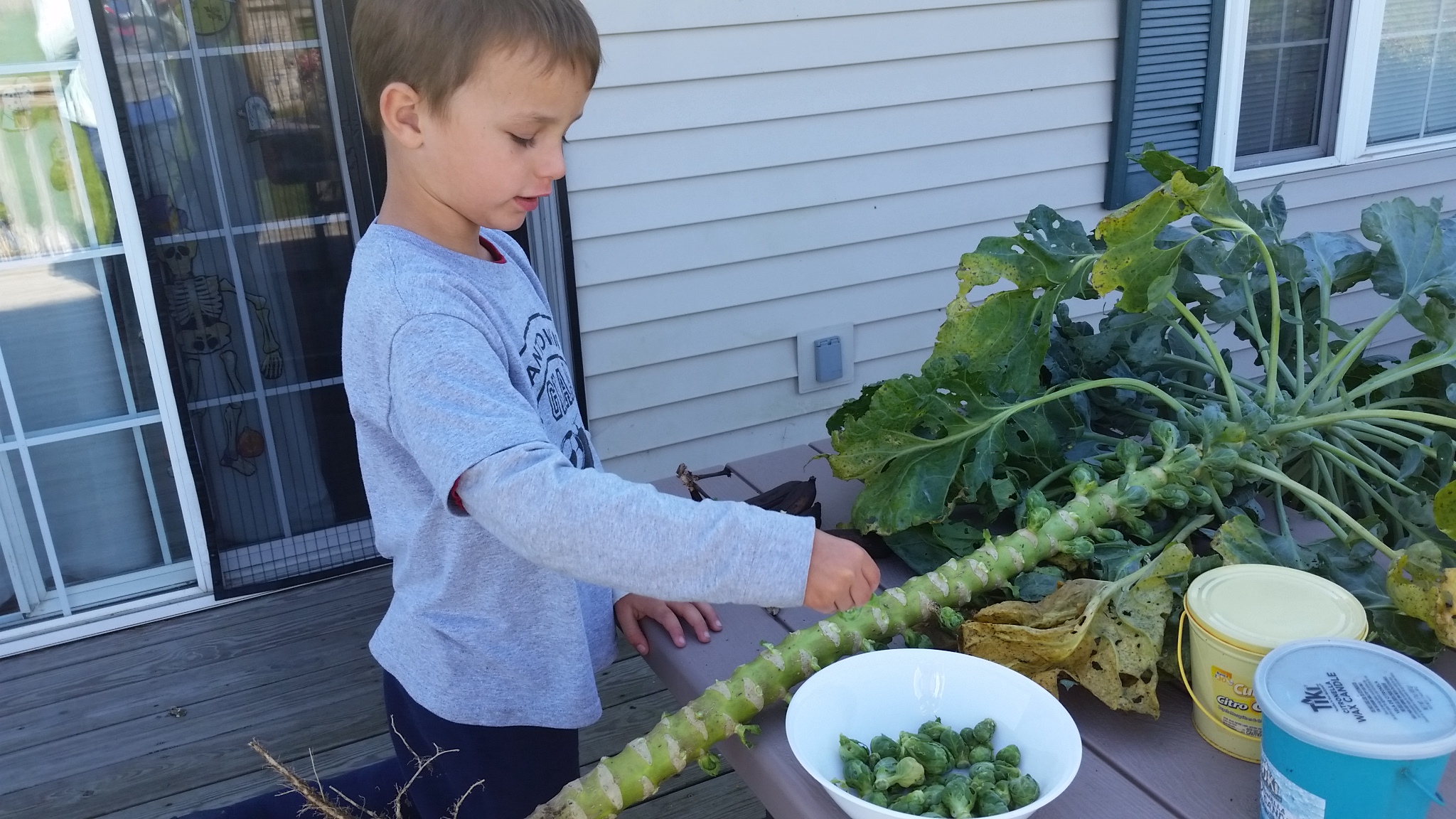
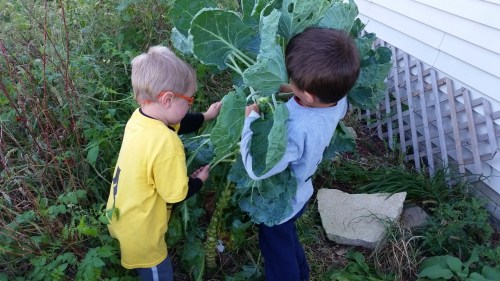
We’ve been waiting for the brussels sprouts to get bigger, but it seems that they’ve grown as much as they are going to.

The boys were excited to harvest them and, truth be told, so was I.
wp-1477253723869.jpg

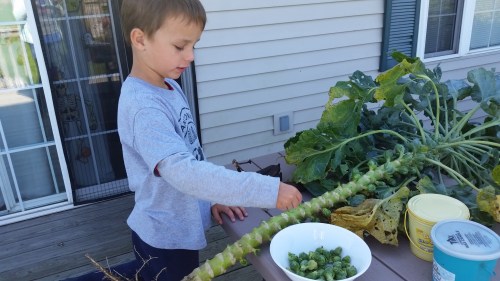
I have purchased fresh brussels sprouts, still on the stalk, at the store. Our stalks are larger and taller but our sprouts are smaller than storebought.

wp-1477253723880.jpg

I worried that they were not ripe, but the leaves were starting to spread so we tasted one…or two…or three.

They were delicious and sweet, with a slight bite. Joe absolutely loved them. He could not stop eating the ‘baby cabbages’.
wp-1477253723876.jpg

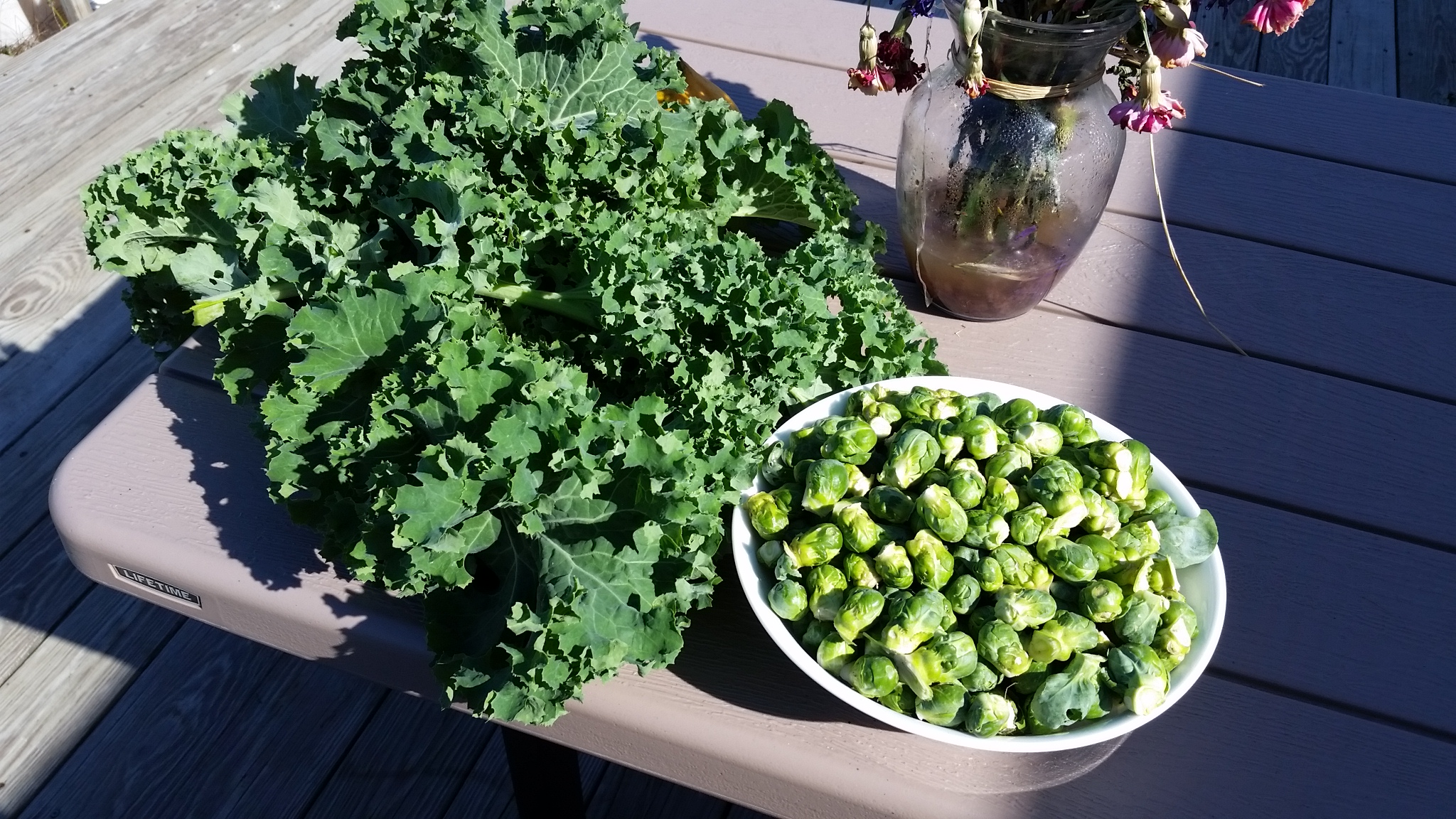
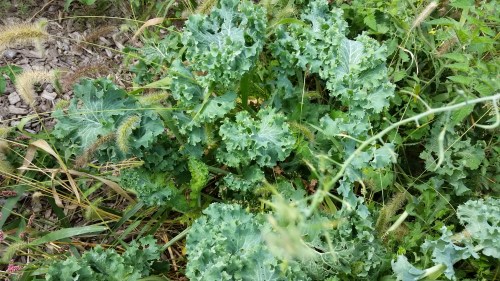
While harvesting these tiny wonders, we found some kale ready to pick.

I’d forgotten that I’d planted it so it was a nice surprise and, since it is soup season, will be a tasty addition to vegetable chicken soup.
wp-1475168915505.jpg

There were also cherry tomatoes red and sweet on the vine and a random cucumber, but the kale and brussels sprouts were the most exciting fall harvest.

wp-1477253723871.jpg

Pumped up by our discoveries, we prowled the homestead in search of more produce ready to pick.

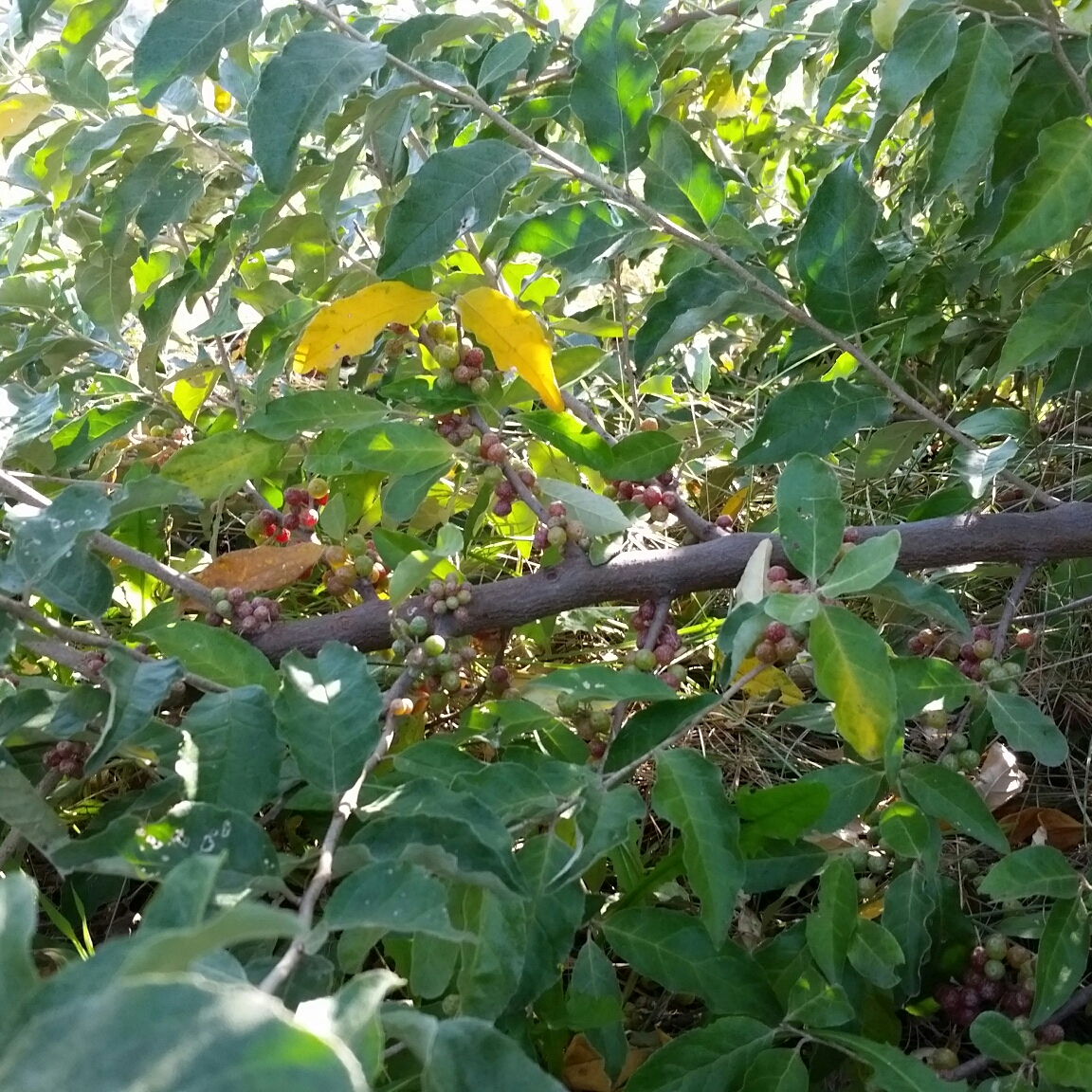
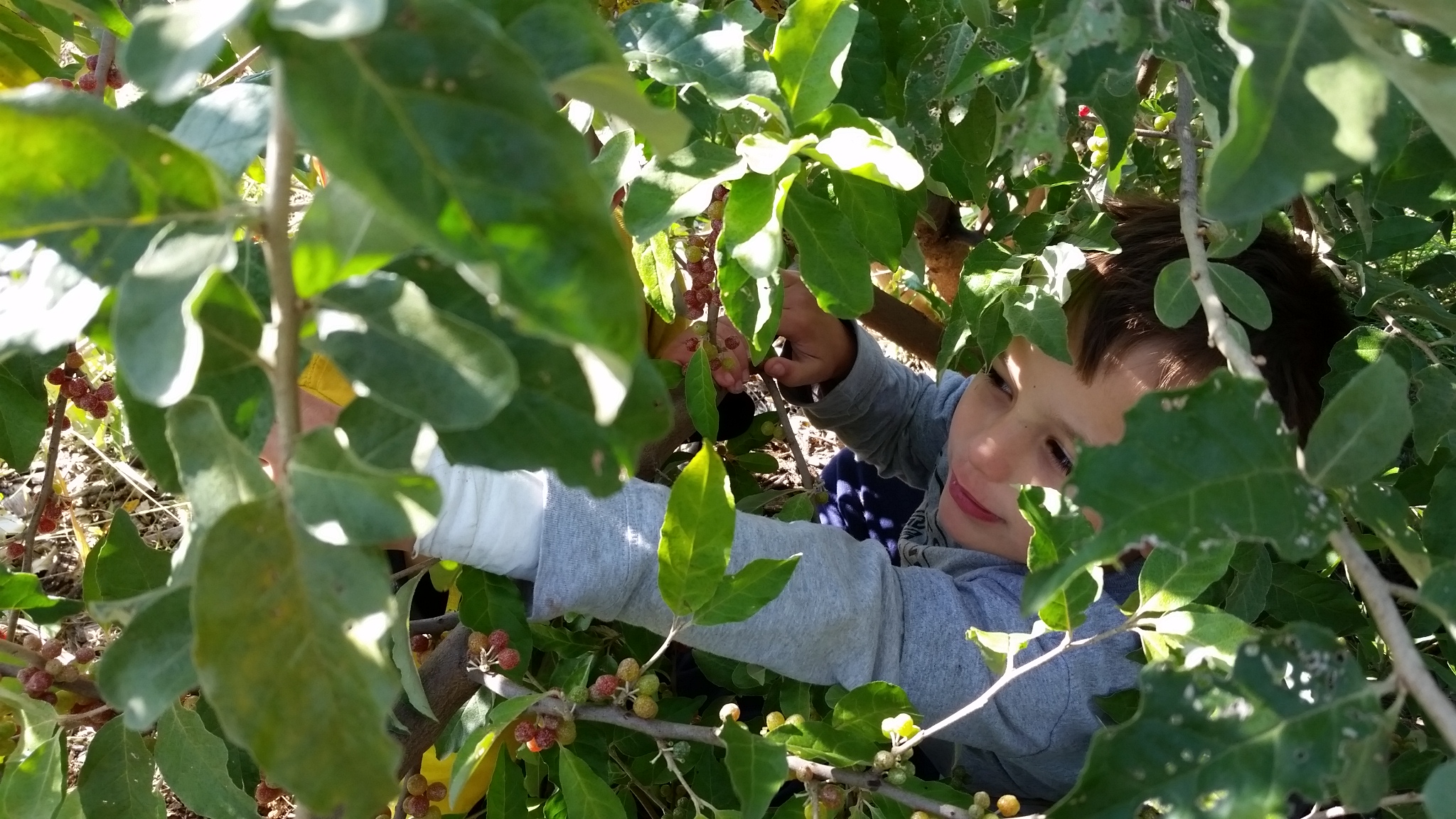
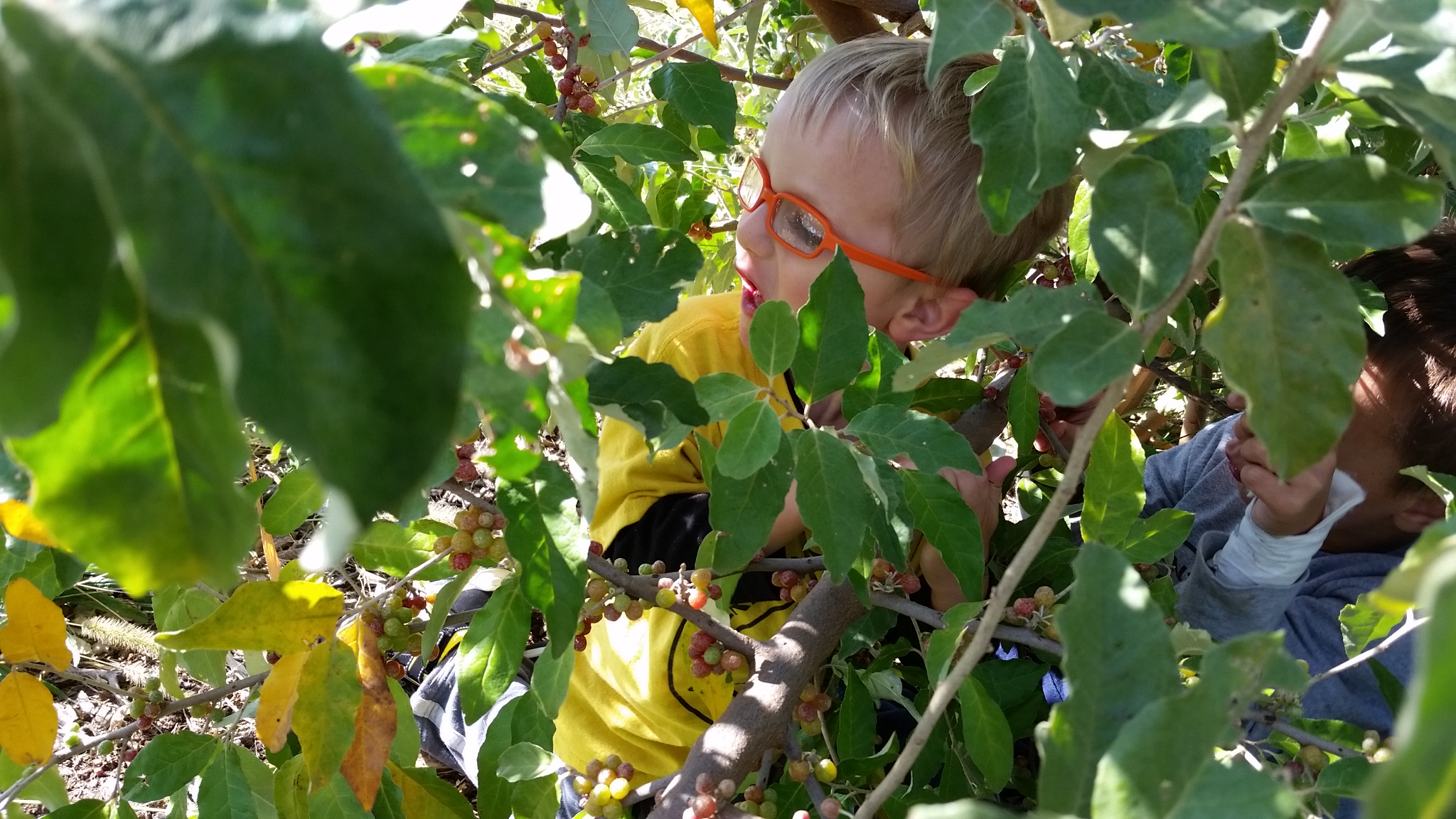
We were rewarded. Our autumn olive had red and pink berries that were sweeter and slightly bigger than last year’s crop.

wp-1477253723875.jpg

They were only on one side of the shrub though. The other side is all new growth thanks to the ice storm that split the plant in two last year. I’m just happy that it grew back instead of dying.

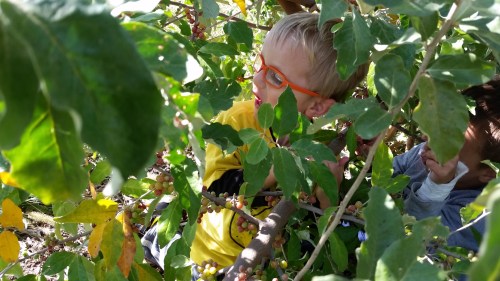
The boys burrowed in and refused to leave until they picked and ate all of the ‘delicious berries’.

wp-1477253724215.jpg wp-1477253724243.jpg

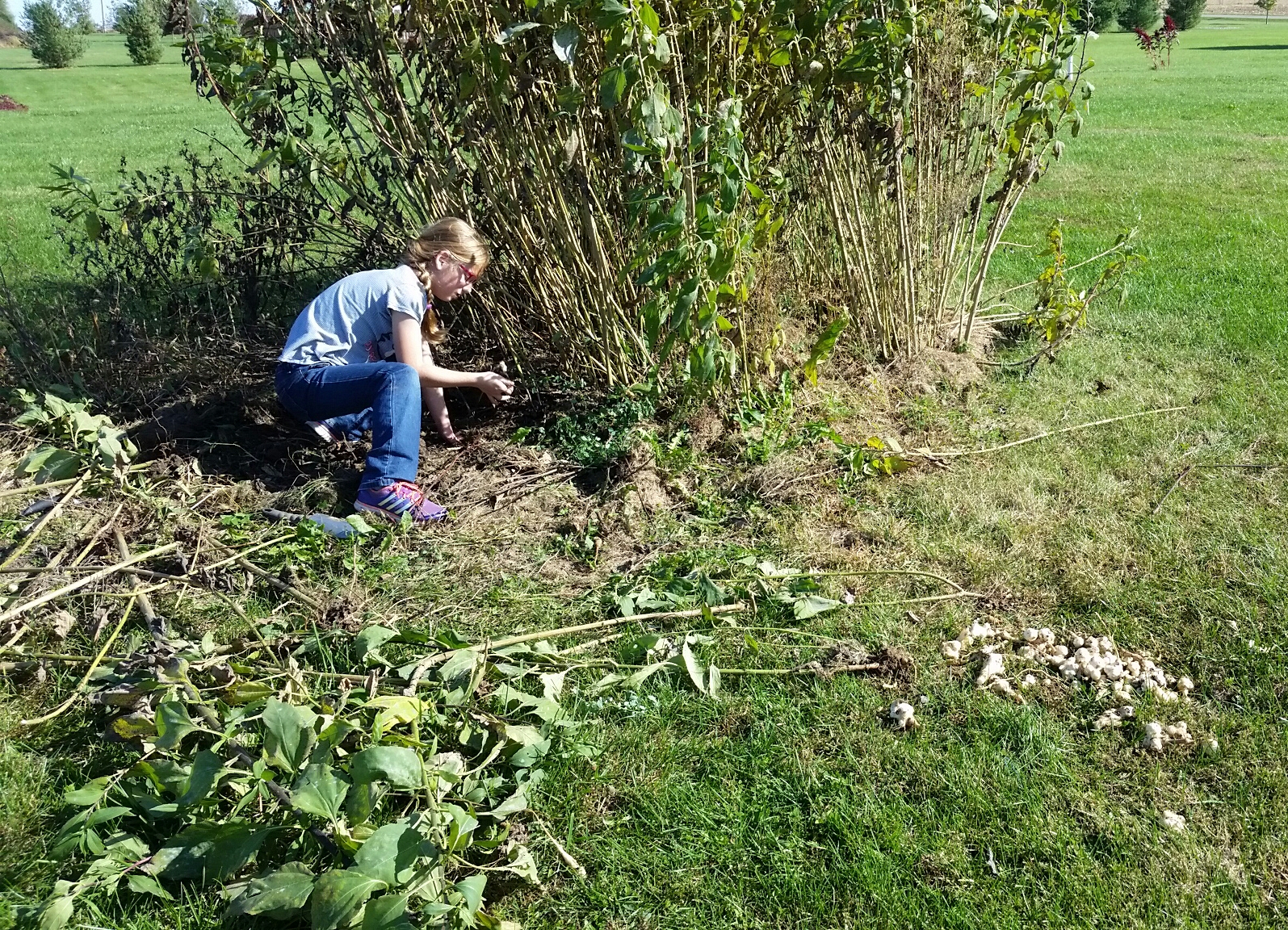
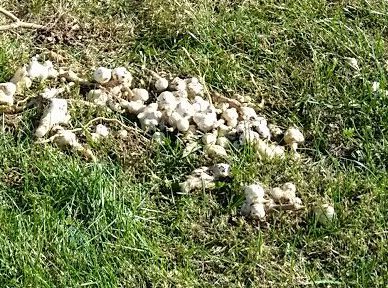
Next, we harvested ‘a few’ Jerusalem artichokes.

My niece and I spent an hour or so digging them up, but we barely made a dent.

wp-1477253724439.jpg

There are so many still in the ground and I don’t know what I am going to do with all of them.

I froze around half of what we collected, but freezing them changes the consistency. They’ll be mushy so I’ll have to mash the frozen ones in with potatoes and puree them into soups.

They can be stored in the refrigerator for up to 3 weeks so I’ll be sharing them with friends and family.

I’m not too worried about how far they’ve spread. The yellow flowers are beautiful and the tall green stems lovely.

Plus, we do have several acres for them to spread and pop up and we may be able to sell some of them next year.

wp-1477253724439.jpg

In all, we’ve had a successful fall harvest. Now on to planting garlic before the ground freezes.

Some kale right here
Some berries there
Artichokes are everywhere

Sprouts all around
More than a pound
I’ll roast ’em ’til they’re crisp and brown

Fall veggies grow
Until there’s snow
And bitter winds howl loud and blow

The Alarm Cluck

Ray and I were sleeping soundly when the first alarm went off.

“Co-co-coroo!”

It was 5am.

On a Saturday.

The sun was nowhere in sight. The sky was dark, dark, dark.

By the time the sun finally broke the horizon, Pecky had been crowing for an hour…maybe more…every 3-5 minutes.

“Co-co-coroo!”

wp-1474856728081.jpg

Yet, he doesn’t just crow at daybreak.

He crows when a car pulls in the driveway.

He crows when the Schwan’s man gets out of his truck.

He crows when we walk out with food and water, when we open the door and whenever he feels like it.

He’s territorial, protective and…maybe a little vain.

“Co-co-co-roo! Look what I can do!”

Now, apparently, he feels like crowing at 5am. On a Saturday.

Why does he do this?

Because there’s a change in the environment.

Because his internal clock is finally ticking.

Because he’s announcing to the homestead that he is here…just in case we forgot.

So when we want to get up early, we leave the door to the coop open. He’s able to strut down the ramp and wake us up.

But, when we want to sleep in, we shut the door at night.

He’s probably still crowing, but it’s muffled.

And…as soon as we open the door in the morning…he’s out and crowing his little chicken heart out.

“Cockadoodledoo!”
Look what I can do!
Through the night and day
I have much to say