Category Archives: Permaculture

(e)Xtraordinary

Today, it’s cloudy, cold and rainy. Yet…even in this dull gray weather, I can see that everything is turning green.

The trees.

The plants.

The weeds.

Dandelions carpet the ground and bees buzz all around.

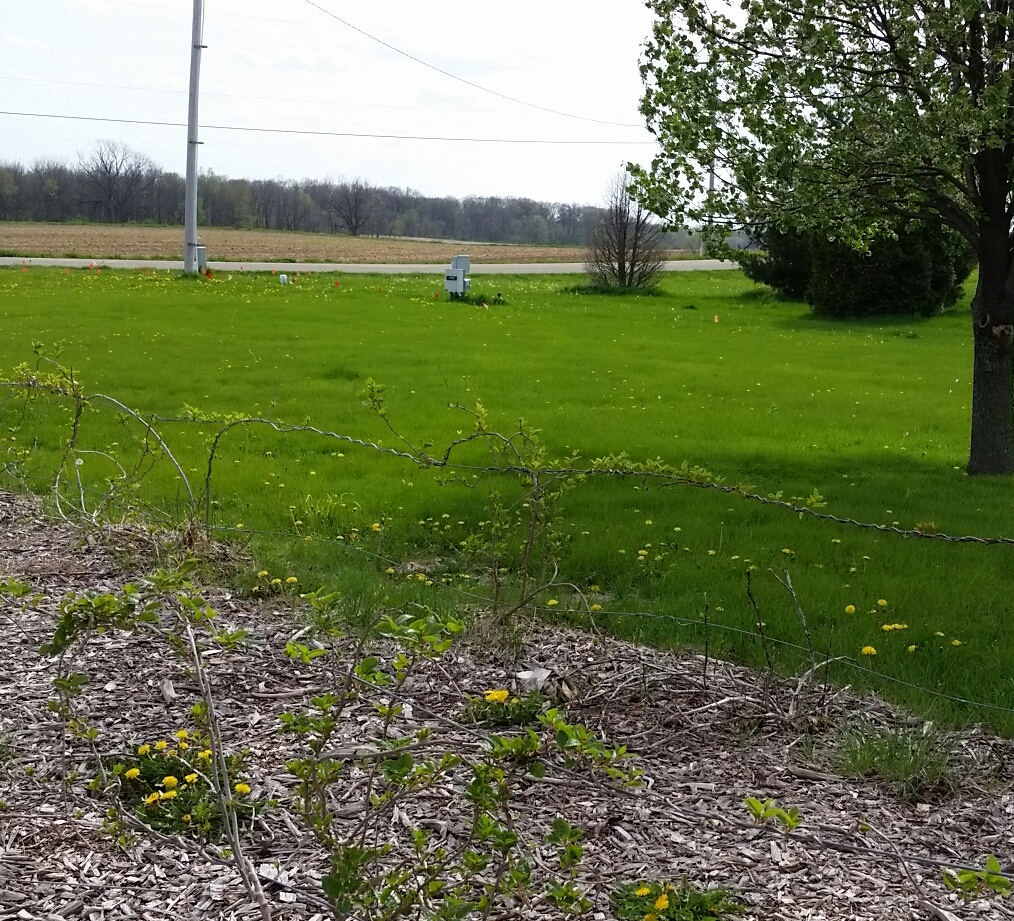
In the vineyard, the kiwi, grapes and hops are leafing out.
20160424_154806-1.jpg

Kiwi vines

20160424_154833.jpg

Grapes

The mint is starting to take over.

20160412_134930.jpg

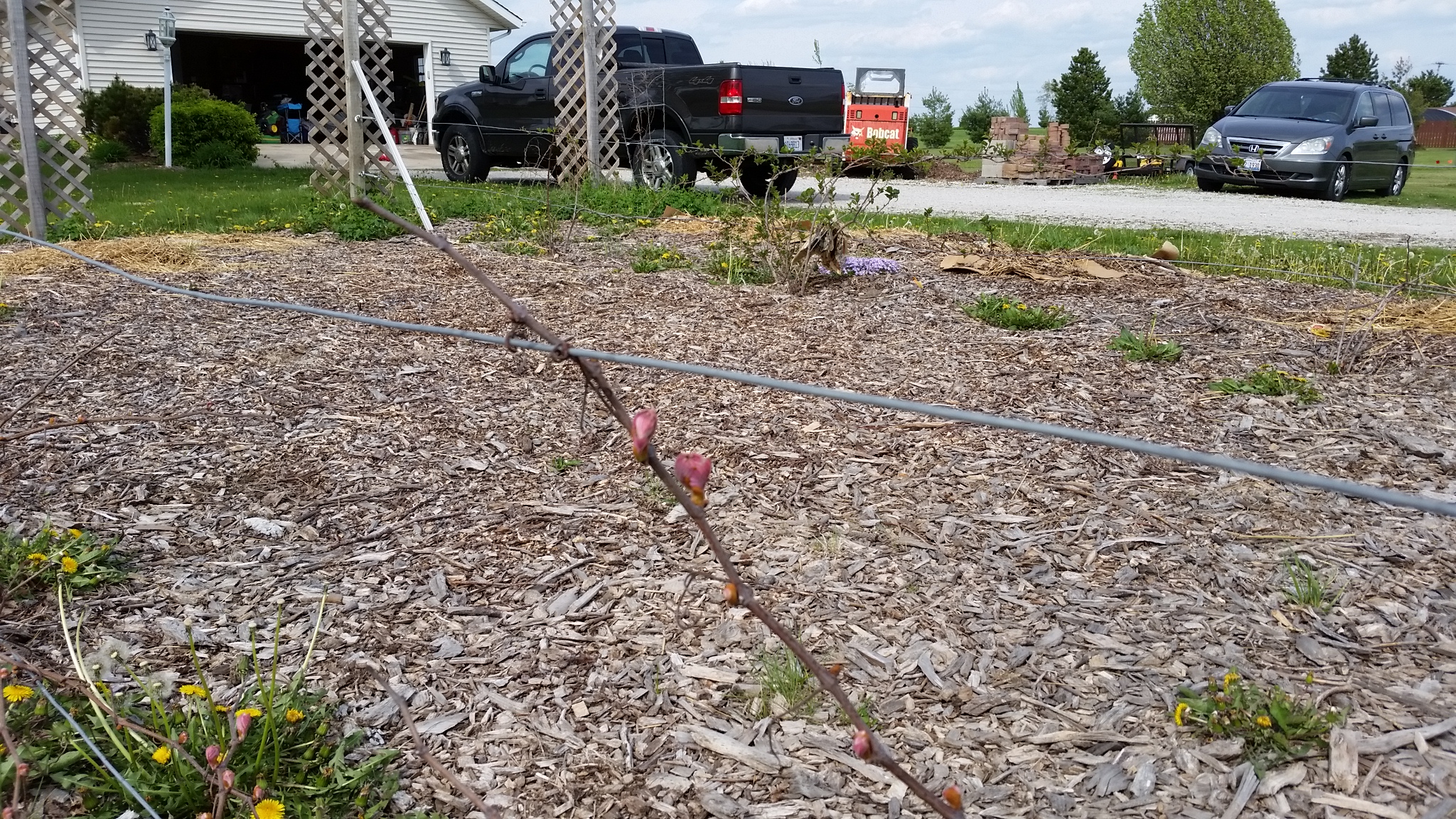
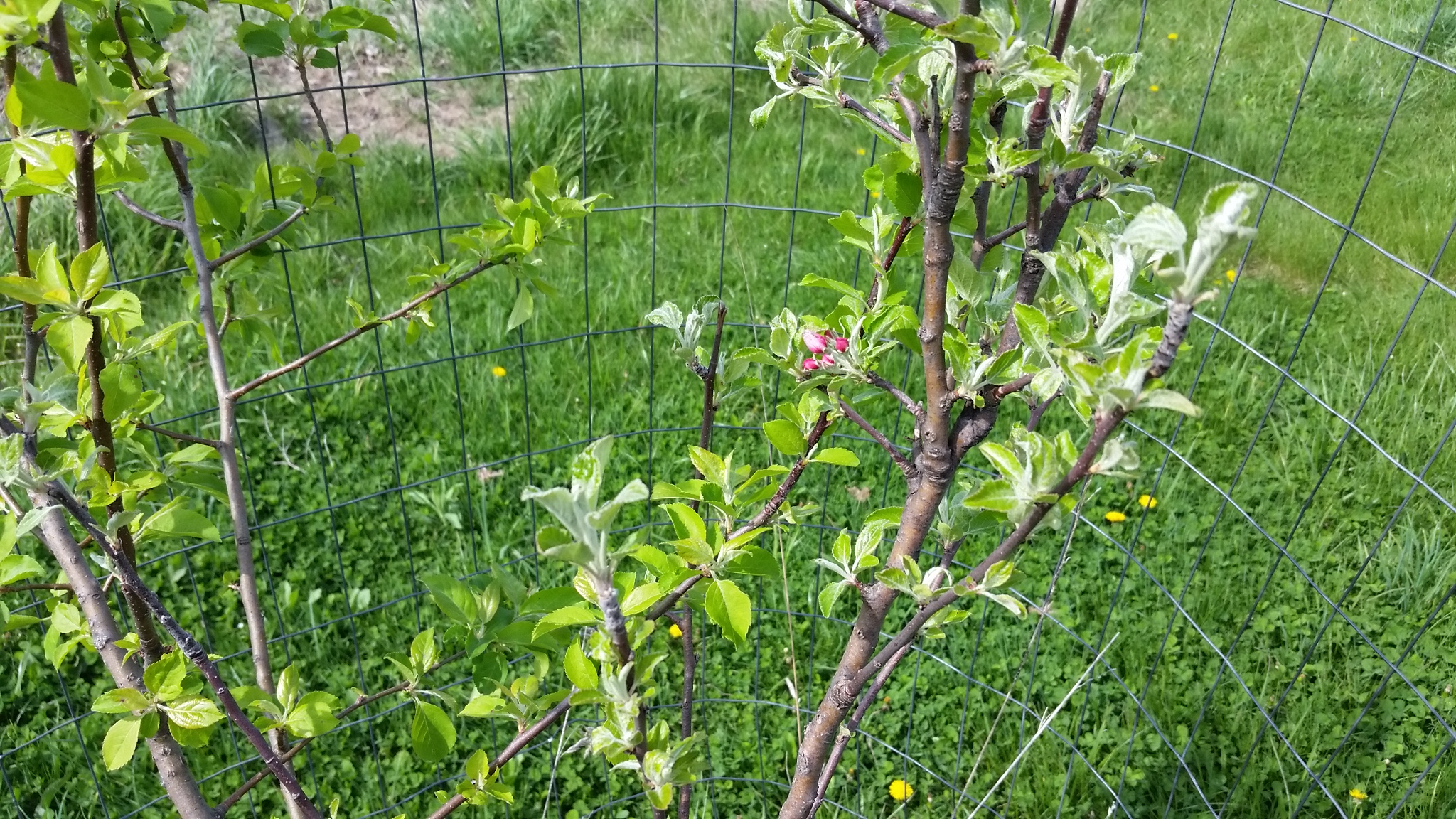
The very first apple tree we planted has blossoms. Gorgeous pink blossoms.
20160424_151131.jpg

The aronias are peppered with tiny white buds.

20160424_155019-1.jpg

The thornless blackberries are leafy and a rogue seaberry plant has popped up underneath one of them.

I did not know that seaberries suckered. We only planted these two years ago and already the root system has spread and new plants have popped up.

I discovered this one last year and another one this year. They aren’t small either.

The aronia’s are doing the same thing.
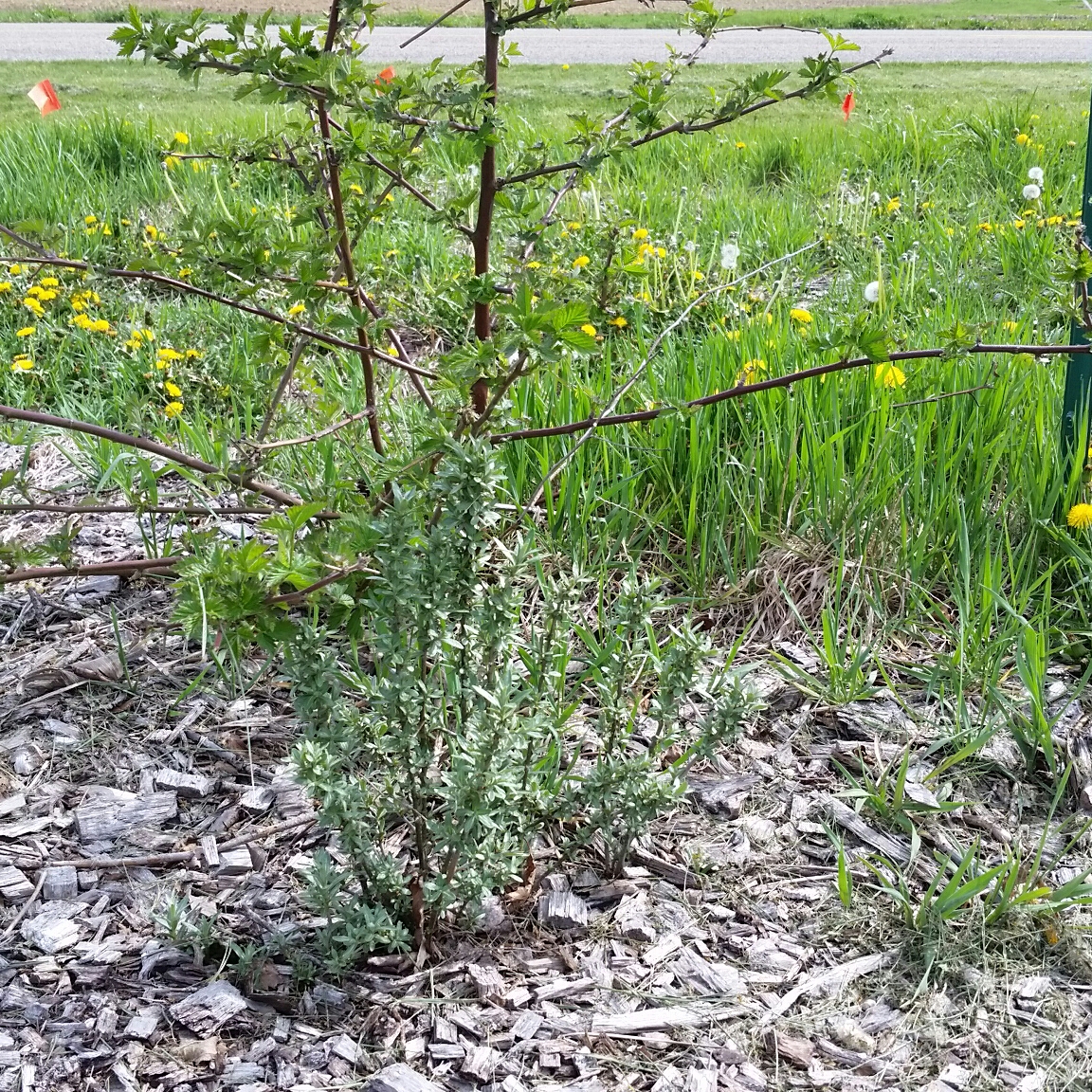
20160424_155053-1.jpg

I checked on the burning bush we planted three years ago and noticed that tiger lilies we transplanted last year are popping up…all over the place.
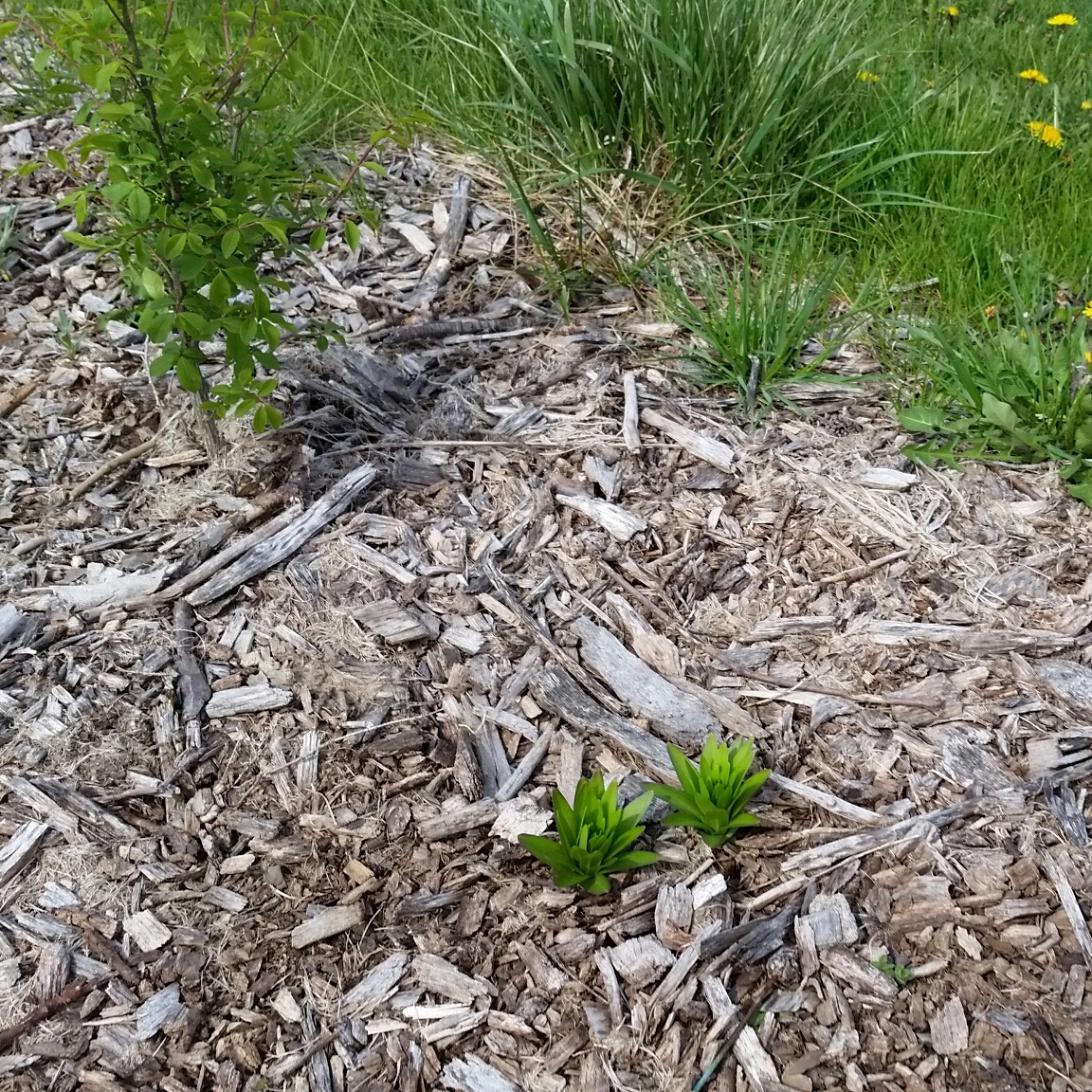
20160424_154928-1.jpg

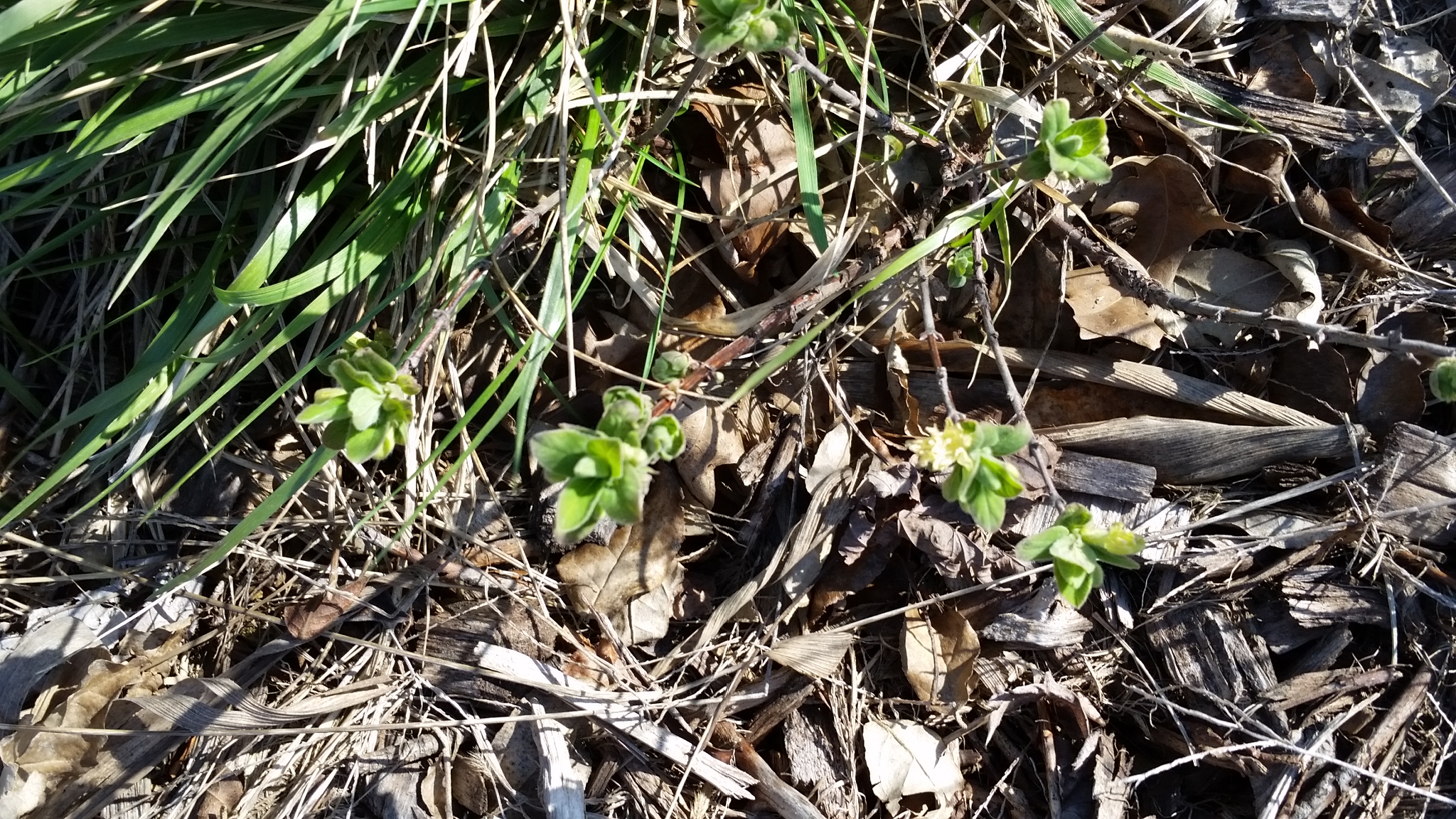
Our honeyberries have blossoms. I cannot wait to taste these. Some people say they taste like a blueberry/raspberry cross. Others say they have a kiwi flavor and still others a grape flavor.

20160424_155133-1.jpg

Our strawberry patch is ridiculous. They’ve spread and completely taken over the area under the rose bushes.
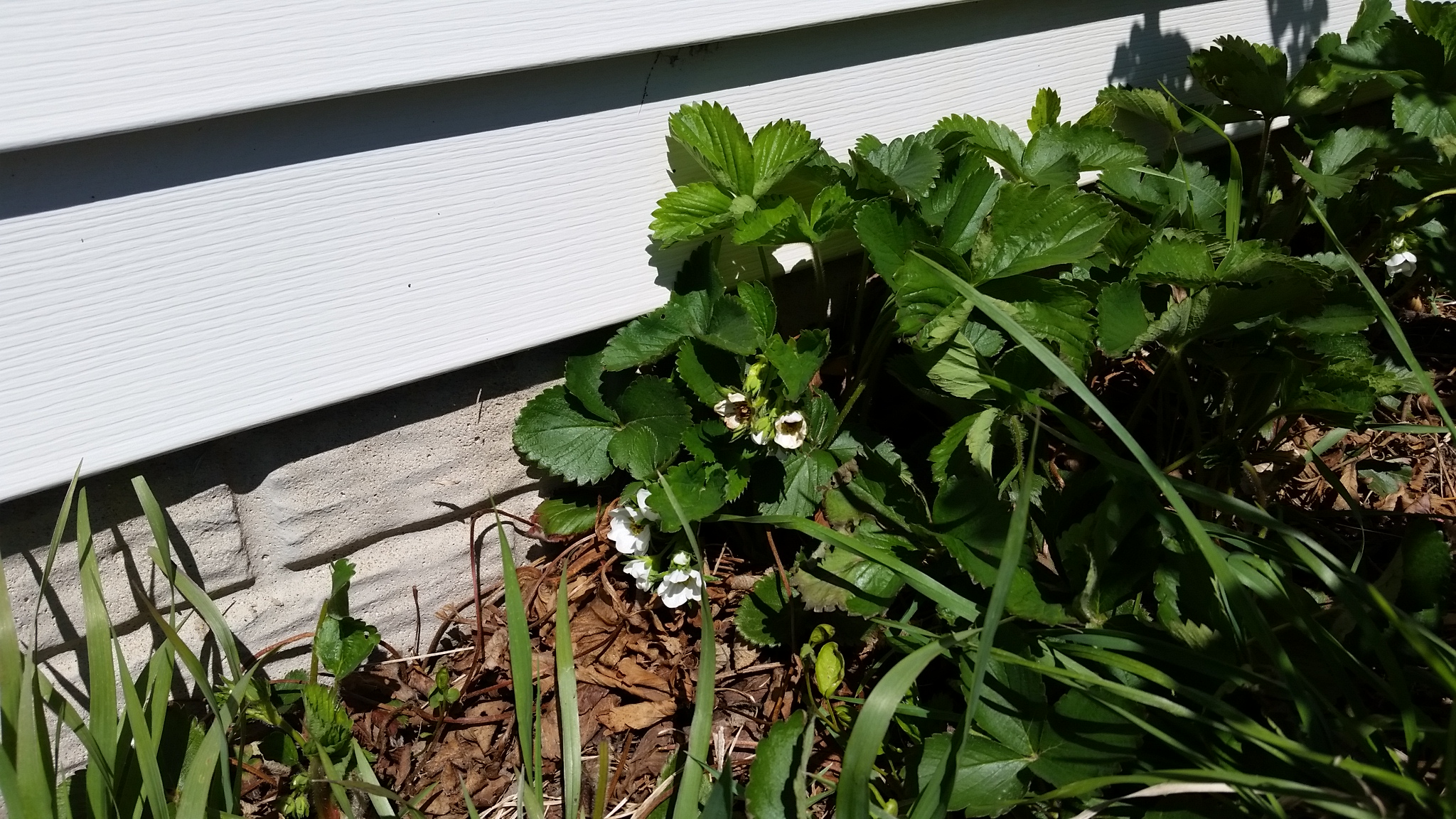
20160412_135121.jpg

I’m a little worried about one of the rose bushes. While two are booming and blooming, one has several empty branches and the leaves, rather than being a bright green, are a sad greenish yellow.

I am going to try fertilizing this one and cutting out the empty branches. It could be that it is being flooded. It’s right by a leaky spicket.
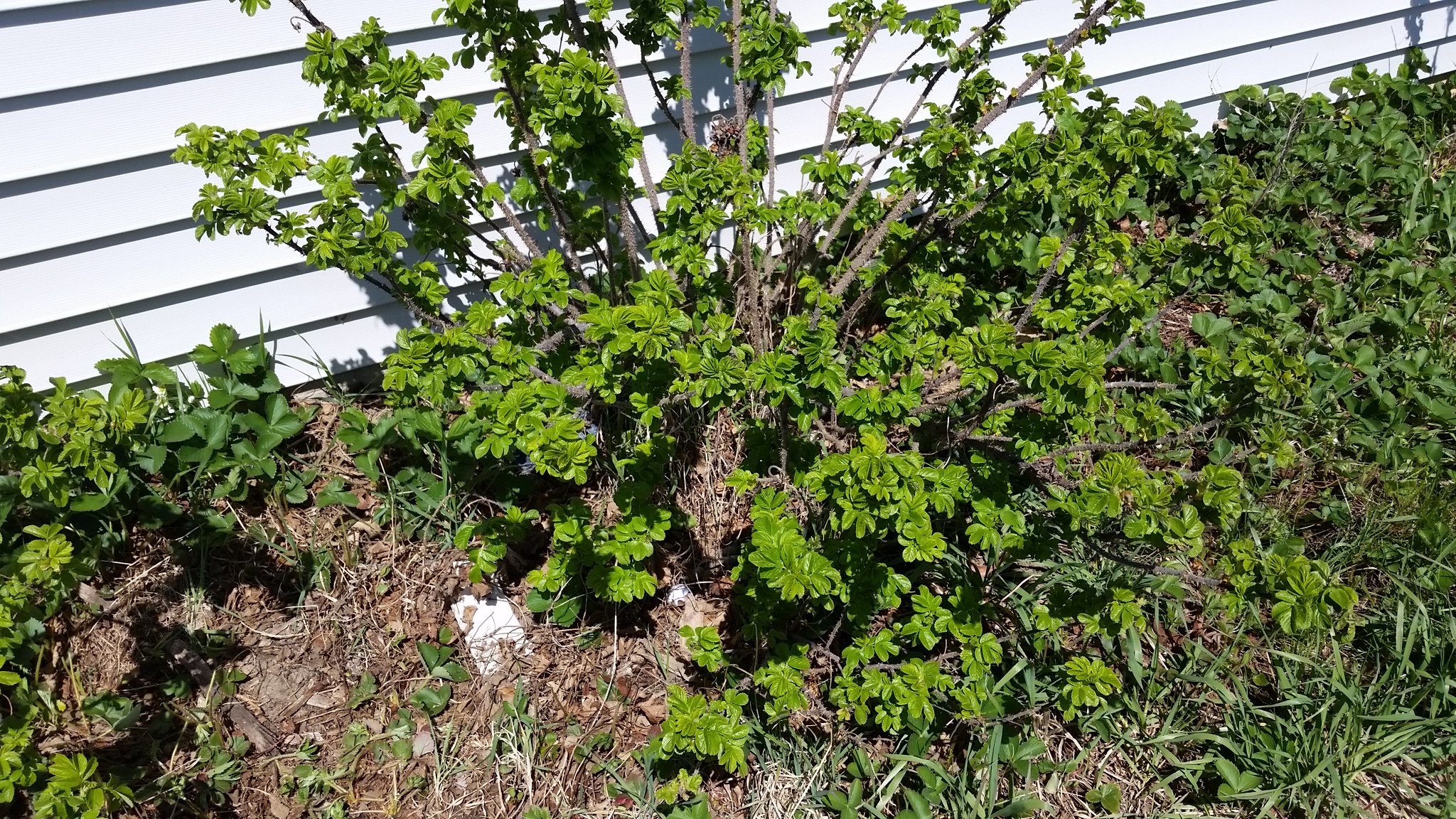
20160412_135139.jpg

Comfrey is everywhere in the swales.

Comfrey is a dynamic accumulator…in other words it’s a miner. The roots go deep and mine nutrients from the soil. The nutrients make their way up through the roots and leaves.

The nutrients in the soil increase by just having this miracle plant in the ground. We plan to dig up some of these, split them and transplant them around our newly planted trees.

20160428_075858.jpg

Every single cherry tree we planted a few weeks ago has leaves.

Every. Single. One.

20160424_134453.jpg

And finally, our little chicks have grown into pullets…or teenagers.

20160425_183107.jpg 20160425_183156.jpg

Yep, quite a bit is booming and blooming on our homestead.

I take before, midway and after pictures every season and the transformation from dull grey to extraordinary green never ceases to amaze and impress me.

From plain, dull grey-brown
To vibrant and beautiful
Nature works wonders

Underneath

On top, the soil looks like a dry, cracked and dusty gray stone.

But underneath...roots tangle, worms slither and grubs battle. Underneath a whole world erupts, struggles and thrives.

Underneath. Back stage. Behind the curtain.

It’s where the work starts and where the foundation must be built strong.

20160424_150209.jpg

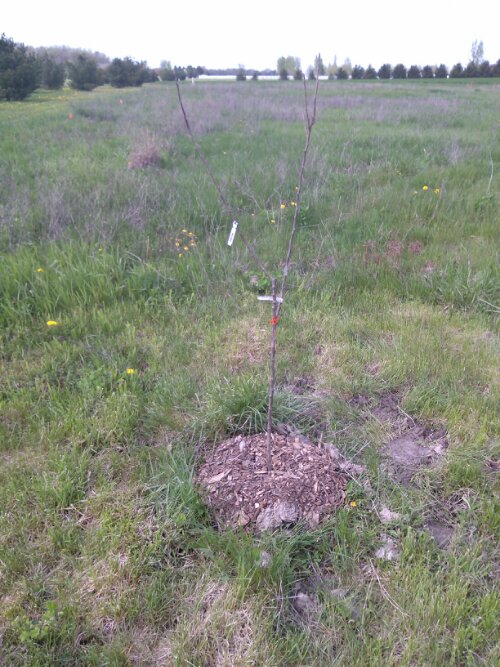
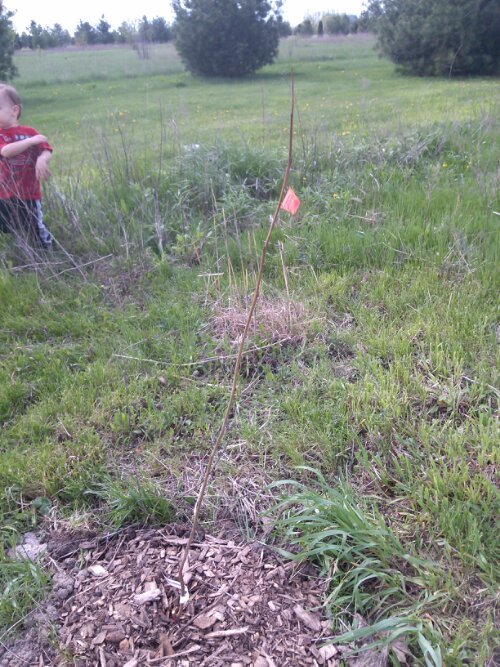
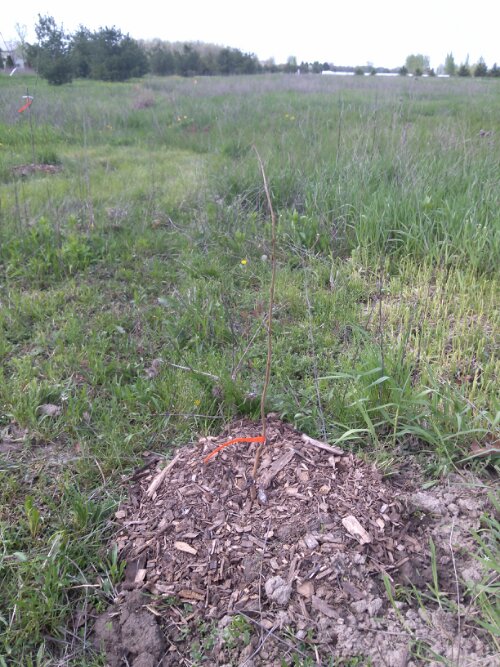
When we planted trees a few weeks ago, they all looked like a brown sticks jutting out of the ground.

We planted them in good, well-drained soil.

We mulched and we watered and we mulched some more.

Then we left them.

For days and days, nothing happened…above ground that is.

But now leaves are budding.

Underneath, the roots were making friends and allies and were hard at work getting those leaves to bud.

20160424_134453.jpg

The roots are fully engaged and strong.

There will be small skirmishes with Japanese beetles and aphids or deer or some other pesky nuisance, but the roots are primed for the tree to succeed.

There is no turning back now.

20160424_150213.jpg

A good foundation
A place that it all begins
The root of it all

Seeing the Future

Sometimes I think I can see the future.

When I sow a seed, I can see it grow into a beautiful plant.

When I collect and egg, I can see it on a plate with bacon and toast.

When I plant a tree, I can see it heavy with fruit.

20160403_155937.jpg

Sometimes I am disappointed when it doesn’t work out the way I see it.

When that seed doesn’t grow, I feel sad.

When that egg breaks on the floor, I feel glum.

When that tree never fruits, I feel grieved.

20160419_110326.jpg

But sometimes...sometimes the future surprises me.

When that seed sprouts into a plant, larger and more beautiful than I had imagined, I’m delighted.

When that egg turns out to have a double, or even a triple yolk, I’m excited.

When that tree shows those first white buds, a sign of fruit to come, I’m elated.

20160403_144626.jpg

Yes, sometimes I think I can see the future…but most times, I know that what I see is nothing as wonderful as what it will be.

20160415_164322-1.jpg

Behold the wonder
Gaze at the beauty of life
Marvel at the sight

Quite Frustrating

This weekend, I opened up my winter sown seeds and discovered…not much.

The cabbage and broccoli were puny, the tomatoes and peppers non-existent and the herbs barely sprouted.

20160419_110315.jpg

Cabbage and broccoli…sage on the left.

20160419_110326.jpg

Non-existent tomatoes and peppers.

I was sad and quite frustrated.

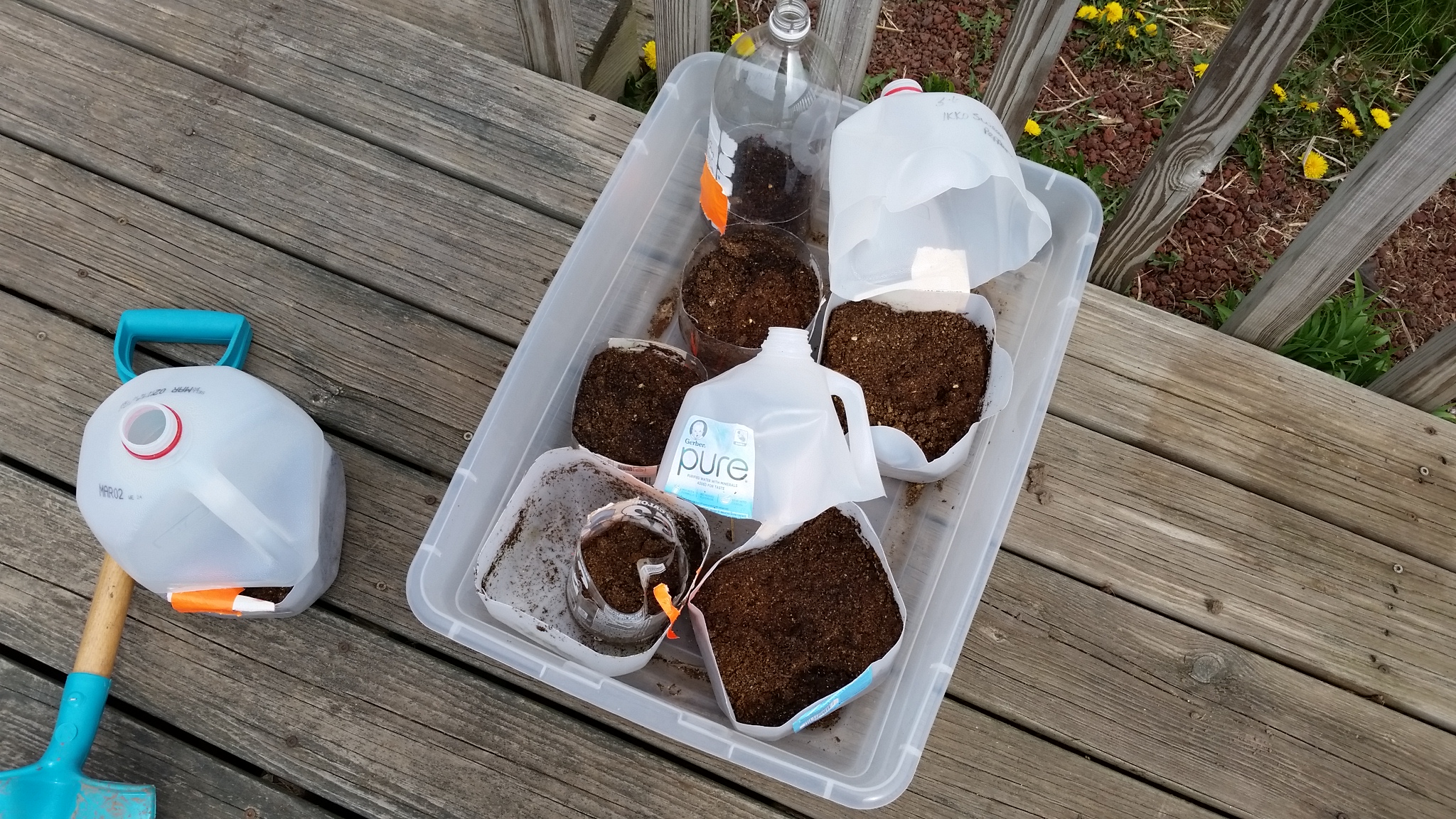
I spent quite a bit of time making my mini green houses, drilling my holes and planting my seeds. So many blogs and fellow gardeners have had such success with this method.

What did I do wrong?

Did I take the lids off too soon?

I don’t think so. I waited until early April to remove the lids and we did not have another frost or near frost after that.

Did the soil get too wet?

I think this may have been part of the issue and a big reason why many of the seeds didn’t even sprout. The greenish moss/mold looking stuff I found may just be algae, but it is a sign that the soil is getting too wet and the seeds are drowning. It may be that I didn’t drill big enough drainage holes.

Did I use the wrong containers?

Possibly. The seeds that did sprout were in clear 2-liter bottles and milk jugs that were more transparent. The clear containers allowed more sunlight to penetrate, and worked more like an actual greenhouse.

Did I let the soil get too dry?

Should I have opened the tops on those really warm days?

Were the seeds too old, affecting the germination rate?

In all my research, these are a few common mistakes, but most of them happen to the sprouted seedlings and do not affect the germination.

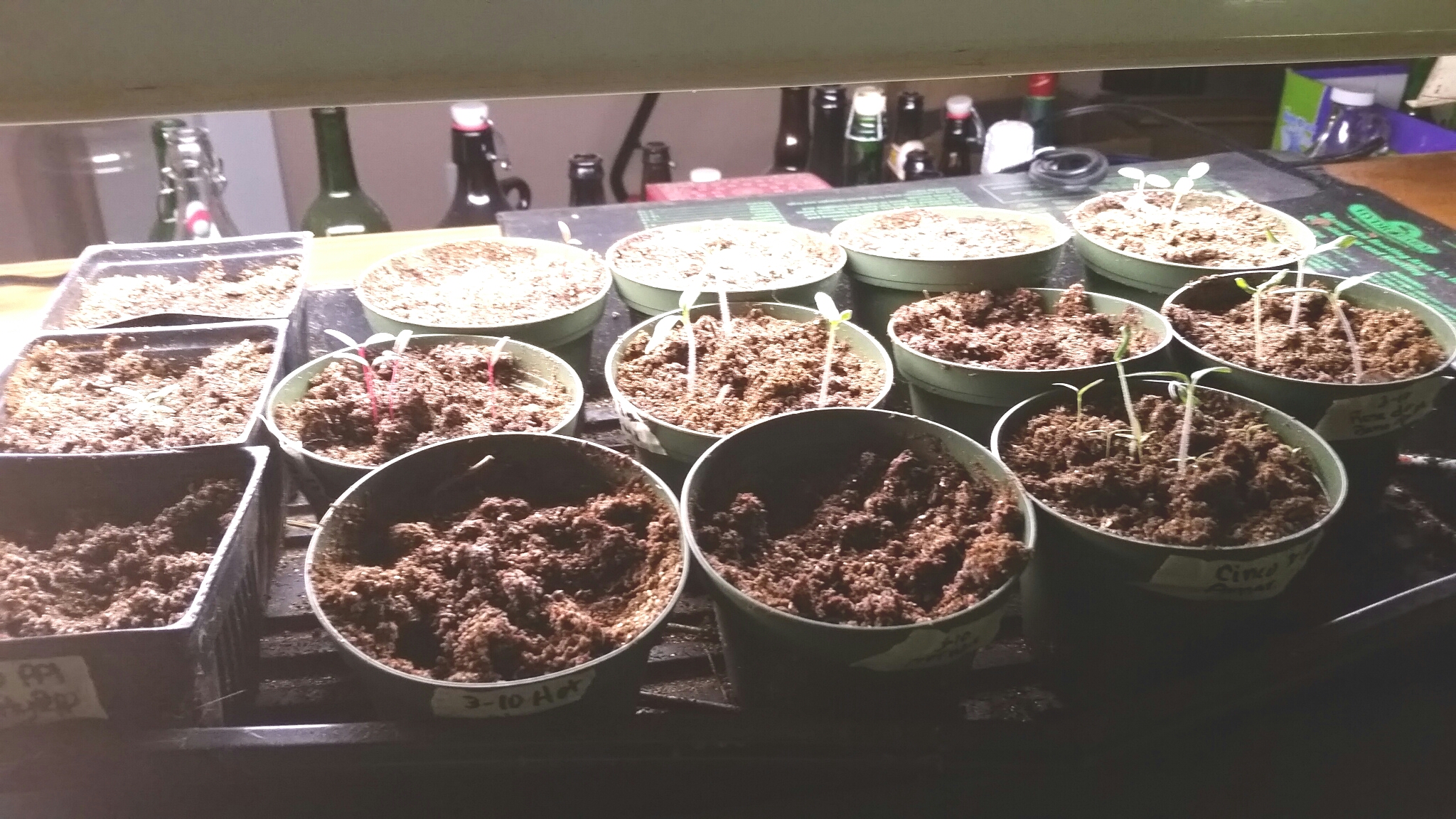
Luckily, this was an experiment and I did not rely on this method for starting ALL my seeds. I started more tomatoes and peppers under grow lights in the basement.

20160419_110309.jpg

Even though I’m disappointed at the failure of this method, I’m not going to completely give up.

I’m going to try it again next year, but focus more on those cold-hardy annuals.

  • Broccoli
  • Cabbage
  • Brussels Sprouts
  • Lettuce
  • Kale

I’m going to drill bigger holes for drainage and make sure to take the tops off on really warm days.

I’m going to make sure to use seeds that have not “expired”.

And…I’m going to try another experiment.

Ray remembers seeing a sea of milk jug tops in his grandma’s garden in the winter, and I remember seeing the same in my babysitter’s garden when I was younger.

I didn’t really understand what she was doing, and I didn’t think to ask why.

Now I get it.

They were using mini greenhouses, similar to row covers and starting their seeds directly in the ground.

In winter.

I see lovage and chives already growing in my garden. Volunteers from last year.

20160419_110447.jpg

I see cilantro sprout, tomatoes take over and dill grow into a forest.

I see plants we let go to seed sprout up, stronger and more aggressive than the seedlings we start, baby and transplant.

I went back and re-read the post I wrote in January when I first learned about winter sowing. This passage struck me:

And why not? Just think of all the volunteers that sprout and grow, most of them ending up being stronger than the seeds I start.

They are outside, hibernating all Winter.

They aren’t watered and pampered…to death.

They wake up in the Spring and push through the soil and end up being stronger than the seeds I start in my basement.

It’s observing then interacting with Nature. It’s Permaculture.

I’ll save my mini greenhouses and give it another try next year, but this time…I’ll plant the seeds in the ground and cover them with the tops.

And why not?

I feel so very silly
That I failed to see
That sowing seeds in winter
Is done so easily

I’ll plant seeds in the fall
I’ll cover them with tops
I’ll look for volunteers
My perfect winter crops!

Lovely

Three years ago, we planted an apple tree and two mulberries on the Northwest side of our homestead.

We planted saplings. Leafless, scrawnyy saplings.

wpid-0506131555b.jpg

Two-variety apple – 2013

wpid-0506131555a.jpg

Illinois everbearing mulberry – 2013

wpid-0506131555.jpg

Dwarf mulberry – 2013

We had plans to turn that area into an orchard, but with only three trees it was dubbed “the fruit tree area”.

Not very clever.

Now, just a few short years later, the scraggly saplings have grown strong with aspirations to become full-grown trees.

wpid-20150525_183522.jpg

Two-variety apple – 2015

wpid-20150410_150307.jpg

Illinois everbearing mulberry 2016

wpid-20150525_183532.jpg

Weeping Mulberry – 2015

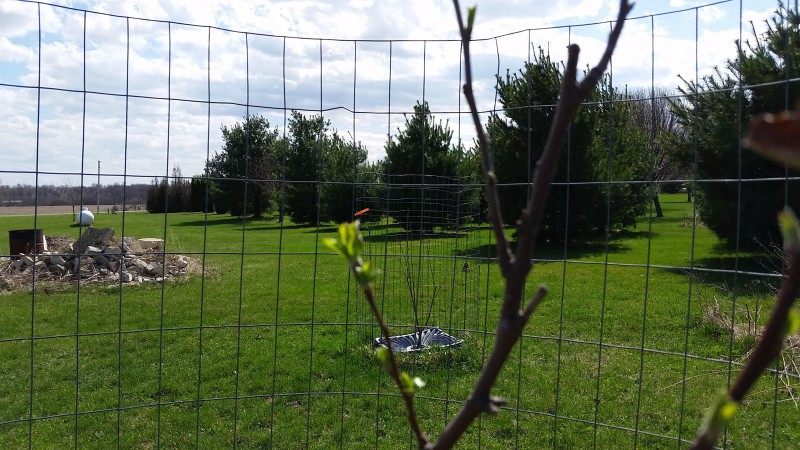
We watered them for the first season. We fertilized them a bit. But then, aside from caging them to give them a chance against the deer, we let them fend for themselves.

They’ve been through a lot these past 3 years.

They’ve bravely withstood being deer snacks and quickly rebounded from vicious Japanese beetles assaults.

I like to think that the phrase “what doesn’t kill us makes us stronger” can be applied to these three little tree-lings.

Last Saturday, we added more apple trees and a few cherry trees. Our “fruit tree area” has graduated to an orchard.

An orchard deserving its own sketch-up.

20160410_175922-1.jpg

An orchard full of 2′ saplings and three leafy tree wannabes, but still…an orchard.

Just wait a few years.

It will be lovely.

Mulberries and cherries
Apple trees…all kinds
An orchard green and merry
A lovely haven…mine

Fill ‘er Up!

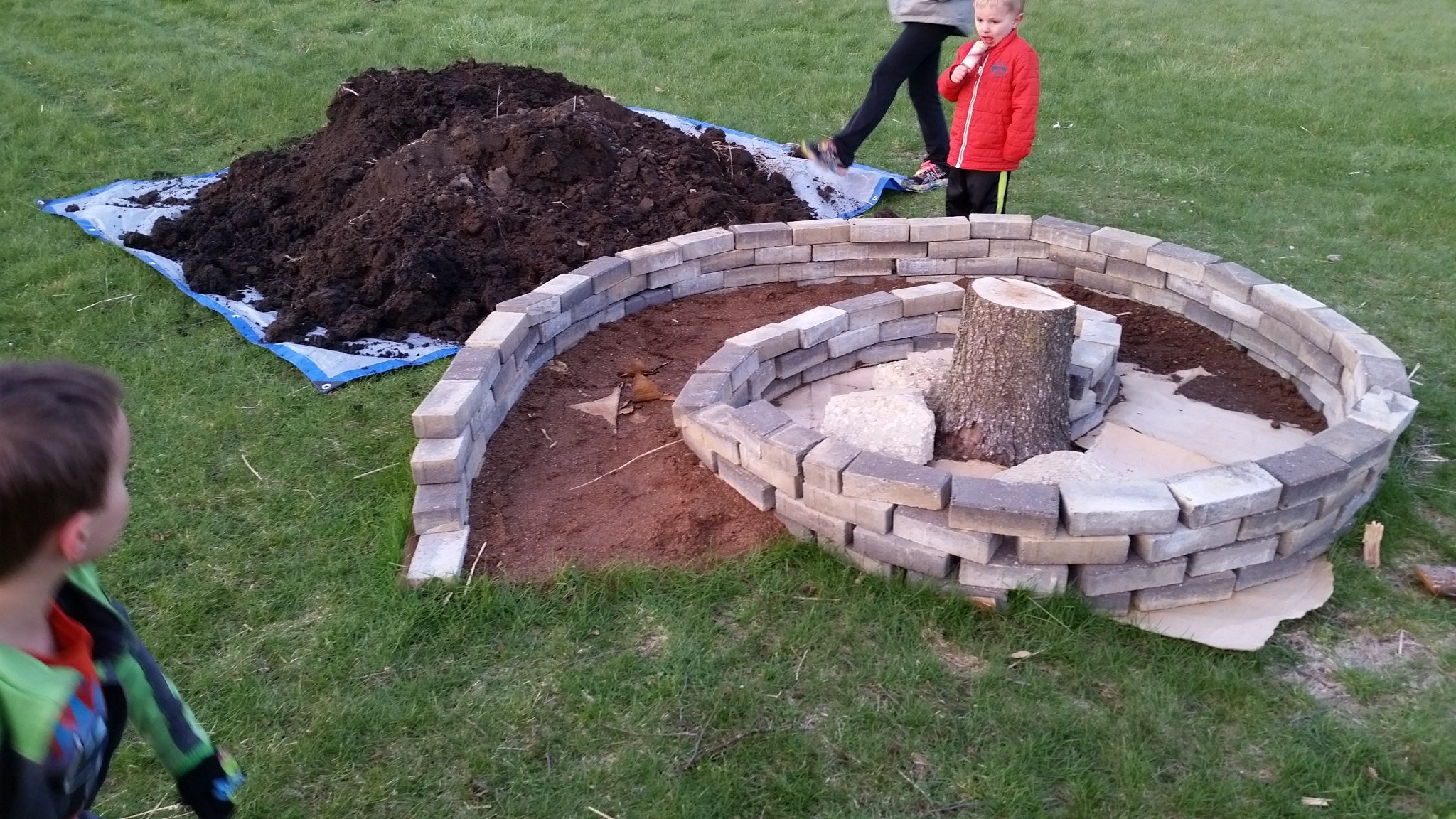
The medicinal herb spiral is built and filled.

All materials used for the construction were free.

Cardboard and newspaper for weed control, landscaping bricks from our neighbor and good, black, worm filled soil from our pasture.

The labor was free too.

20160229_152436.jpg

20160404_191358.jpg

The seeds that we will be planting were the only cost, and that was minimal…less than $15 for all.

  • Cilantro (saved from last year’s crop)
  • Sage
  • Oregano
  • Parsley
  • Lemongrass
  • Lavender
  • Chives
  • Lemon balm
  • Bee balm
  • Thyme
  • Rosemary
  • Chamomile

We’ll also throw nasturtium and marigolds in for pest control and maybe some lettuce for filler.

20160405_122218-1.jpg

Our neighbor has more bricks for us, so we’ll build this up a little bit more before we start planting. If possible, I’d like the top to be flush with the stump.

I’d also like to plant some sort of ground cover over the whole thing to help with unwanted weeds, but for this year, we will mulch with straw.

We’ll top the whole thing off with a planter or some sort of garden statue on the top of the stump.

Let the growing begin!

Herbs in the spiral
Tempting butterflies and bees
A fragrant garden

Eighty Trees

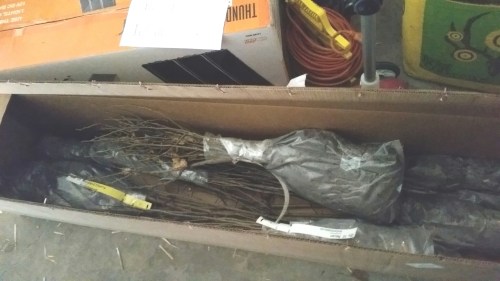
Eighty trees arrived yesterday.  Eighty. At $3.70 a tree it was a can’t-pass-this-up kind of deal.

After all, we need more trees to fill our swales, and what could be better than this  food forest in a box.?

2016-04-05-13.10.34.jpg.jpeg

Fruit trees, nut trees and ornamental beauties all nestled together, dormant and ready to be planted. Such variety!

  • Ten American Red Bud
  • Ten Antonovka Apple
  • Ten Cherry
  • Ten Chestnut
  • Ten Paw Paw
  • Ten Select Seedling Apples
  • Ten Persimmon
  • Ten Pecan

What’s that?

Ready to be planted you say?

Eighty holes needed?

Ah. There’s the rub.

Eighty trees arrived
All nestled in a heap
Eighty trees to plant
In holes dug 2-foot deep

Eighty trees? Oh my! I say
What made us get so many?
Eighty holes for eighty trees?
I’d say now we have plenty!

Oh, and they threw in a free magnolia too.

Cherry Blossoms

Everything on our homestead is blossoming, blooming and booming.

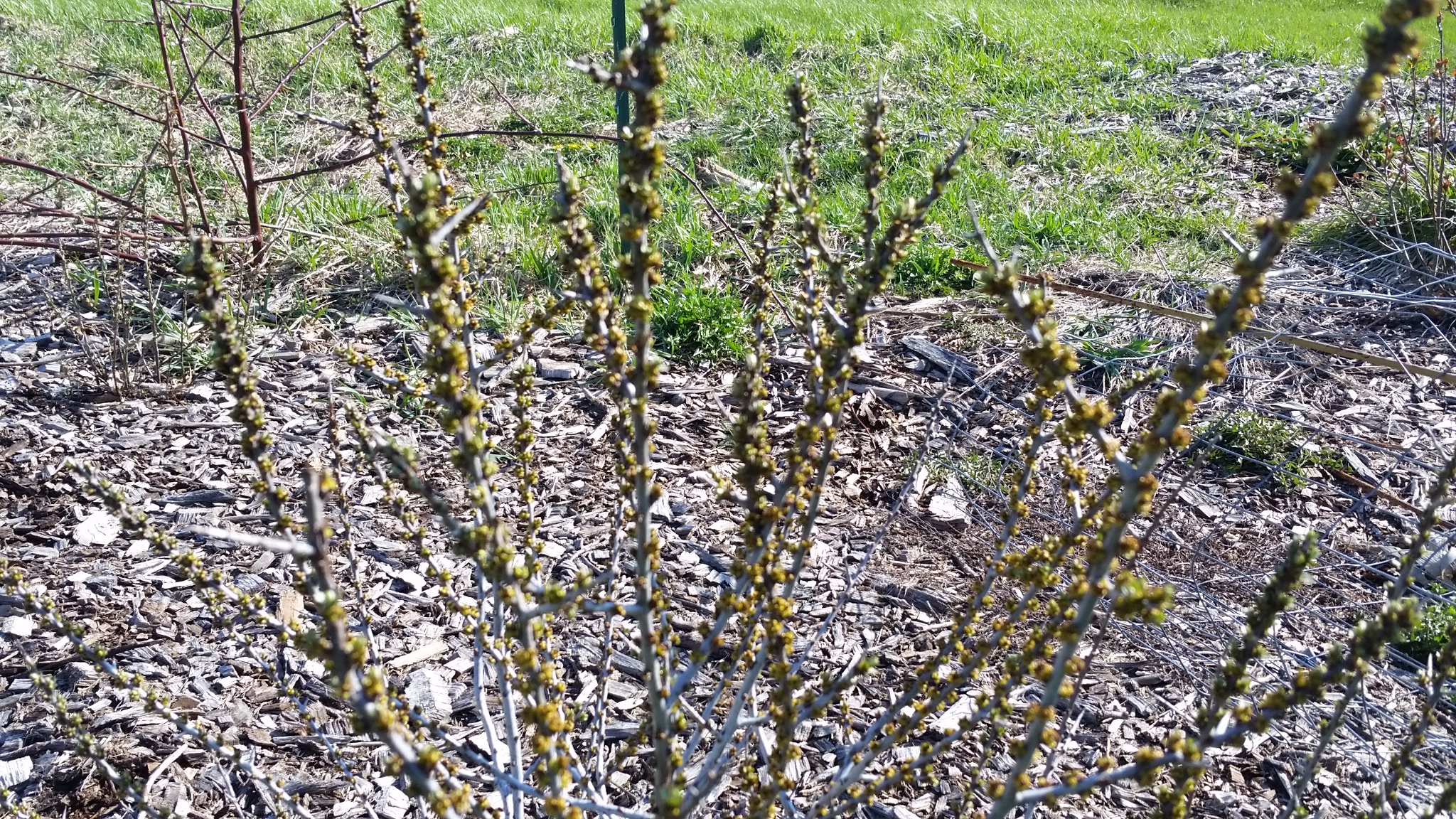
The sea berries are peppered with purplish buds.

20160403_161942.jpg

The aronia sports waxy green leaflets.

20160403_161603-1.jpg

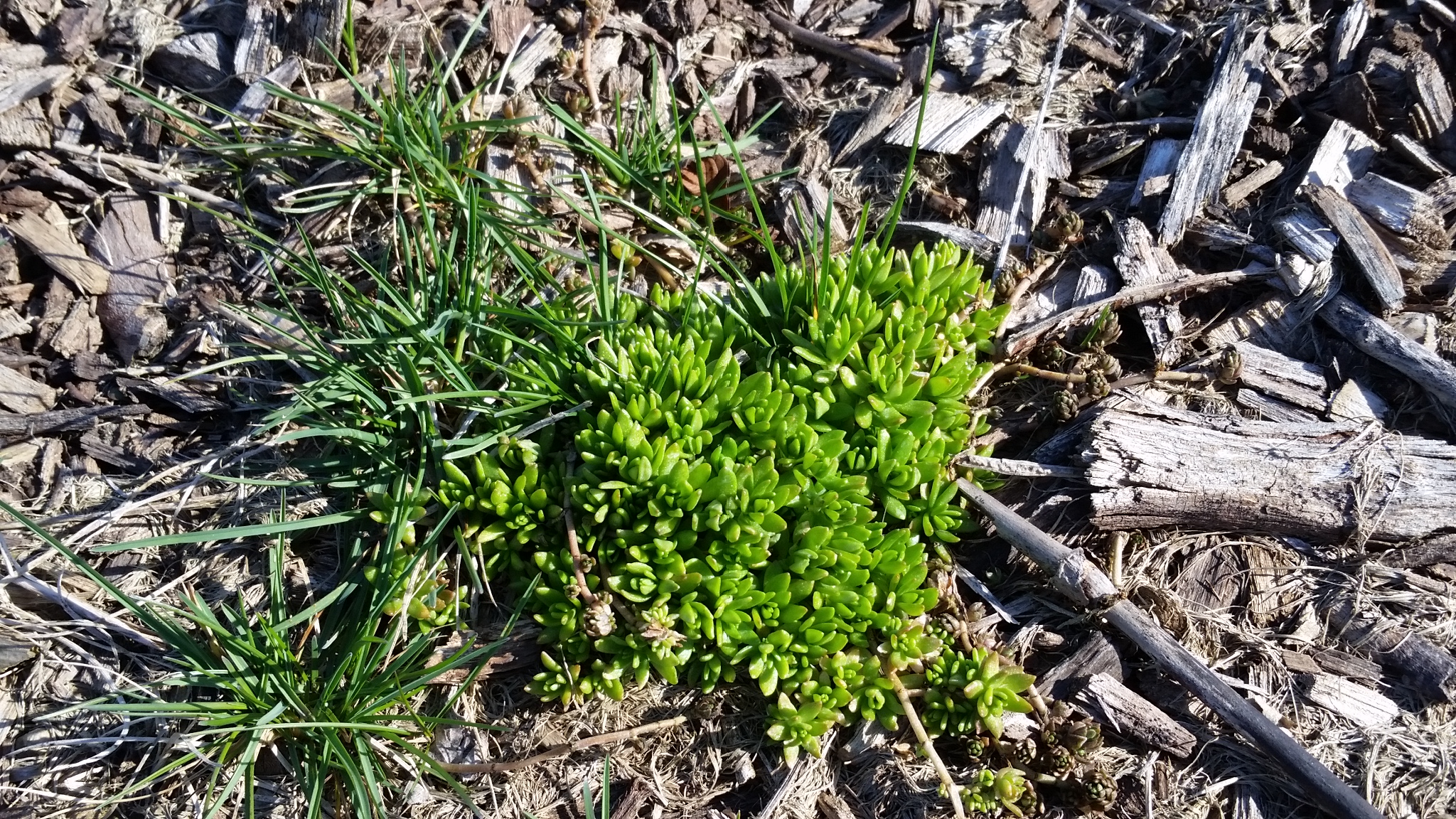
The ground cover we transplanted last year is invading the fedge.

20160403_161929.jpg

The honeyberries have dusty green sprouts.

20160403_161536.jpg

But the fuzzy white blossoms on the cherry trees are the most exciting.

20160403_144626.jpg

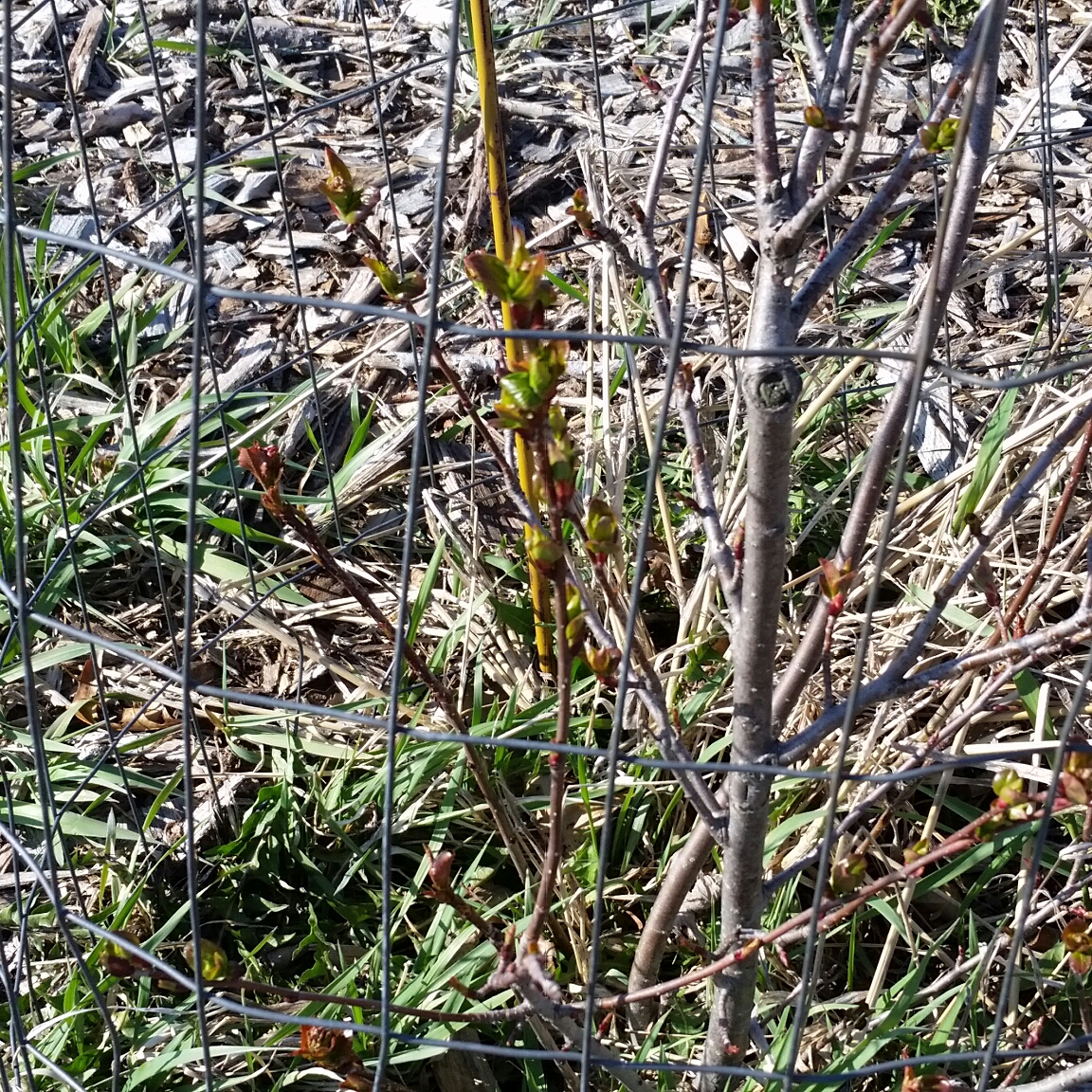
We planted several cherry varieties. The trees, or rather shrubs, that are blooming are called Nanking Cherry.

We have a couple of apple varieties, some oak trees, a few willows we transplanted and three cherry varieties: Nanking, sugar sweet and an unknown root stock.

The Nankings, so far, are the only ones blossoming.

White, fuzzy, gorgeous blossoms.

Most of these trees bear fruit in the 3rd or 4th year, but the Nankings are supposed to fruit sometime in the 1st, 2nd or 3rd year.

This is the 3rd summer.

This is the season.

This is it.

So while the boys and Charlie played in the pond, and while Ray cleaned out the chicken coop, I stood admiring these beautiful new buds hoping for sweet, juicy fruit in late July.

20160403_144703.jpg

Such pretty blossoms
Budding and growing so white
Cherries in July

Autumn Olive…Again

The Autumn olives had a rough go last year.

Wind, water and the unknown were not kind to them.

I was disappointed. Still am.

Yes, I know that ‘these things happen’ and ‘not every endeavor is a success’, but I still don’t have to like it. I just have to learn from it.

In January, I ordered two more autumn olives to replace the 2.5 we lost last year. The .5 is down but not yet out.

They came in the mail today along with a couple of rosemary pots and three grape vines.

20160331_134714-1.jpg

I’m not going to repeat past mistakes.

I’m not going to leave the tag on the trunk because it will strangle the poor thing as it grows.

I’m not going ignore early warning signs and react only when it is too late.

I’m going to be proactive and fertilize from the get-go.

I’m starting all over again…armed with some wisdom from past mistakes.

Invasive and strong
Grow tall dear autumn olive
Once again I try

Stronger

Volunteers are always stronger and more resilient than seeds started indoors…at least in my experience.

Borage and mint invade the garden with a vengeance every year. I work tirelessly to ‘relocate’ these pesky but useful plants to the swales.

Tomatoes pop up all over the kitchen garden.

Dill becomes a fragrant forest if we let it…and we usually do.

The garlic chives I planted our first season on the homestead has come back for the past three years. It’s the first to break through and is stronger, more fragrant and more aggressive every season.

Yet, we don’t use it much in cooking. I throw some in eggs every so often add a few sprigs to add flavor to sour cream, but I mostly forget it’s even there.

Then why did we plant chives?

The spiky blades send cabbage worms, aphids, Japanese beetles and slugs packing.

The fragrant shoots have beautiful purple flowers.

The gorgeous flowers attract bees and butterflies.

Chives are useful weapons and gentle friends.

Seedlings have more of a battle. Some will valiantly fight and win, but others will weakly give up and lose.

The survivors though, they will be stronger for their struggles.

Working, striving through the earth
Reaching, stretching to the sun
Spiky, lush and fragrant
Blowing softly in the breeze
Chives breaks through

20160325_1921100.jpg

Growing, struggling through the soil
Craving, yearning for some light
Spindly, poor and meager
Seedlings rise up

2016-03-23-13.45.59.jpg.jpeg