Category Archives: Permaculture

Pond Life

When Ray started to dig the “test pond” I didn’t show much interest.

Sure, one day it would be nice to have a pond, but I wasn’t mentally there yet. I wasn’t eager and excited to get it going like I was with the swales.

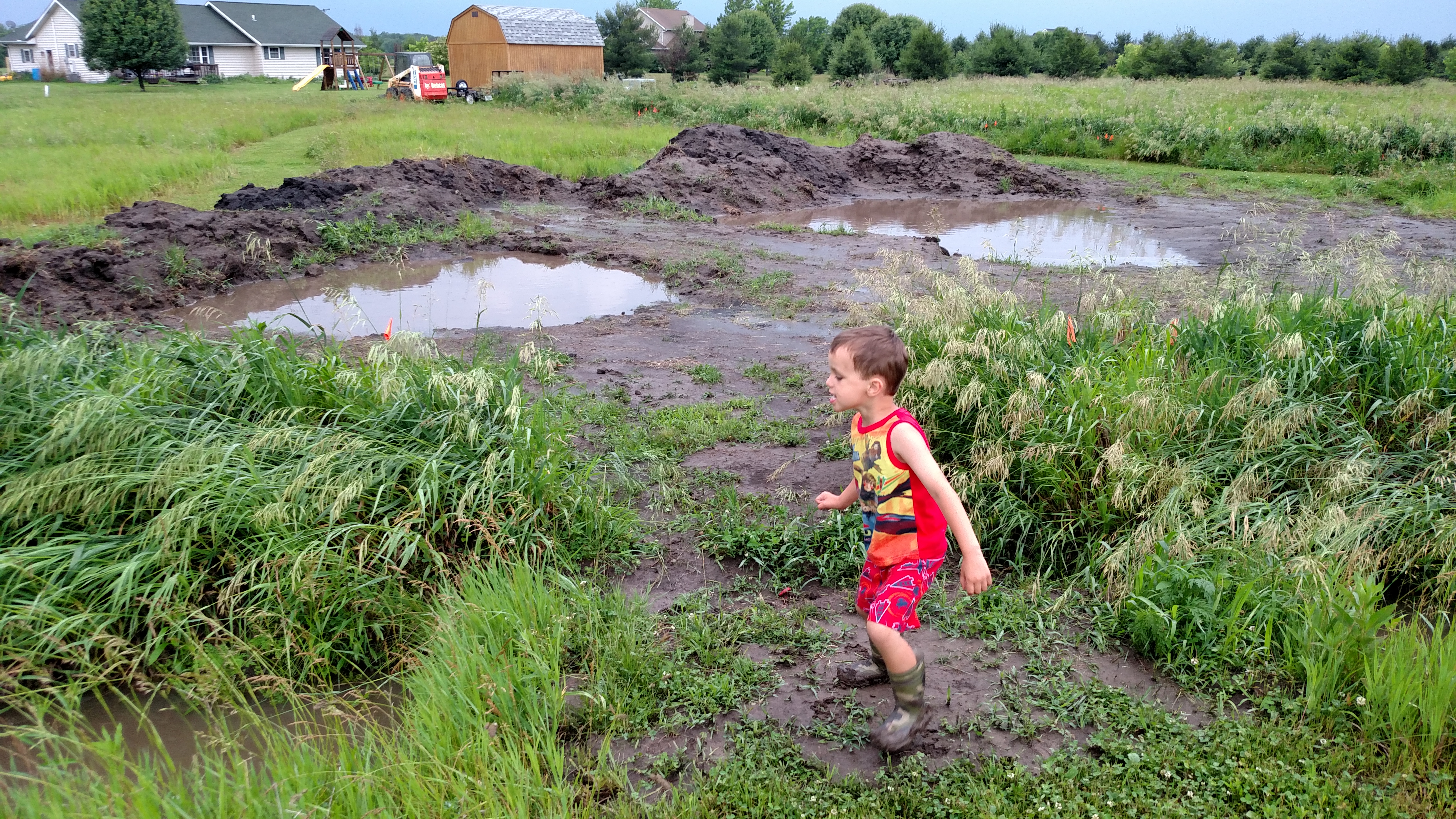
To me, it looked like a big hole…a fun place for the boys to play and get messy.

wpid-20150525_185642-1.jpg

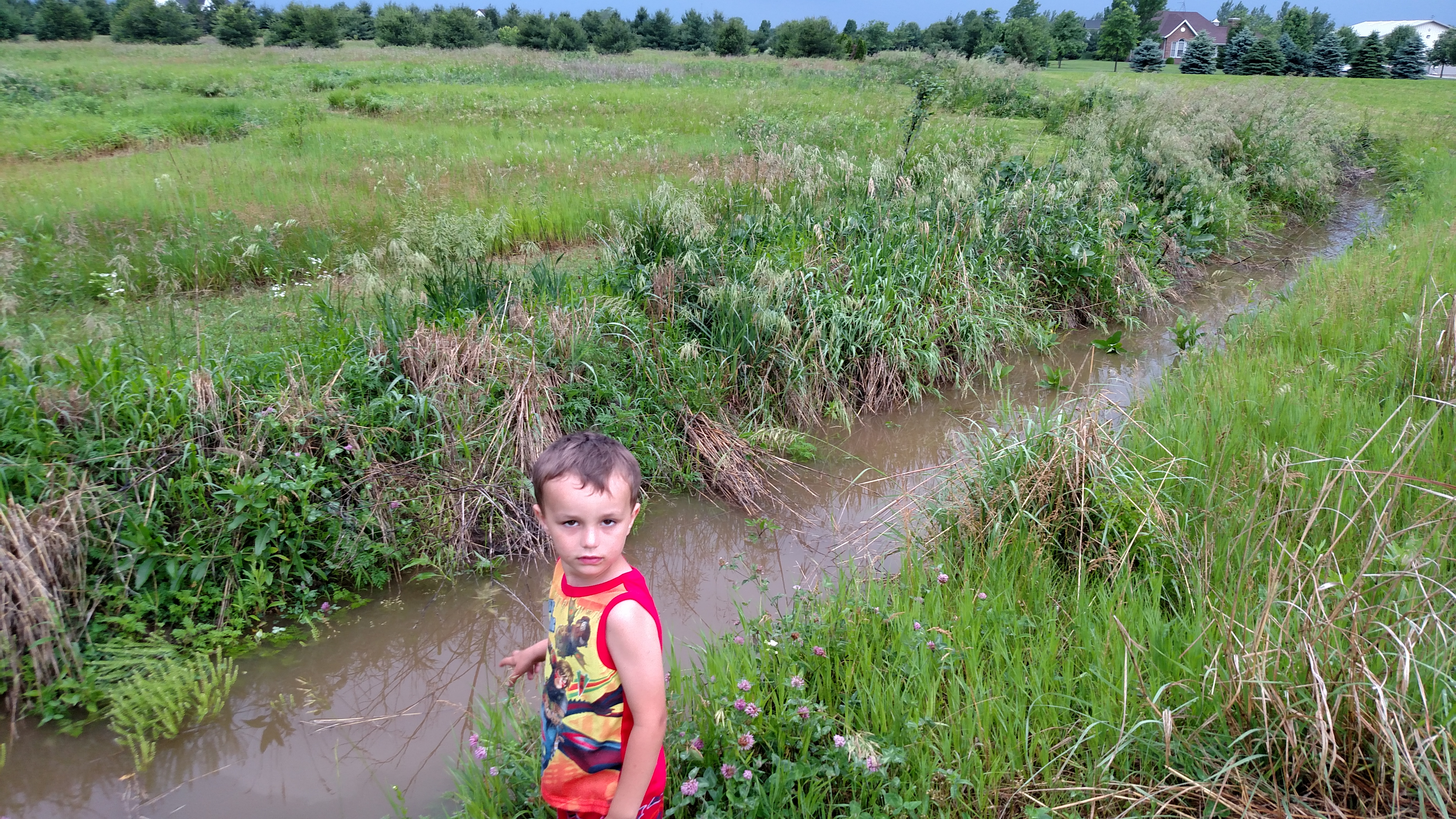
Then, it filled with water.

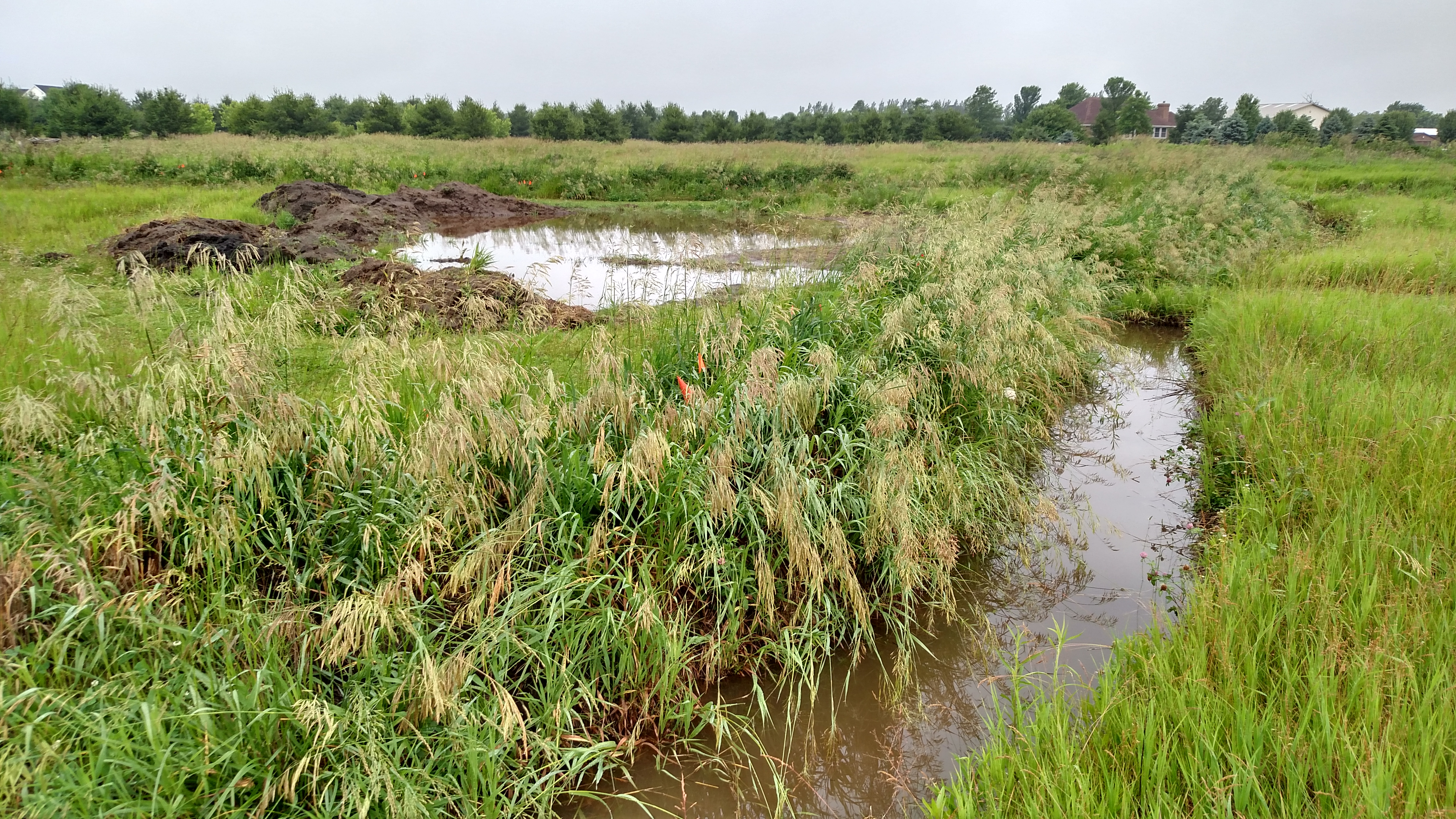
Suddenly, instead of a big muddle of dirt and grass we had a beautiful, glassy and peaceful pond.

wpid-20150612_082715.jpg

Soon, we heard the croaks of frogs mix with the buzz of bees and bugs.

Blue dragonflies, skimmers and other water bugs started to appear, chasing each other over the surface of our little pond.

wpid-20150705_171037-1.jpg

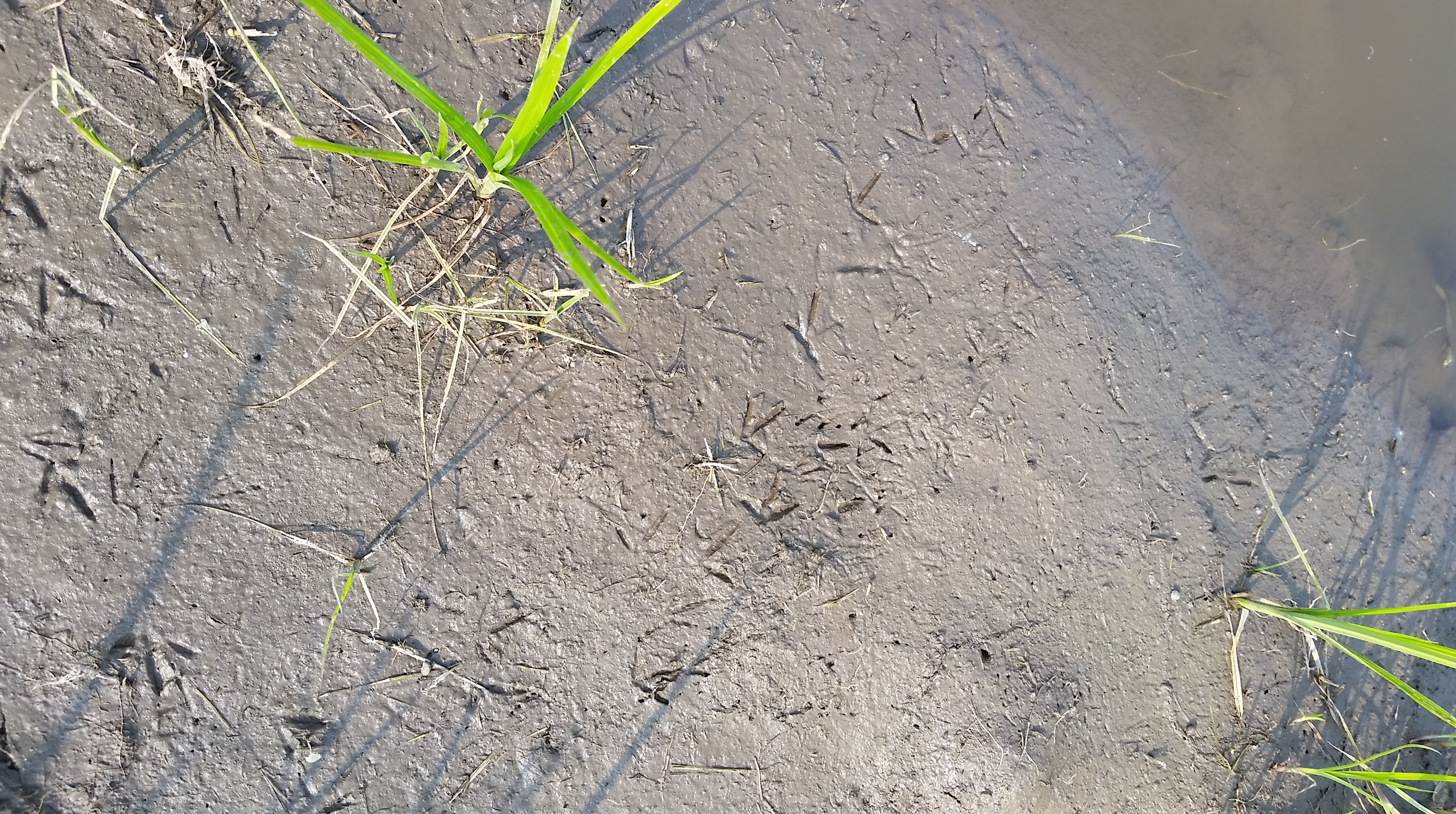
We found tracks of birds, deer and other four legged critters at the water’s edge.

wpid-20150705_170510.jpg
wpid-20150705_171019.jpg

We also found life in the water.

Tadpoles at various stages of development swam and darted around just below the surface of the water.

wpid-20150705_170803-1-1.jpg

There were no signs of the goldfish we’d dumped in a week earlier, but there was life in, around and above the water.

Our ‘test’ was a success.

A Newly Discovered Trap Crop

There they were.

Hiding in plain sight.

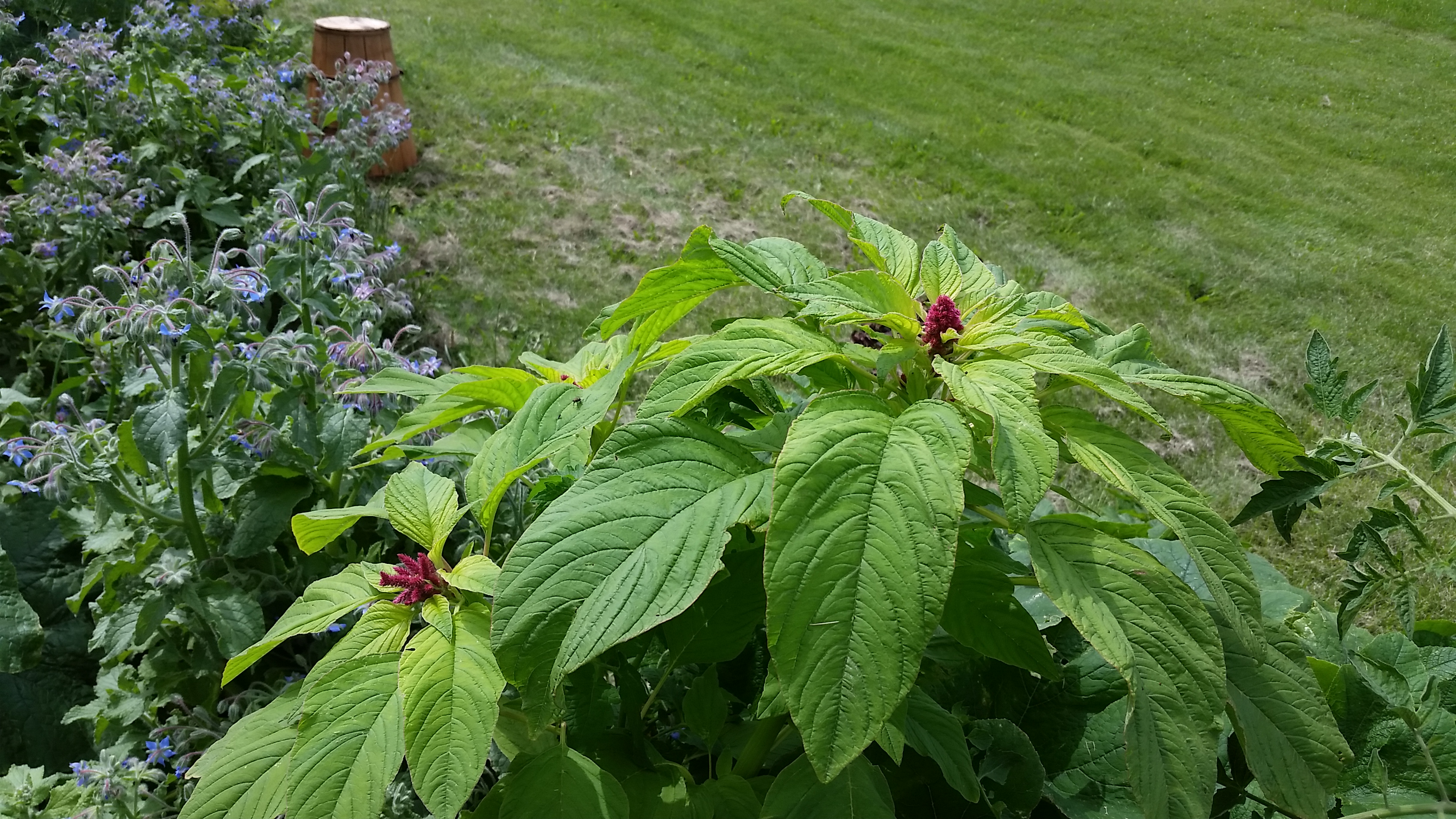
Munching on my beautiful amaranth.

The dreaded, destructive and disastrous…Japanese Beetles.

wpid-20150629_144908-1.jpg

I’m a little surprised that with all of the borage in the garden, these little devils have decided to attack the amaranth.

Last year, they were all about the borage.

They couldn’t get enough of it.

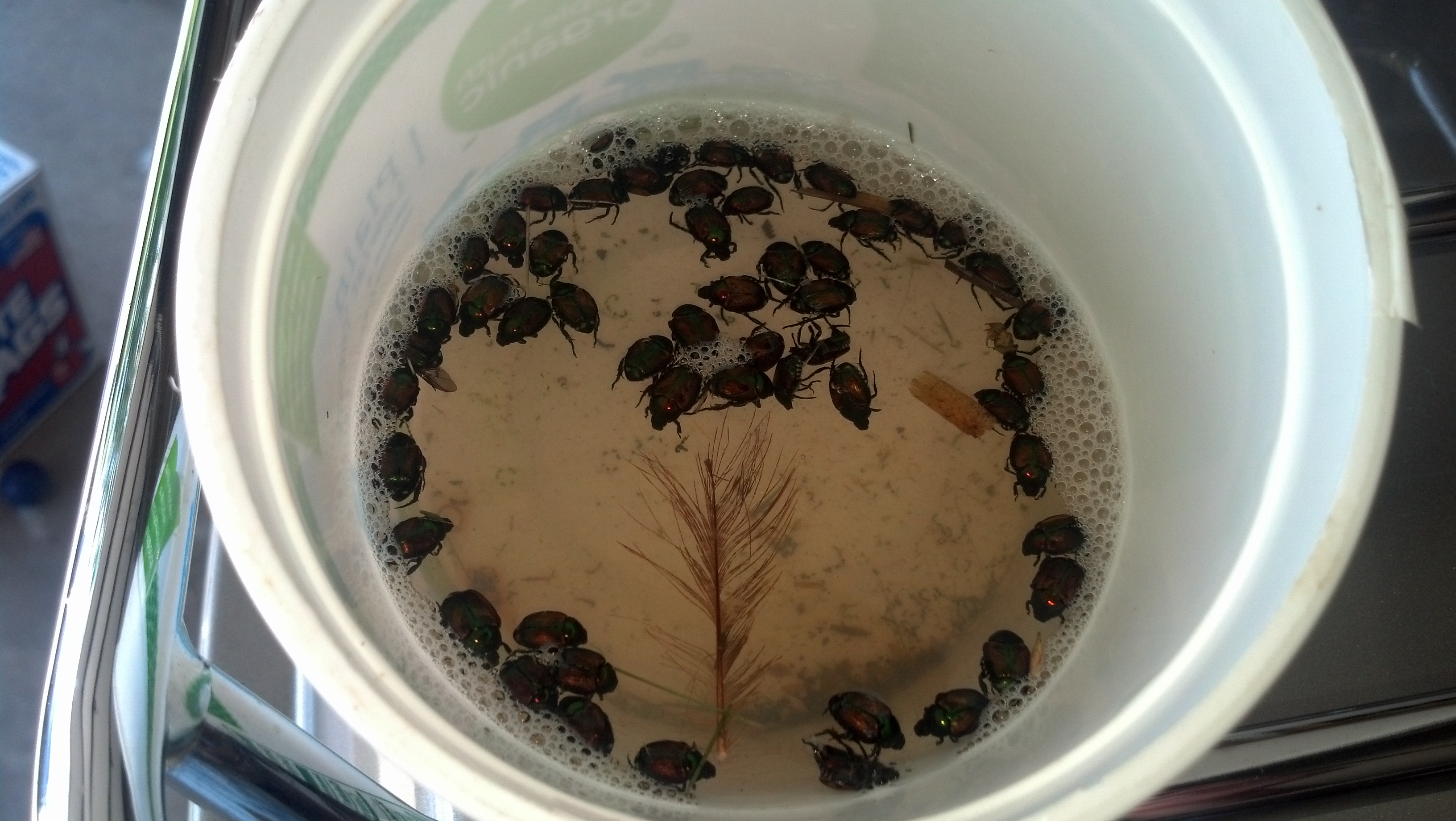
We caught around a zillion of them a day, dropped them in soapy water and fed them to the grateful chickens.

It’s a big reason we planted so much borage this year.

wpid-img_20140710_153721_196.jpg

So why are have they developed a taste for amaranth? Why did they bypass all of the borage that they so loved last year and instead begin to eat my amaranth?

Is it the sugar content?

Japanese beetles are attracted to plants high in sugar. The sugar content in amaranth is 3.3g per cup.

Maybe the height?

This year, due to the runaway squash and over zealous tomatoes, the amaranth has had to push its way through to get some sunlight. It’s taller than the borage and almost as tall as the dill. Maybe it’s an easy mark for the beetles.

wpid-20150625_152626.jpg

Whatever it is, I’m just glad they’re staying away from my tomatoes.

The beetles are back
They’re on the attack
They surround my plants
Immune to my rants

But little they know
That much to their woe
There’s a new plant in town
To knock them all down

The Vineyard Grows

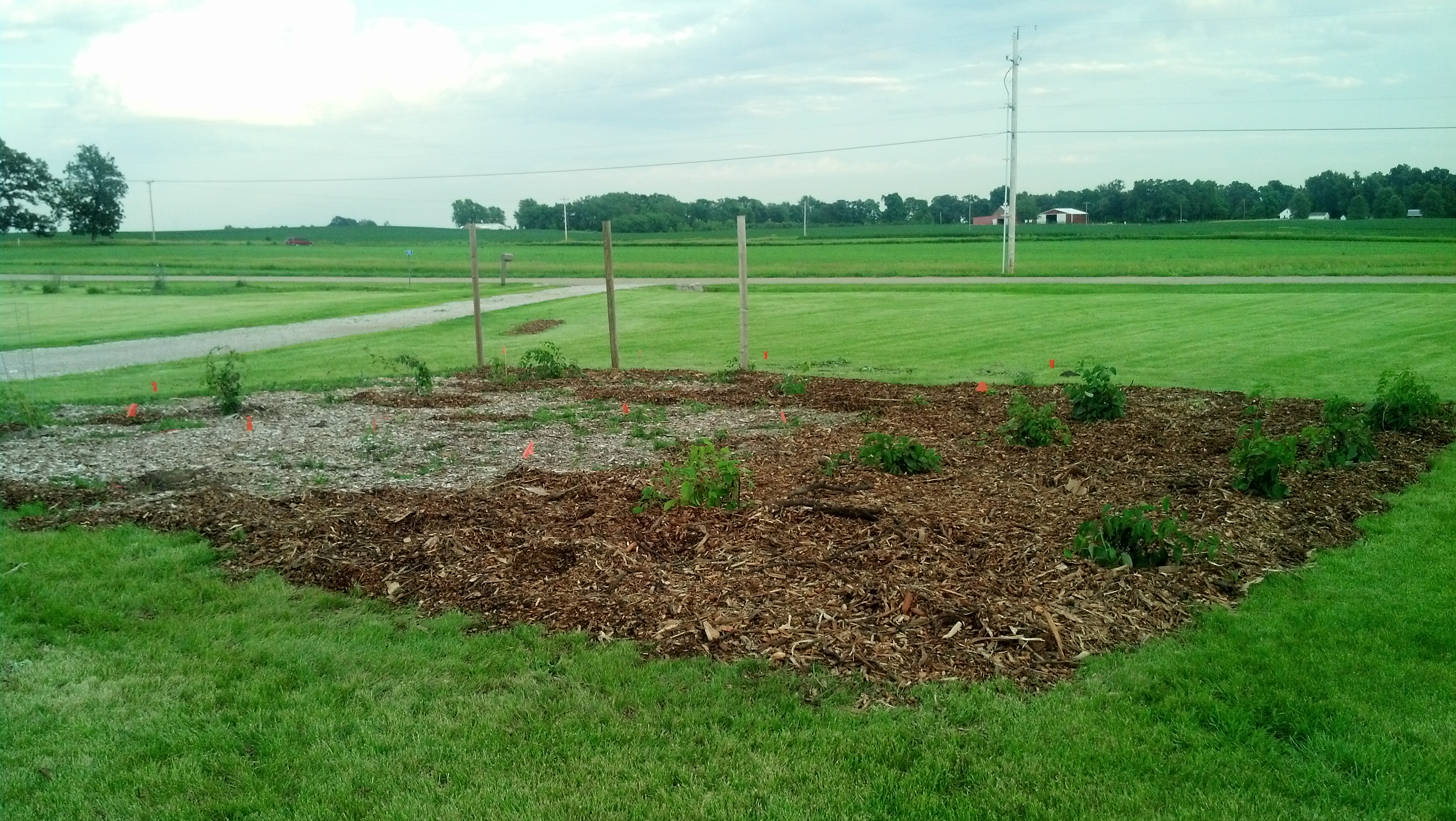
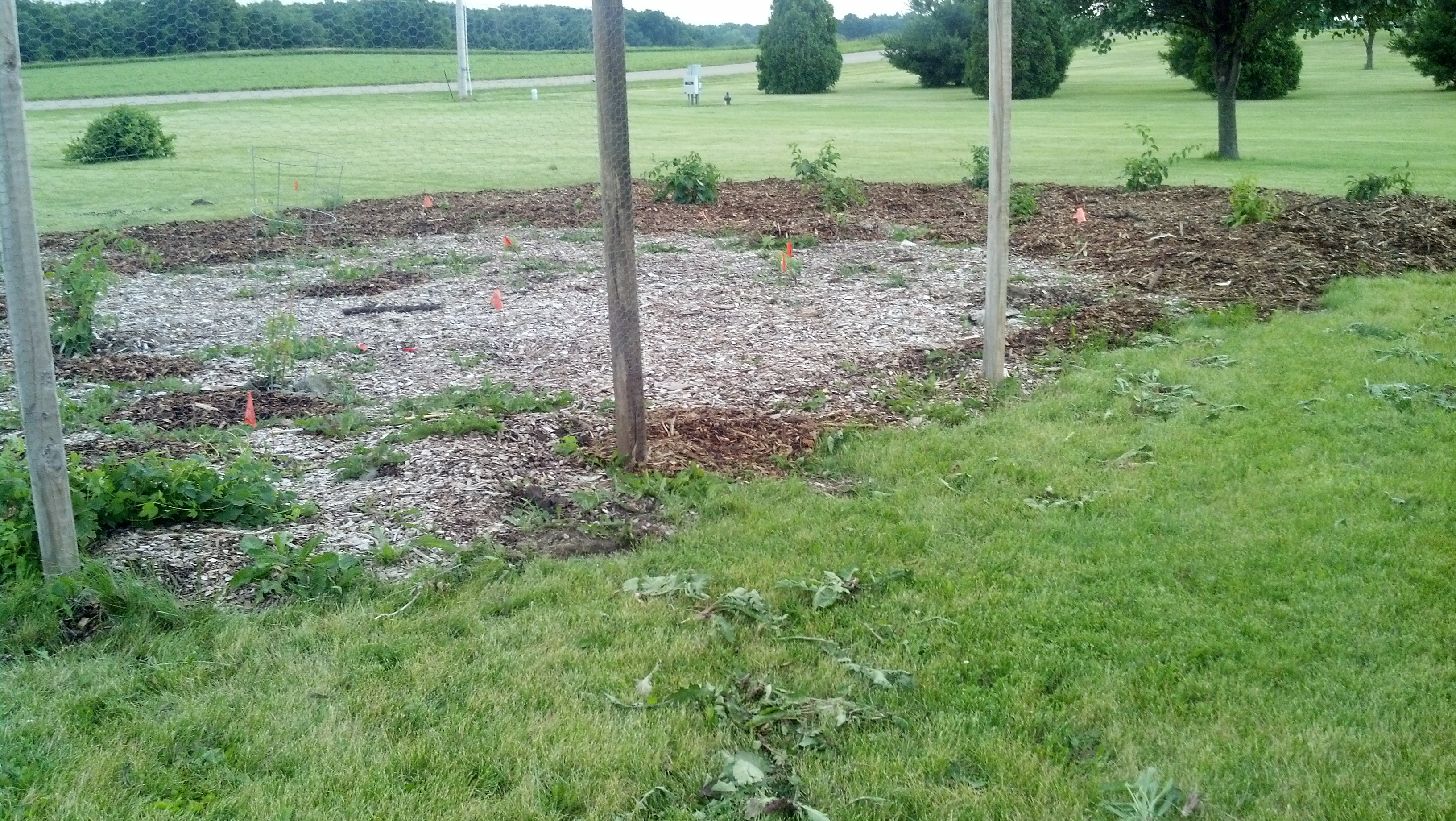
Our vineyard last year was beautiful.

We’d planted 13 new kiwi plants and mulched all 5 rows. As I stood back and looked at our work, I felt a sense of accomplishment and could hardly wait to see it grow.

Last Year

Last Year

Now, a year later, the same vineyard is beautiful, stronger and more resilient than last year. It needs less care because the roots are more developed and can do a lot on their own.

wpid-20150622_080329-1.jpg

This Year

I still go out and check the plants. I make sure that they have what they need. I make sure that nothing is harming them. I take pictures of their growth and get excited seeing the fruits of our labor.

But they don’t need me as much.

Every year, they will continue to grow stronger and become more independent. Then, one day, I’ll walk through the rows and marvel at how something so small and vulnerable could have grown into something so beautiful and strong.

The vineyard was sparse
The boys were so much smaller
Time changes all things

Last Year

Last Year

This year

This Year

Posted 6/22/14
We’d always planned to expand the vineyard. Earlier this season, we planted a few more grapes and a few more hops. We were going to wait until next year to add more. That is, until we found the deal.

Ray’s mom called us and told us that Ace Hardware was having a 50% off sale on all plants and trees…she wanted to get us a tree for our tenth anniversary. We were on our way to drop the boys off before heading to Alaska, but we had a few hours yet, and went to take a peek.

There were a TON of plants, herbs and trees to choose from. The trees were much larger than those that we planted earlier in the year. We looked at the trees but couldn’t decide which one to get, so we started to walk around and see what kind of bushes and shrubs were on sale.

Then, I found them. The arguta kiwi. These are small grape sized fruit that are cold hardy and taste like kiwis.

kiwi

“You are not going to believe this!”

“What did you find?” Ray asked walking my way.

There were so many plants! They were bigger and cheaper than the ones we bought from the nursery: half off of $16.

“Eight bucks, Ray. EIGHT BUCKS!”

The male we planted the previous year was growing really slow. We needed both male and female plants for pollination, so we ended up getting three new males ten new females. We added two rows to the vineyard and filled in the row we planted last year with a couple of ladies.. Then, we had 9 yards of mulch delivered to retain moisture.

We spent our Saturday planting and spreading mulch.

wpid-img_20140621_200653_273.jpgwpid-img_20140621_200722_559.jpg

The boys also seemed to think it was pretty cool.

wpid-img_20140621_202604_189-1.jpg

As we stood back and admired our work, I imagined the hops growing up the trellis and the grapes and the kiwi vining out and filling in all the empty spaces.

wpid-img_20140621_202624_571.jpg

I couldn’t help but think how beautiful it was and imagine how gorgeous it would be in the future.

A beautiful place
A shady spot to relax
A place to enjoy


To the Brim

In 24 hours over 2.5 inches of rain poured down on our homestead. Our weather radio continuously bleated out warnings of flash floods, high winds and strong storms in the area.

We sat inside, watching the wind whip the rain sideways watering our garden and filling our swales.

During a break in the weather, we went out to explore.

IMG_20150607_183648378

The swales were brim full of rainwater.

IMG_20150607_183639974

The ponds Ray had dug out were filling up–working exactly how he had envisioned.

Run-off from the spillway on the south swale went into one pond, then the other.

IMG_20150607_183237072

By morning, rather than two small ponds, we had one large, glassy pond.

IMG_20150608_071727425_HDR
Both swales were filled and and overflowing into the spillways which were pouring out into the pond.

All of this water would have run over our property and out into the road had our swales not worked to catch and make use of the water.

Boys were running fast
Nature sounds all around us
A beautiful sight

IMG_20150608_072144866_HDR

IMG_20150607_183007365

A Soft Glow

Our Memorial Day weekend was spent working around the swales and vineyard.

We spent all day Saturday spreading mulch in the vineyard. Nine yards of mulch spread by hand with a little help from the skid steer.

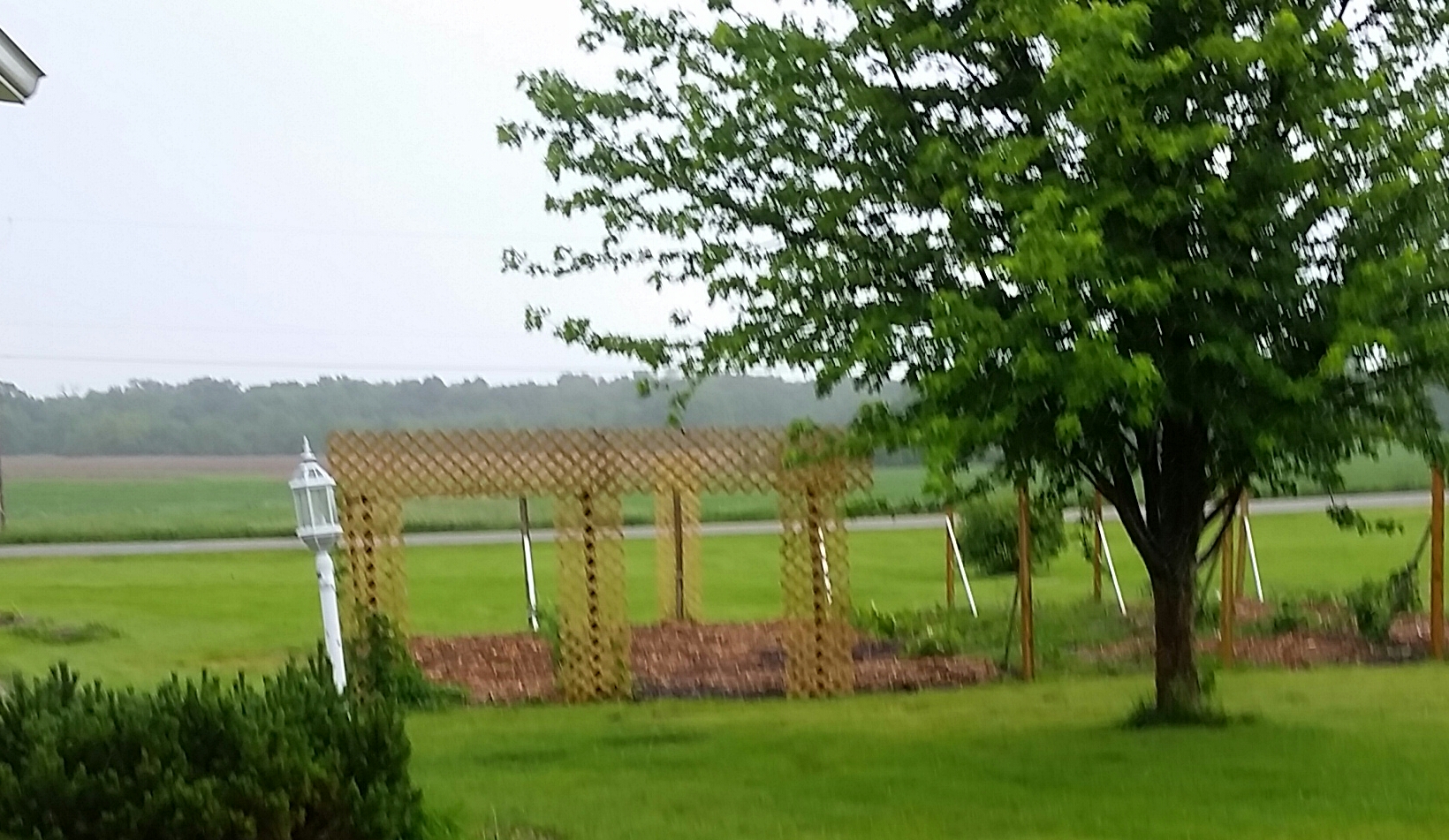
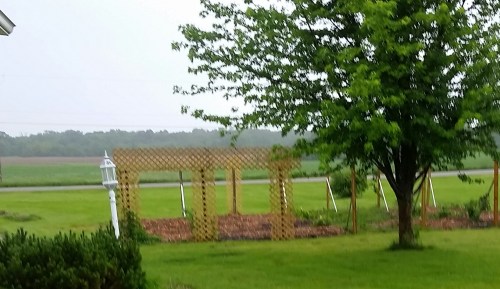
Ray spent Sunday fixing up the trellis in the vineyard. We’ve decided to trellis every post and plant more vining plants.

When I look at it, I can imagine the green beauty it will be with the quickly growing hops and blackberries and the annual peas and beans.
wpid-20150526_102027-1.jpg

I’ve sadly neglected reporting on, or even looking at the three trees we planted our first year on the homestead.

Last year, we put IrriPans around the trees both to keep down the weeds and to direct the rain.

While we are not likely to get fruit this year, I’m pleased at how well our apple tree is doing.
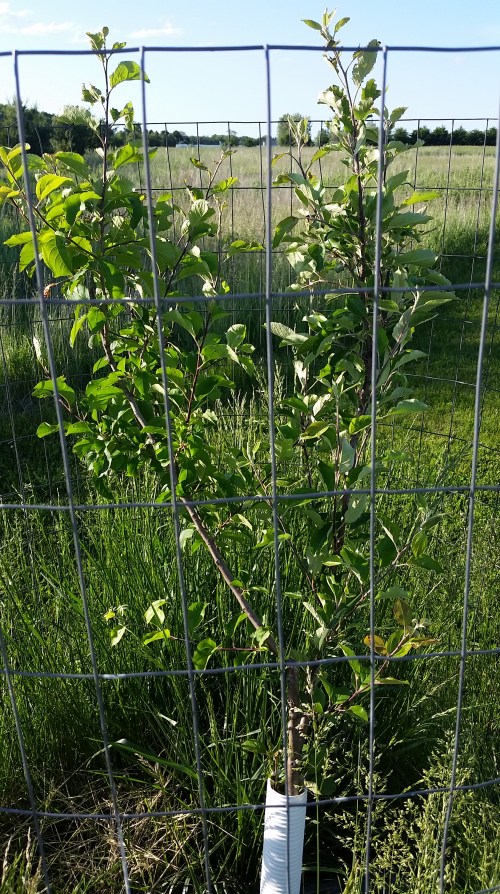
wpid-20150525_183522.jpg

Our mulberry trees are also thriving and have the start of a few berries.

wpid-20150525_183532.jpg

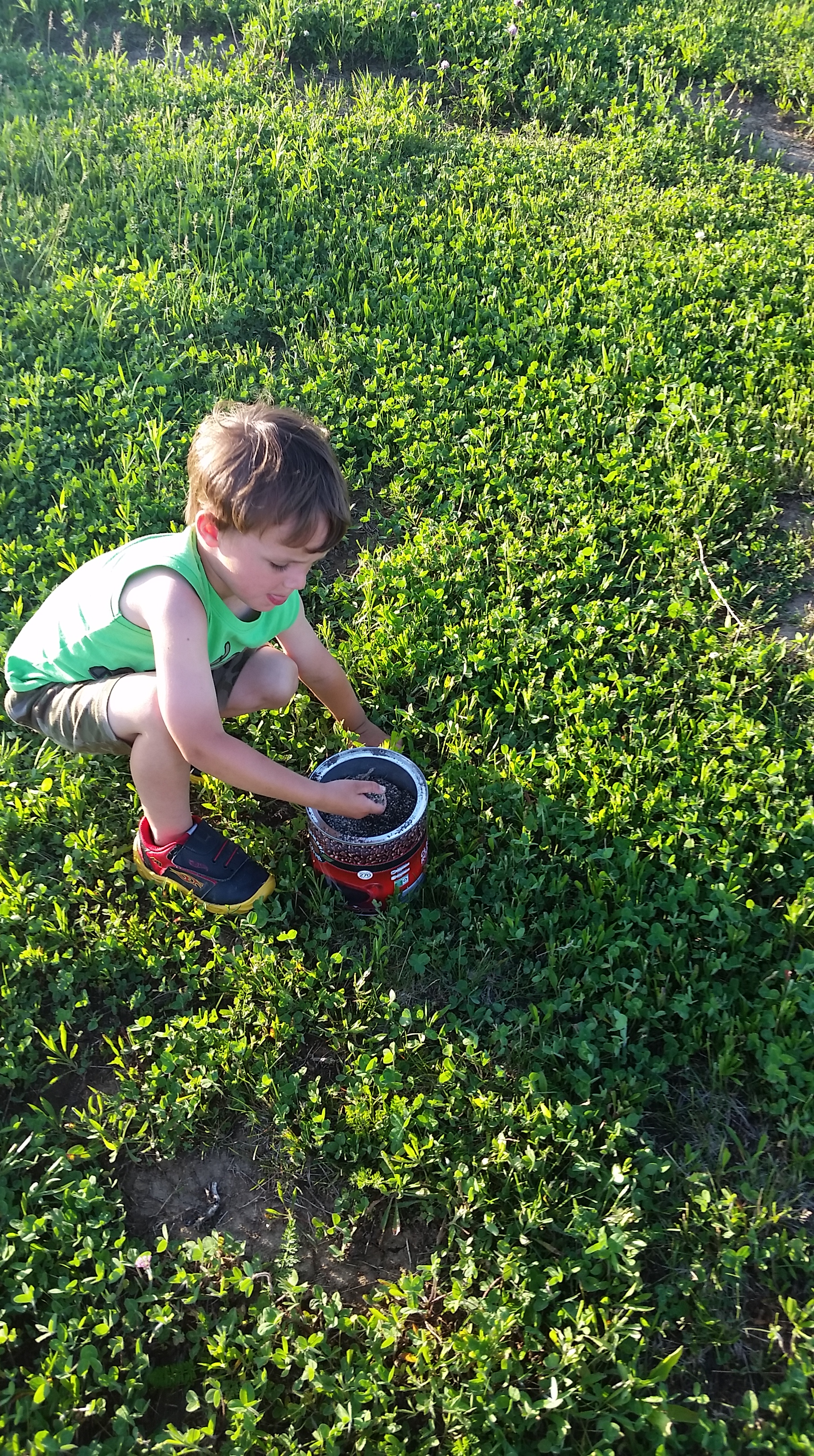
Since it had rained and would be raining again for the next few days, Joe and I spread some of the custom seed mix I put together a few weeks ago.
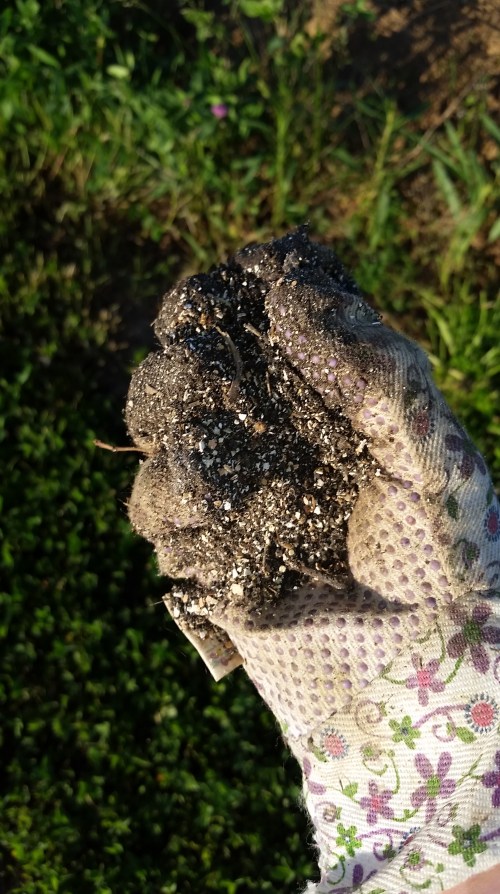
wpid-20150525_190614.jpg

Joe took his job very seriously, putting all of his energy into flinging the dirt, eggshell and seed mix all over the swales…and all over himself.
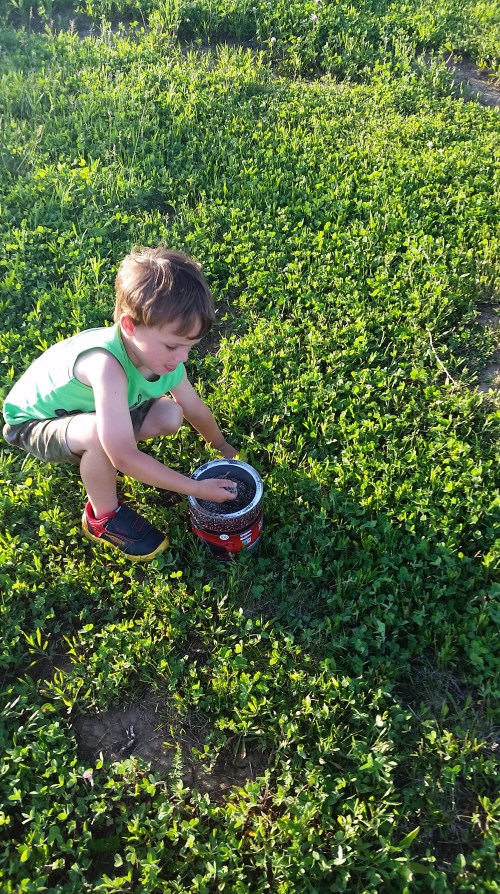
wpid-20150525_190638.jpg

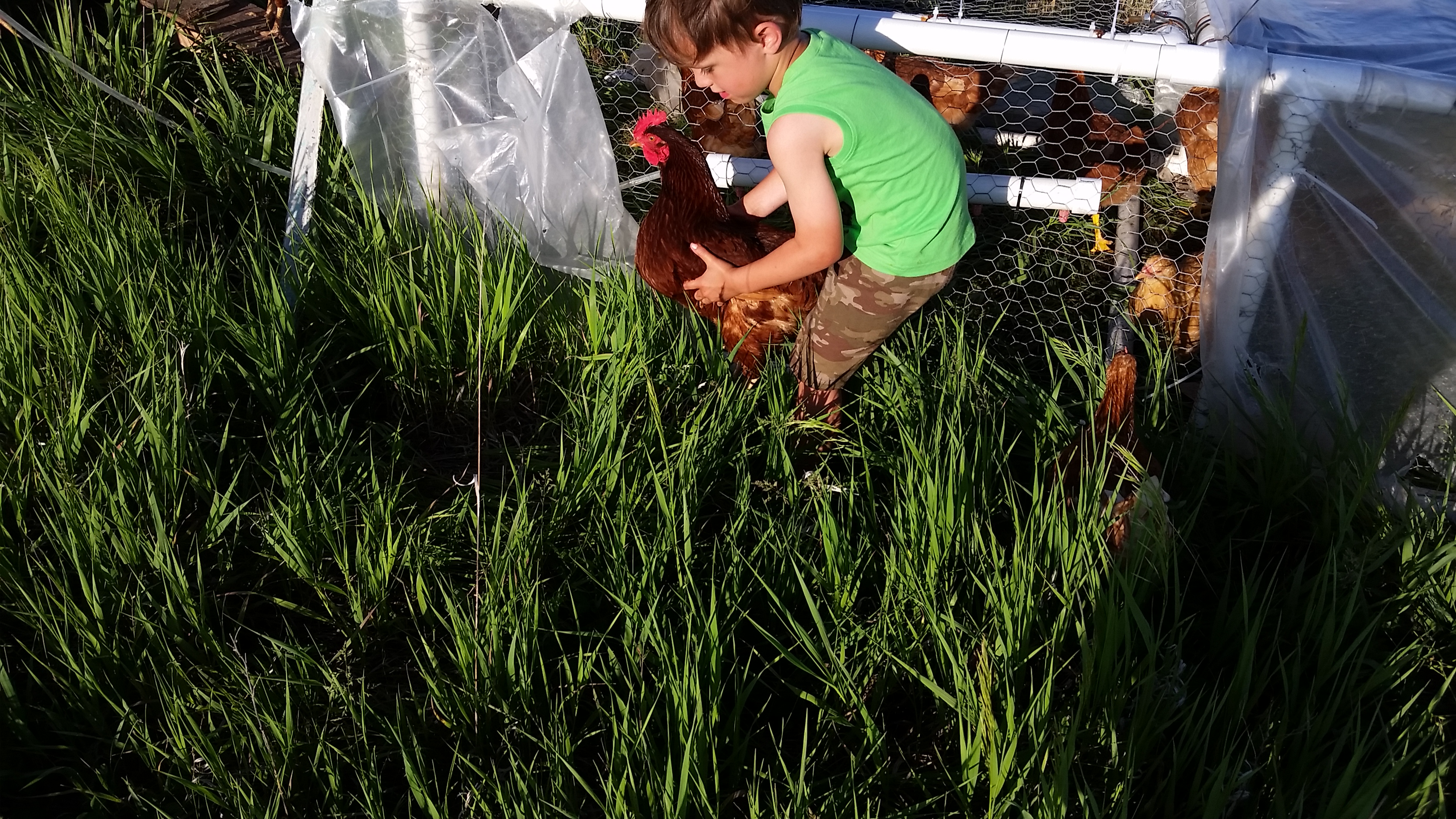
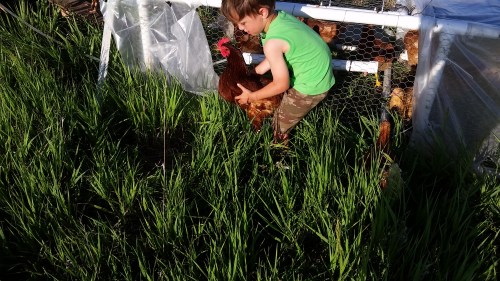
The boys followed chickens around while Ray changed the bedding and cleaned out the coop.

At first, Jake was a little reluctant to try to pick them up.
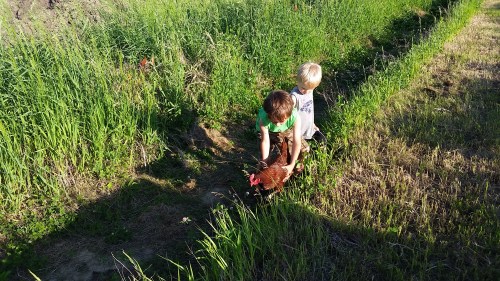
wpid-20150525_183919.jpg

But after watching Joe a few times, he was ready to hold one too.
wpid-20150525_184041.jpg

wpid-20150525_184124.jpg

Then he got bored chasing chickens, and went off to throw mud clods in the puddles that had formed in the test pond.

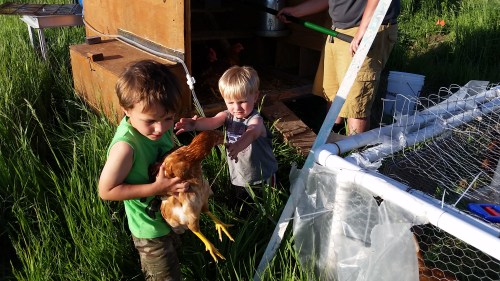
Joe sat and watched, holding his favorite chicken.

He’d named her Yellow for her yellow eyes and yellow feathers.

wpid-20150525_185642-1.jpg

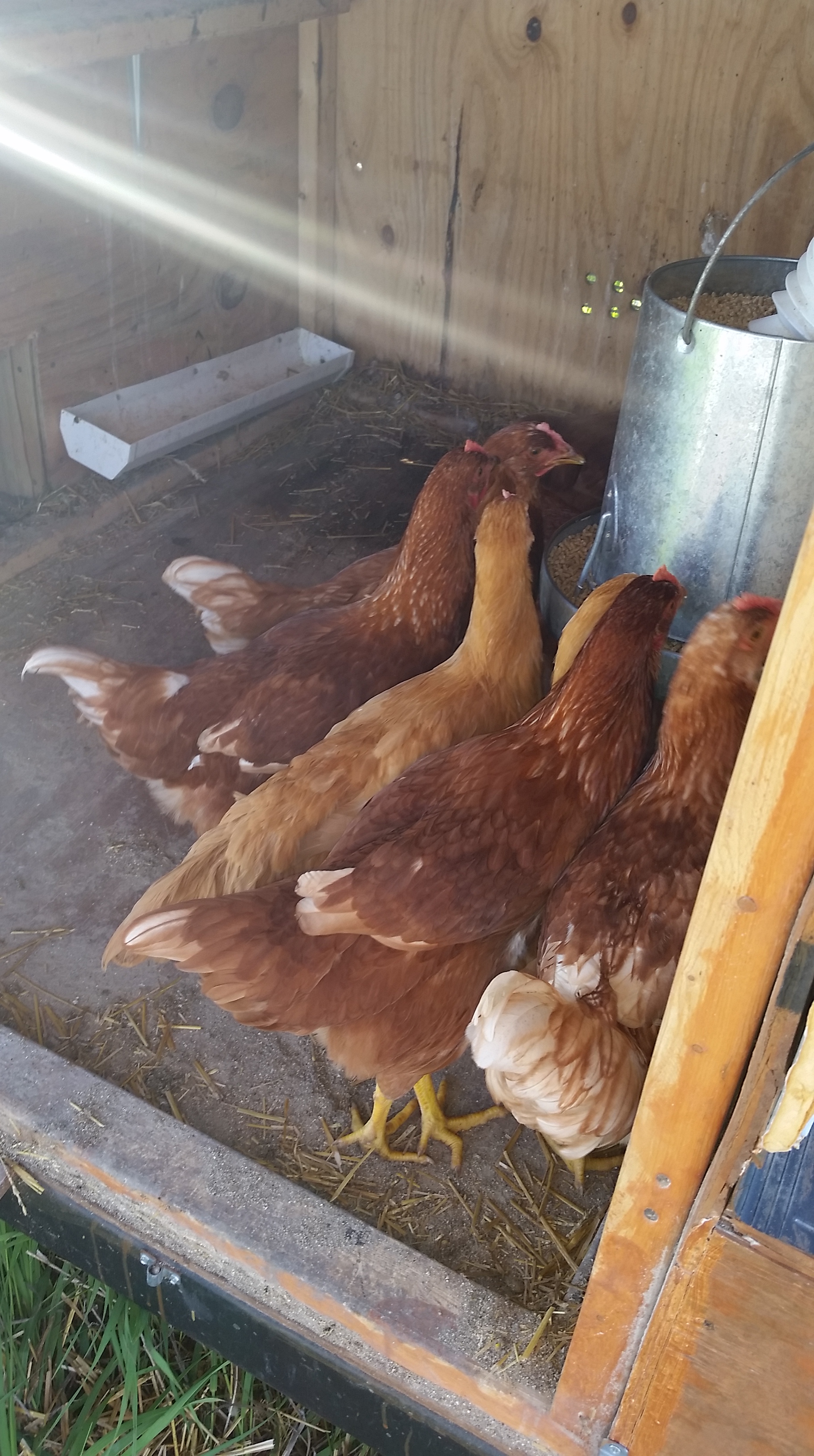
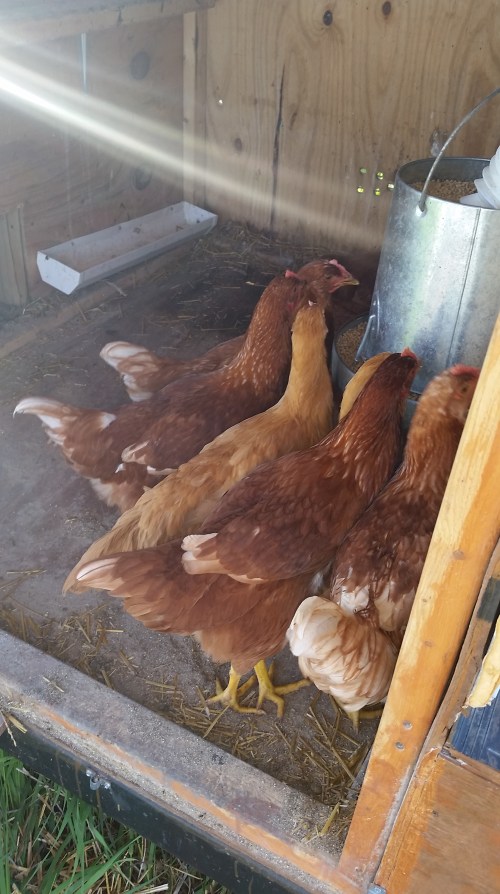
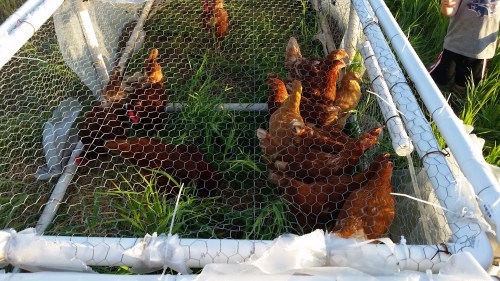
The younger birds are growing fast. A few already have their combs coming in and they are all starting to gain confidence when confronted by the crotchety old hens.
wpid-20150525_190256.jpg

They are even co-mingling on a regular basis now.
wpid-20150525_192808.jpg

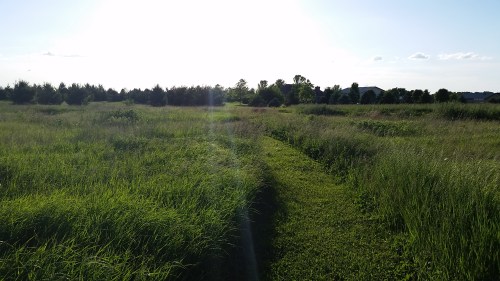
Once the coop was cleaned, the chickens fed and the playpen moved onto fresh grass, we walked around the swales ticking off everything we had accomplished.
wpid-20150525_185356.jpg

We’d spread 9 yards of mulch in the vineyard.

We’d weeded the strawberry patch and some of the kitchen garden.

We’d changed out the chickens.

We’d dug a bit more in the test pond.

We’d planted more raspberries in the swale, as well as a few other herbs and veggies a friend had given us.

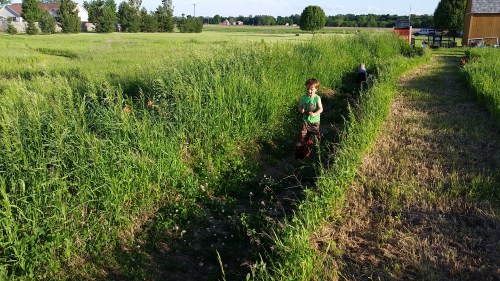
Watching the boys run and play, we felt a sense of accomplishment in seeing the fruits of our labor.
wpid-20150525_184452.jpg

The work we had done over the long holiday weekend paled in comparison to witnessing the excitement our boys felt in running in the swales, helping to spread seeds and helping catch the chickens.

There always seems to be more projects we want to start and more seeds we want to sow. There are times we feel stressed or discouraged at all that we’ve left undone.

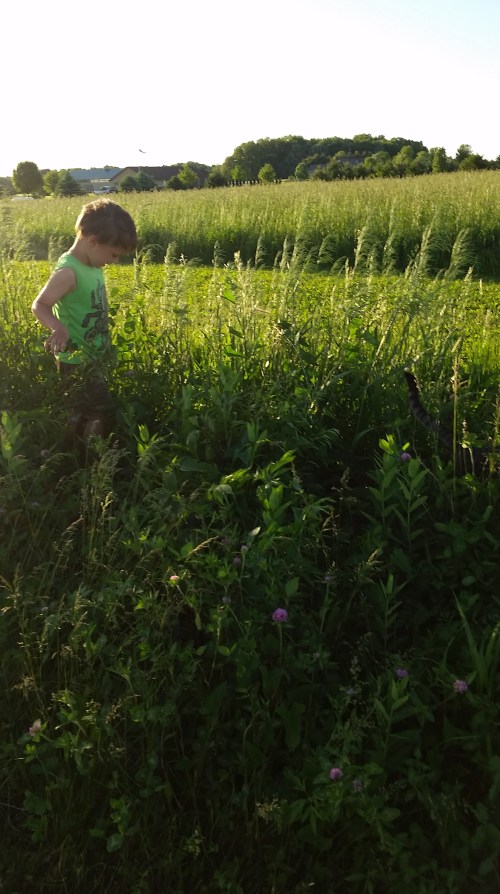
But seeing the boys enjoy everything we have built humbles us and makes us realize that the most important job we have is growing two little boys and nurturing their joy in the land.

The sun sets slowly
A soft glow blankets the land
Happily, we smile
wpid-20150525_190807.jpg


Plip Plop Plant

It’s been raining for days.

Intermittently pouring, sprinkling and storming with brief sunlight sightings.

But, ‘we’ve got gardenin’ to do’ so with rain gear, boots and spades, the boys and I ventured out to the swales to plant in the rain.

wpid-20150511_105846.jpg

We started with raspberries. While back home, we dug a few up from Grandma’s garden and brought them back to plant in the swale.
wpid-20150511_114339.jpg

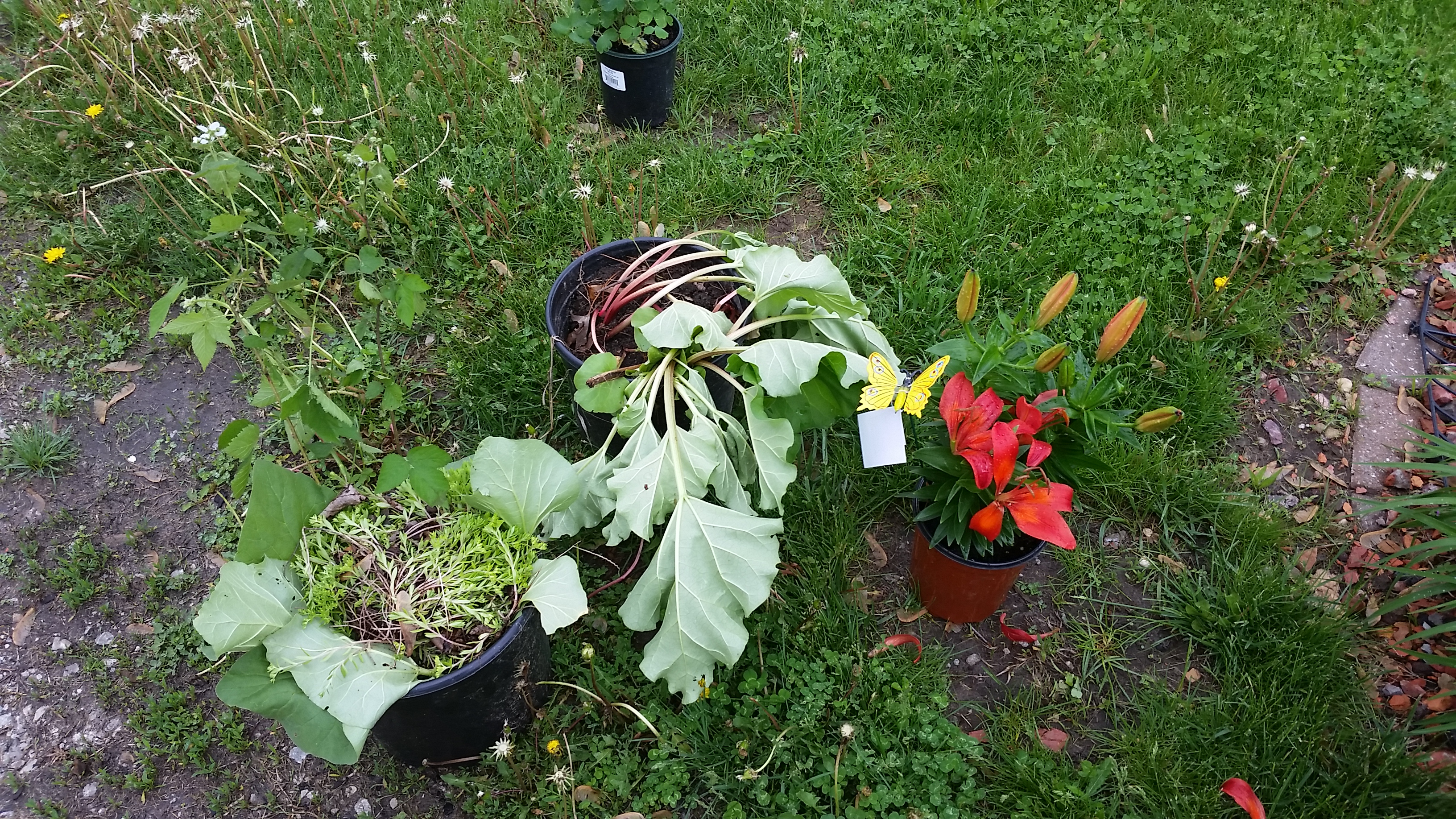
Then came the rhubarb. This rhubarb is special. The original strain came from a rhubarb patch at Great Grandpa’s house in 1973. Now we’ve brought some of it to our home 42 years later.

Pretty neat.

wpid-20150511_115954.jpg

In the fedge, I planted a pretty green and mossy ground cover.

This is amazing stuff, you can walk all over it and it springs back up and chokes out weeds. When in bloom, it has pretty yellow flowers and in the fall it turns red and gold.

I planted three orange lilies I got for Mother’s Day right along the driveway in between the lilacs and burning bush.

And then it poured.

When I see puddles
I cringe, seeing only dirt
A mess to clean up

When boys see puddles
They see only joy and fun
Splishing and splashing

Oh to see the world
With whimsy, glee and delight
Through a child’s bright eyes

wpid-20150511_120231.jpg


Propagating Perennials

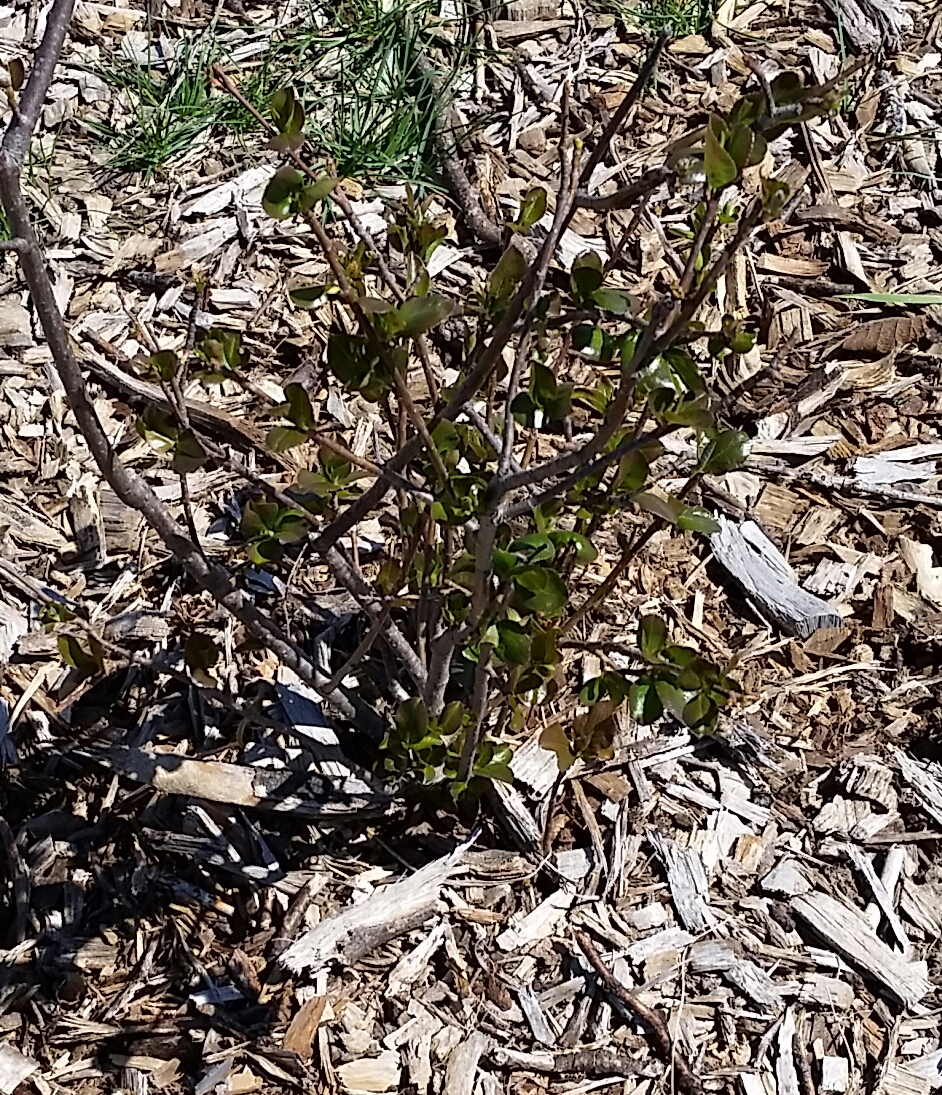
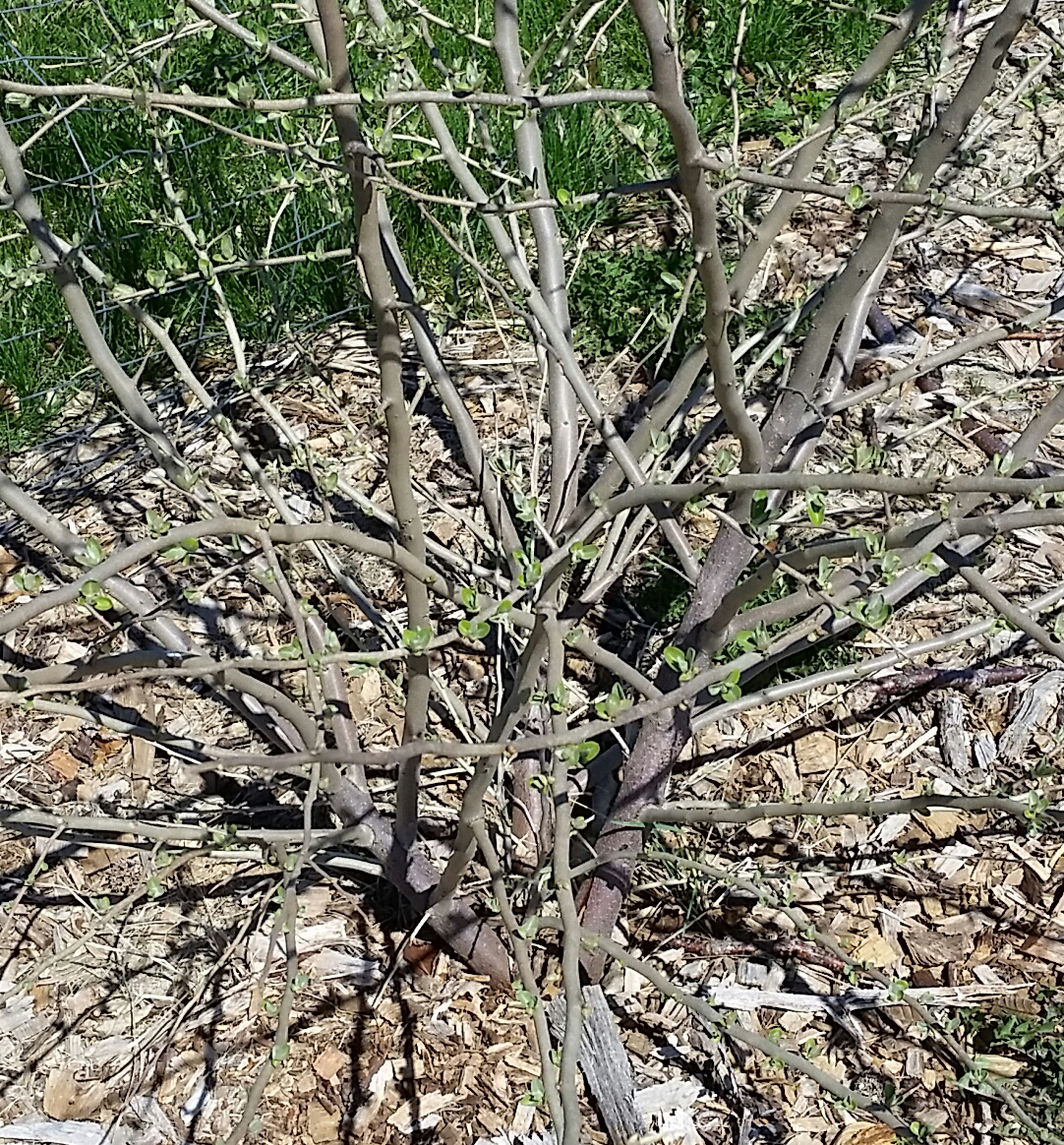
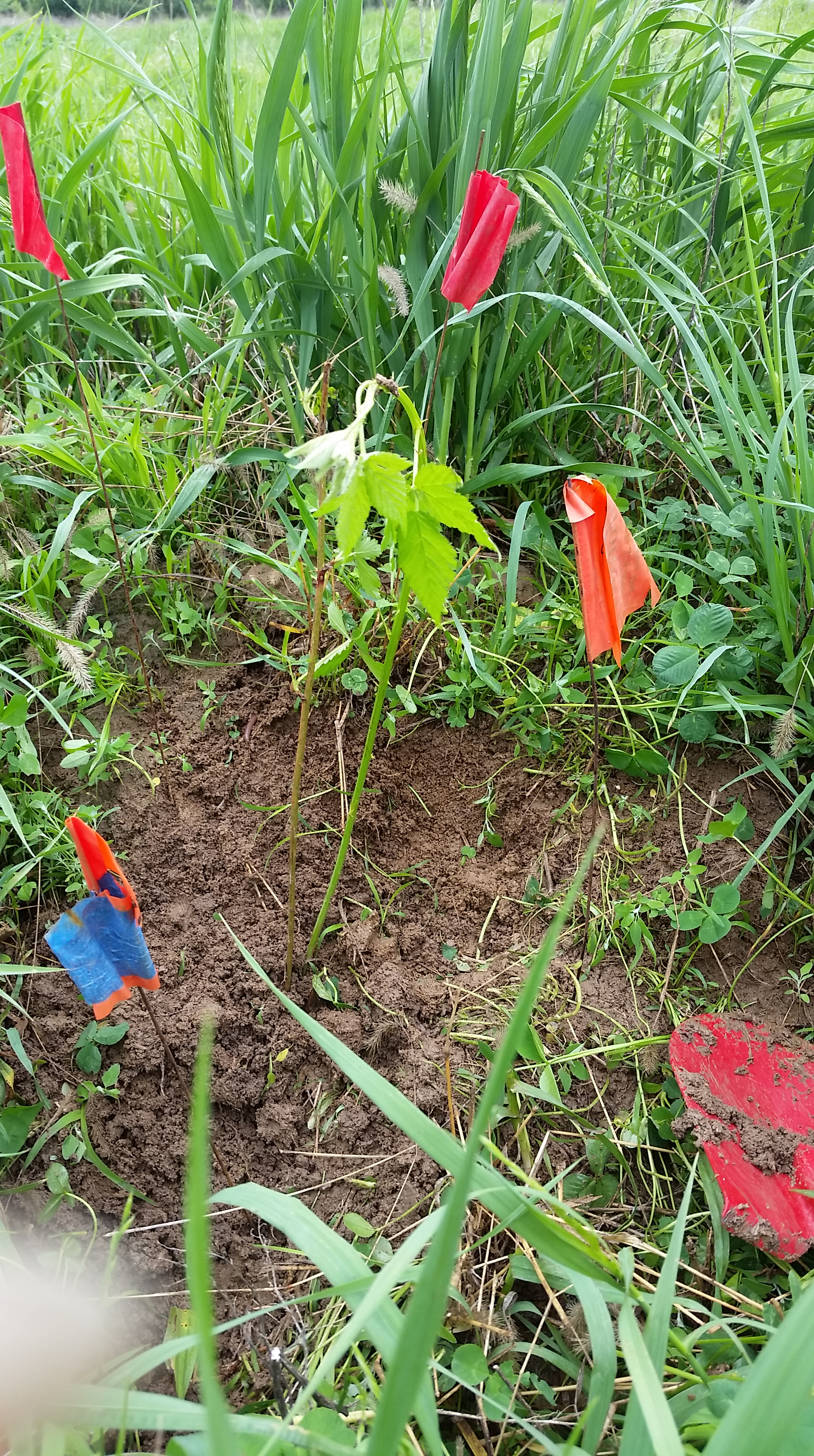
There are three perennials that we plan to propagate this year: Autumn Olive, Aronia and Thornless Blackberry.

We are going to try propagating from cuttings. The blackberry will probably take off the fastest as it seems to spread quickly. We may not even have to take a cutting if new shoots come up.

For the Autumn Olive and Aronia, we’ll be using a method I found at the Volunteer Gardener‘s YouTube channel.

I just discovered this channel while doing research for this post and I love it. The tutorials are simple and straightforward and most are under 10 minutes…which is about what my attention span is these days.
wpid-20150415_141131-1.jpg

Aronia


wpid-20150415_141121-1.jpg

Autumn Olive

The steps are pretty easy and (fingers crossed) foolproof.

Step 1: Using sharp shears, cut a small branch with full-size leaves. The branch should bend easily but not break. Keep the cuttings wet and fresh.

Step 2: Trim off every leaf at an angle except for the one on top.

This is going to be hard. You are going to feel like you’ve just killed the branch and it will never, ever, EVER grow. That’s exactly how I felt when watching the video.

But…it is important for the greater good to perform this operation. Too many leaves would be a drain on the plant. They would weigh down the already fragile cutting, sapping it of energy.

The new plant needs all of the energy it can get to grow new roots. Out of the wounds left behind, new roots will form and the plant will be stronger.

Step 3:  Dip cutting and all nodes (the spot where you cut the leaves off) in rooting hormone.

I’m using a talc based Rootone. We had great success with it last year when we were planting trees in the back swales.

Step 4: Bury in soil that has been dampened. I plan to use seed starting mix. The important thing is to use loose, well-drained soil.

Step 5: Mist with a spray bottle and keep damp and warm. While the Volunteer Gardiner suggests placing these in the shade with little sunlight, I’m going to put them in partial sun.

My reasoning for this deviation:

When I start seeds, I don’t put them under solar lamps until they’ve sprouted. It’s more important that the seeds stay moist and warm for germination.

Once they sprout, I kick on solar lamps to help start photosynthesising those new seedlings.

Since these cuttings already have a leaf, that process can get rocking right away.

Other sites I’ve visited also suggest partial sun placement.

And then the waiting game begins. Roots should start forming after 3 or 4 weeks and then new growth a few weeks after that.

Most of the sites I looked at suggested waiting until Fall or Spring to transfer the new plants into the ground. Last year, when we had a bunch of willow cuttings to start, we dipped them in rooting hormone, stuck them in the ground and watered them.

They lived…thrived actually. Only 1 or 2 didn’t make it.

For the Aronia and Autumn Olive cuttings, I’m going to do a test. I’m going to plant two using the method we used with the willow trees and I’m going to follow the above process for the rest.

Results pending.

Propagating plants
Aronia, Autumn Olive
Free diversity

Over and Around

Yesterday, the boys and I went on a hike in the late afternoon.

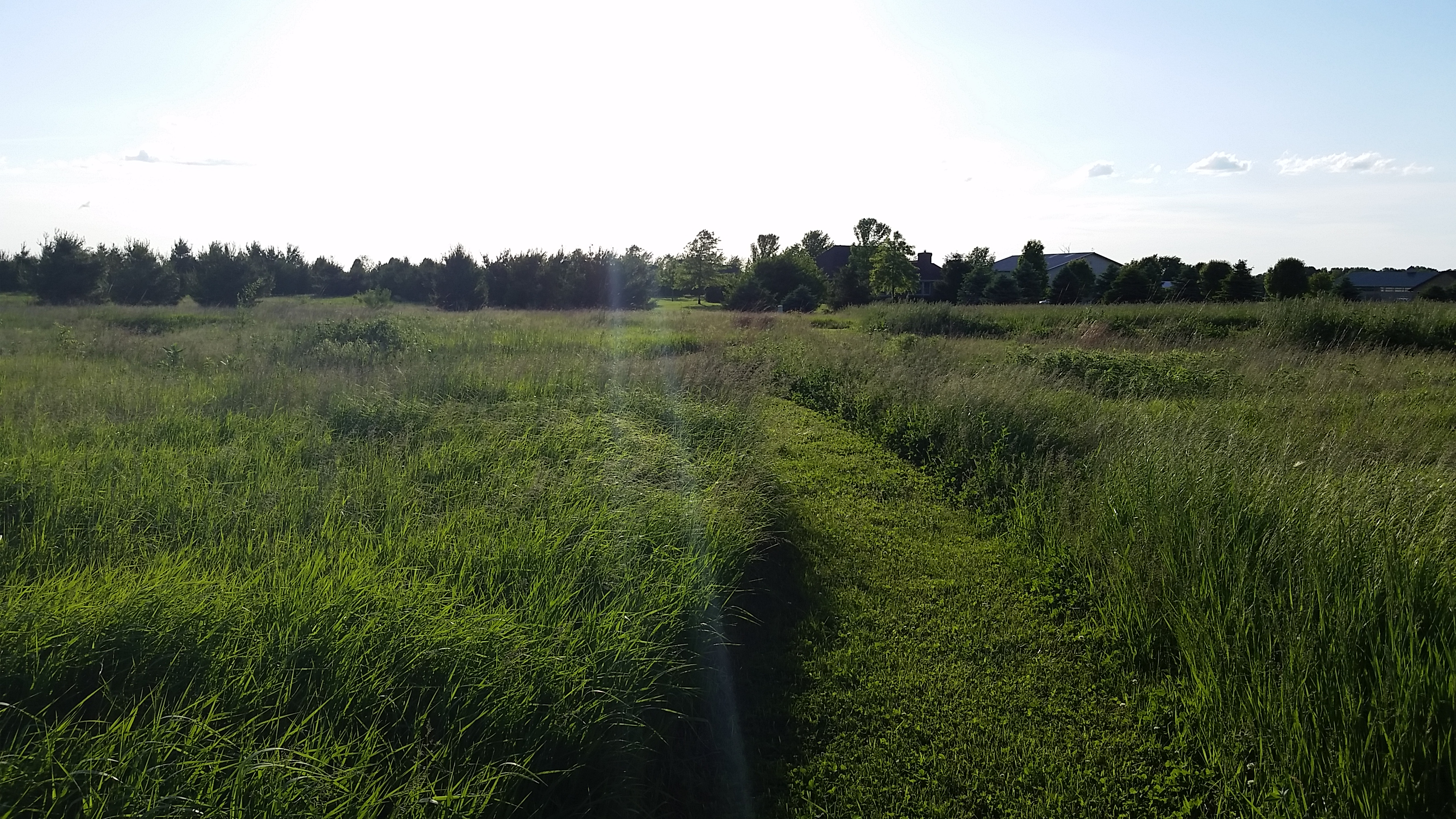
Through the swales, over the swales and all around the swales.

I gave them a mission.

“Be on the lookout for trees boys, and let me know when you see one.”

Feeling this was an important mission, Joe raced down the path spotting trees and shouting, “Right here! There’s one right here!”

Jake ran right behind him, mimicking his shouts.

wpid-20150415_120303.jpg

I followed taking notes on my clipboard.

We have 47 trees in our swales.

We planted more than that last year, but many died early on or didn’t make it through the winter.

We have 47 trees that are alive with leaves sprouting in different shades of green.

There are fruit trees: cherry, apple and pear; a few nut trees: chestnut, walnut and almond; and a sprinkling of other miscellany: lavender, pussy willow, corkscrew willow, oak and a few question marks.

wpid-20150416_215129-1.jpg

The boys had completed their mission long before I’d finished documenting the tree varieties on my swale map.

They were playing in the dirt pile when I walked back to the house. I stood and watched them play for a few minutes thinking about how excited they get when they feel they are a part of the work.

They don’t even see it as work…it’s a mission, a game.

It’s a joy to watch.

I called them to the kitchen garden. One final chore needed to be done before we could turn in for the day.

I had toted three cabbage pots over from the greenhouse. I’m not willing to risk all of them by planting too early, so these three will be my weather test.

Once I told the boys the plan, they were eager to help.

Joe passed them out to us.

One for Jake…

wpid-20150416_143211.jpg

One for Joe…

wpid-20150416_143531.jpg

And one for me.

wpid-20150416_143916.jpg

The cat supervised.

wpid-20150416_143228.jpg

In the yard today
Warm sun setting on our backs
Cats purring, stretching

Jetsam and Flotsam

One man’s trash is another gardener’s treasure. Just take a look at Pinterest and you’ll find all sorts of repurposed materials used for different functions in gardens.

Egg cartons used as seed starting containers.

Used coffee grounds for fertilizer.

Crushed egg shells used to repel slugs or powdered to add calcium to the soil.

The list goes on.

Here are a few things we repurpose for our garden:

  • Coffee grounds as a nitrogen soil amendment.
  • Egg shells as a calcium soil amendment.
  • Kitchen scraps go into the compost pile or to the chickens.
  • Berry containers are great seed starters, especially herbs as they have drainage holes.
  • Coffee canisters hold powdered egg shells and coffee grounds.
  • Cardboard and newspaper to keep down weeds. We use only uncoated cardboard.
  • Growing celery from kitchen scraps.
  • Vinegar kills weeds.

Here are a few things we’d like to start repurposing:

        • Toilet paper rolls for starting seeds. These cardboard tubes can be planted directly in the ground as the cardboard breaks down over time.
        • Growing lettuce from kitchen scraps.
        • Using cinnamon as a rooting hormone substitute.
        • Growing beans in cotton balls.
        • Milk jug turned watering can.

The boys would really enjoy the milk jug watering can. They love to explore, water and help in the garden.

wpid-20150410_145216.jpgwpid-20150410_145259.jpg

I come across more things we’d like to try every week. My Pinterest board is full of techniques others have tried with success.

Now it’s my turn
I’ll try to be thrifty
Maybe they’ll work
That would be nifty

Easy Does It

I’m trying hard not to take on too much this year. The garden season always comes with new and exciting ideas to try. Just looking at my Pinterest board makes me eager and overwhelmed at the same time.

wpid-20150331_103213.jpg

There are just so many things out there.

So many seed varieties.

So many new techniques.

So many hours in the day.

So many…

For the past two years I have started out the season with a pledge:

“I will not take on more than I can handle this year.”

For the past two years…I’ve taken on more than I can handle. Thinking, “Oh, it’s just one more small project. I can handle it.”

I’m not saying it will be any different this year. We are already talking about adding a pond, getting ducks, propagating plants to add to the swales and getting a couple of turkeys (I hope my husband was kidding about the turkeys.). All this in addition to planting, maintaining and harvesting our annual garden.

But, I am pushing myself to see everything we have done since we moved in 3 years ago.

We have swales.

wpid-20150401_171745.jpg

We have trees.

We have raised beds.

We have chickens.

wpid-20150401_171633.jpg

We have a kitchen garden, a strawberry patch, a vineyard and a fedge.

We have gained knowledge every step of the way.

So when a project doesn’t get completed in the season. It’s not a failure…it’s just put on hold until next year.

Next year, when “I will not take on more than I can handle.”