Category Archives: 13 Skills

Step One: Writer’s Workshop

I’ve taken the first step in my journey into publishing and registered for a writer’s workshop on how to write and publish a children’s book.

Could it be any more specific to the journey I’m on?

The workshop is an intro into the world of children’s books and genres, as well as a peak into the research behind and process of submitting work for publication.

The instructor, Dawn Malone, has been through the process and is the author of Bingo Summer, published in Spring 2014.

I’m excited for a number of reasons.

One, I will learn more about how to hone my skill, how to become a better writer.

Two, there might be an opportunity to share my work, get feedback and constructive criticism.

But perhaps the most exciting part? I’m not just talking about it, writing about it or thinking about it…I’m doing it. I’m actually taking that first step.

And that feels pretty good.

wpid-20150109_142457-1.jpg


Feet First

With some encouragement from family and friends, I’ve decided to look into getting some of my stories published.

In looking back through all I’ve written over the past two years, I’ve found that I’ve built quite an extensive portfolio: Joe the Bug Hunter, Audrey and the Bubblebath Kids, Adventures in Homesteading and Mischief Makers plus all of the kooky poetry and haikus I’ve composed on gardening.

So why not give it a go?

wpid-20150105_223331-1.jpg

I’m just in the beginning stages of research, but so far I’ve found that there are two main options for publishing a book: self-publishing and traditional publishing.

In researching the traditional method, the common theme is that it takes time and patience…and a thick skin.

First, you have to find an agent, which takes time.

Once that’s done, the agent will want to revise your book before showing editors and publishing houses, which takes more time.

If said agent finds an editor willing to buy your book, you’re in for another round (or several rounds) of revisions before the book even goes into production. And then you may not even recognize the story as the one you initially wrote. The whole process could be a horrible experience…or a wonderful one. Which takes even more time.

In all, it could be a year or more before your precious book is published, and then…what if no one buys it? Or worse…it gets a really bad review?

On the flip side, going the traditional route has its benefits.

If the book gets picked up, you’ll have editors, an illustrator, a printer, distributor and promoters, plus a nice up-front payment. It may take a few years, but if the book is a success you’ll start receiving royalties and have only paid with your time and tears.

Then there is the self-publishing route. It’s the same steps as the traditional route, but you have to pay up front for editing, illustrating, producing, promoting, printing and distributing the book.

You, the author, also have more control over the book and content. No one can tell you to cut a scene you feel is integral to the storyline. But, as a stay-at-home mom, novice blogger, budding gardener and beginning writer…do I really have the time, money and energy it takes to self-publish with any success?

I don’t want to dip my toes in the water, I want to jump in with both feet and I’d like a guide (in the form of a nice agent) to help me on my journey.

On the other hand, I don’t want to limit myself to just one storyline, one editor or one publisher “guide”.

I want to keep writing and putting more content out there for feedback.

Then I realized, I don’t want to do traditional publishing or self-publishing…at least not right now.

I’m already putting my content out there. It’s on this blog. I share it on Facebook. And, some of my readers are kind enough to share my blog with others.

I’m getting feedback all the time. The next step is to start networking and sharing with other aspiring authors–gaining insight from their experience, giving and getting feedback in writing forums.

I don’t need to limit myself to one path right now. I’m not a professional author and my stories, while think are good, are far from polished.

For right now, I’m going to continue writing all of the stories that are racing through my mind. I’m going to be happy that I’ve found the writing bug again…that my creativity and imagination continue to flow.

I’m not going to limit myself and pull my focus away from doing what I enjoy…but I am going to start having the confidence to promote my stories and treat my writing as an art rather than just a hobby.

13 in 15: New Year, New Skills

The year is coming to a close. I’ve taken a look back at the skills I’d set out to master in 2014 and made a new list for 2015.

A few of my proposed skills smack of New Year’s resolutions, but I think it takes some skill to stick to a resolution so fitness and meal planning made the list.

1. Publishing
I’ve been encouraged by family and friends to attempt to publish some of the stories I’ve written over the past year. I admit, I would love to see some (or all) of my stories in print. I of coursethink they are great (she says modestly), but I’m not so sure I’m up for the rejection that comes with sending them out to publishers.

I worry about criticism. Constructive criticism is welcome and I look forward to it, but mean-spirited criticism, without any attempt at civility? Am I ready for that? Can I handle it?

I sure hope so.

2. Seed Saving
We’ve been saying for a few years now that we are going to start saving seeds. We mean well at the beginning of the season but somehow, whether it is because we are tired or lazy, we barely even try. We tell each other that we will just do it next year, when we’ve really had time to research it.

Well, just like we plan to get to all of those indoor projects in the cold months, we plan to actually research seed save this year.

No, really.

3. Concealed Carry
I am so much more comfortable around handguns since taking the Women on Target class. This year, my husband and I are going to start the concealed carry permit process.

We’ll need 16 hours of instruction, class work and live fire, in order to qualify. I’m looking forward to learning more about the laws surrounding concealed carry and to getting more target practice in.

4. Reloading
This one has been on our list for several years now. Since we are going to apply for our concealed carry permits…it’s high time we get going on reloading as well.

5. Auto maintenance
In November, my husband asked me if I wanted to learn how to change my oil. Even though auto maintenance was on the list for 2014, I told him no. Why? Oh, laziness was part of it and…nope, it was all just laziness.

I’m a fair-weather-learn-to-change-my-oil kind of gal, so in the spring or summer, I’ll master this skill (or at least try it once).

6. Sewing
Now that I’ve mastered, ok, attempted to master…fine, now that I’ve sewed one hem (and rather poorly), I’m going to try sewing a simple pattern such as an apron or a pillowcase. Should be easy enough, right?

7. Essential Oils
I’ve taken the plunge and bought an essential oil starter kit from Young Living. It came with a 450 page quick start guide and, I’m told, that there is a bigger guide for more detailed info on each oil. Yikes.

I’ve definitely noticed a difference in my mood and health since I’ve started diffusing essential oils in my home. It may all be in my head, but I do feel better so…doesn’t that mean it is working? Even if it is all a figment of my imagination?

8. Back to “prepping”
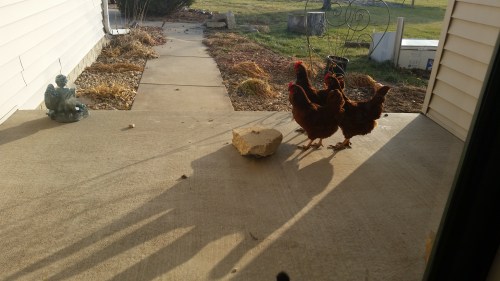
We’ve been lax on our prepping skills and I’m not sure why. Sure we garden, raise chickens and have been working hard building up our homestead, but we’ve let many of the other parts of prepping slide.
wpid-20141206_145453.jpg

We need to get better at food and water storage, home defense, 72 hour kits in the vehicles and the list goes on. We will slowly get back up on track, and it’s not just a matter of checking things off the list…it’s keeping those boxes checked and making preparedness a habit.

9. Curriculum Planning
Now here is one I keep pushing back. I keep saying, “Oh, I’ll get on that next month” and then the month comes and goes with no progress on curriculum planning.

This winter, I will start researching and planning in earnest and we will get back to a routine of sorts.

10. Meal Planning
I firmly believe that this is a skill. It takes a great deal of organization to plan meals and stick to it every month. It takes skill to make the grocery list and determine which store has the best price…and it’s not always Aldi.

Pinterest is an excellent resource for both the meals and the organization. The skill will be sticking to it.

11. Stocks and Investing
We’ve been meeting with a financial adviser and have become more interested in making our money “work for us”. Since we plan to invest, I’m going to do the responsible thing and learn more about the ins and outs of investing, mutual funds, bonds…all of that other scary financial jargon.

12. Fitness
I know, I know. Everyone has the fitness goal at the start of every new year, and it’s not so much a skill as it is a resolution. I’m putting it here, on my whiteboard, on a sticky note on my bathroom mirror, in my car and pretty much anywhere I can see it in order to keep myself motivated.

Right now, I’m participating in a 30-day arm challenge and at the first of the year I’m going to start a 30-day ab challenge. I’m also going to join a fitness club, both to meet people and to get fit.

13. Blogging
This year, I really am going to focus on this skill. I’ve been blogging for two years now and have 200+ followers so it is high time to start networking and learning how to make the most of the blogging world. I’m going to start with Five Minutes with Jack and see where that leads me.

So there is the list
The daunting and scary list
Challenge accepted

Curriculum Research

Ah curriculums. So many out there. So confusing. So overwhelming.

How do I pick just one among the hundreds–free and costly–out there?

How do I know that the one I picked is right for my children?

How do I find that perfect curriculum that measures what they should learn and when they should learn it?

What do I want to do?

Well, let’s start with what I don’t want to do.

What I don’t want to do is mimic the school system by buying a “first grade curriculum package” and following it to a T.

This curriculum is set up to measure what students are supposed to learn at each grade level. For example, according to the folks at LeapFrog, by the first grade all students should be able to count to 30.

All students should be showing an interest in solving mathematical problems.

All students should respect the feelings and rights of others.

The list goes on and on.

It’s not that I don’t think these skills are important…they are. But, do we really need to measure the “readiness” of a student to progress to a different grade? Do we really need to categorize what they should be able to understand and, maybe even master, before moving on?

If they do not have all of the skills they “should”…are they held back and forced to learn the same things in the same way? Is this really how we want to “measure” the success of a child?

My answer is no. Why? Because, these standards are really ways to measure how successful the teachers are at each grade level.

This is unfair to both student and teacher because kids are different…they don’t all look alike, walk alike or talk alike. They are unique individuals who should not be standardized in any way. They should not be forced into conformity just because someone said they should be able to master X or Y by a specific grade level.

What I don’t want to do is decide on one educational approach. I want to explore all approaches: Traditional, Charlotte Mason, Classical, Unit Study, Unschooling, Independent Study and Umbrella Program. This will enable me to use an eclectic mix of all approaches…use what works and throw out what doesn’t. Use immersion learning.

I am going to set high level target goals I want them to master…not by a certain age, but at their own pace.

These are our high level targets:

  1. The ability to think critically using logic, common sense and deduction.
  2. The ability to use this critical thinking, reading and comprehension to “self-teach” and in turn, teach others.
  3. The ability to use the above skills and logic to inform, persuade and motivate. (Rhetoric)
  4. Mathematics
  5. The ability to use all of the above, plus motivation to be successful and happy in whatever they decide to do.

In addition, I want them to love learning.

I want them to have strong ethics, compassion and be virtuous in character and actions.

I want them to be active, both mentally and physically.

And, I want these habits to stick with them all their lives.

It sounds lofty, overwhelming and scary. I’m not foolish enough to think that I can control them…make them do and be these things. It’s not that easy. Children are unique beings and I cannot push my beliefs and wants on them.

But, I can at least lay the foundation for these traits…the rest is up to them.

Women on Target

As I mentioned in my post All Wrapped Up, I attended a Women on Target class with a good friend.

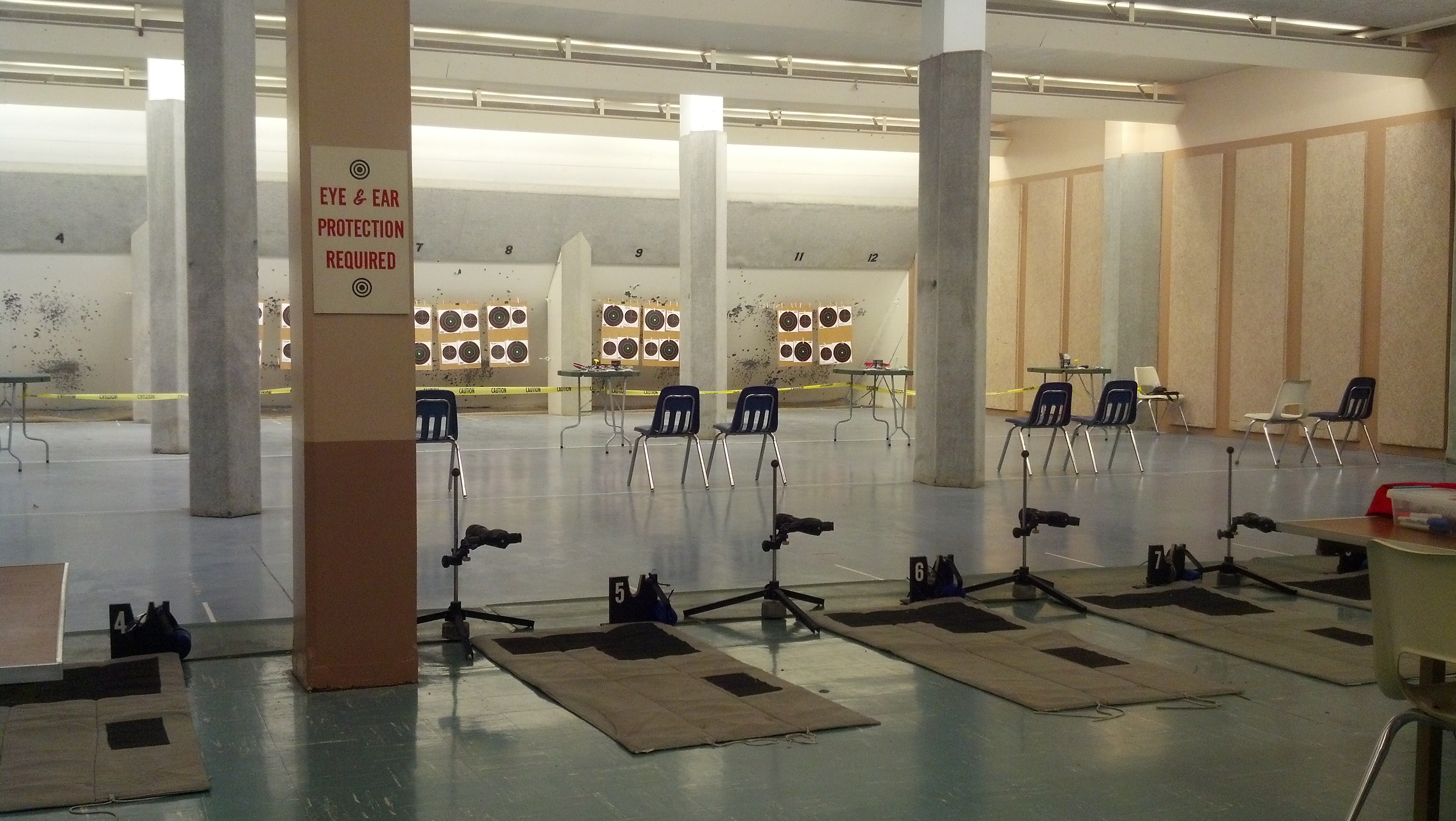
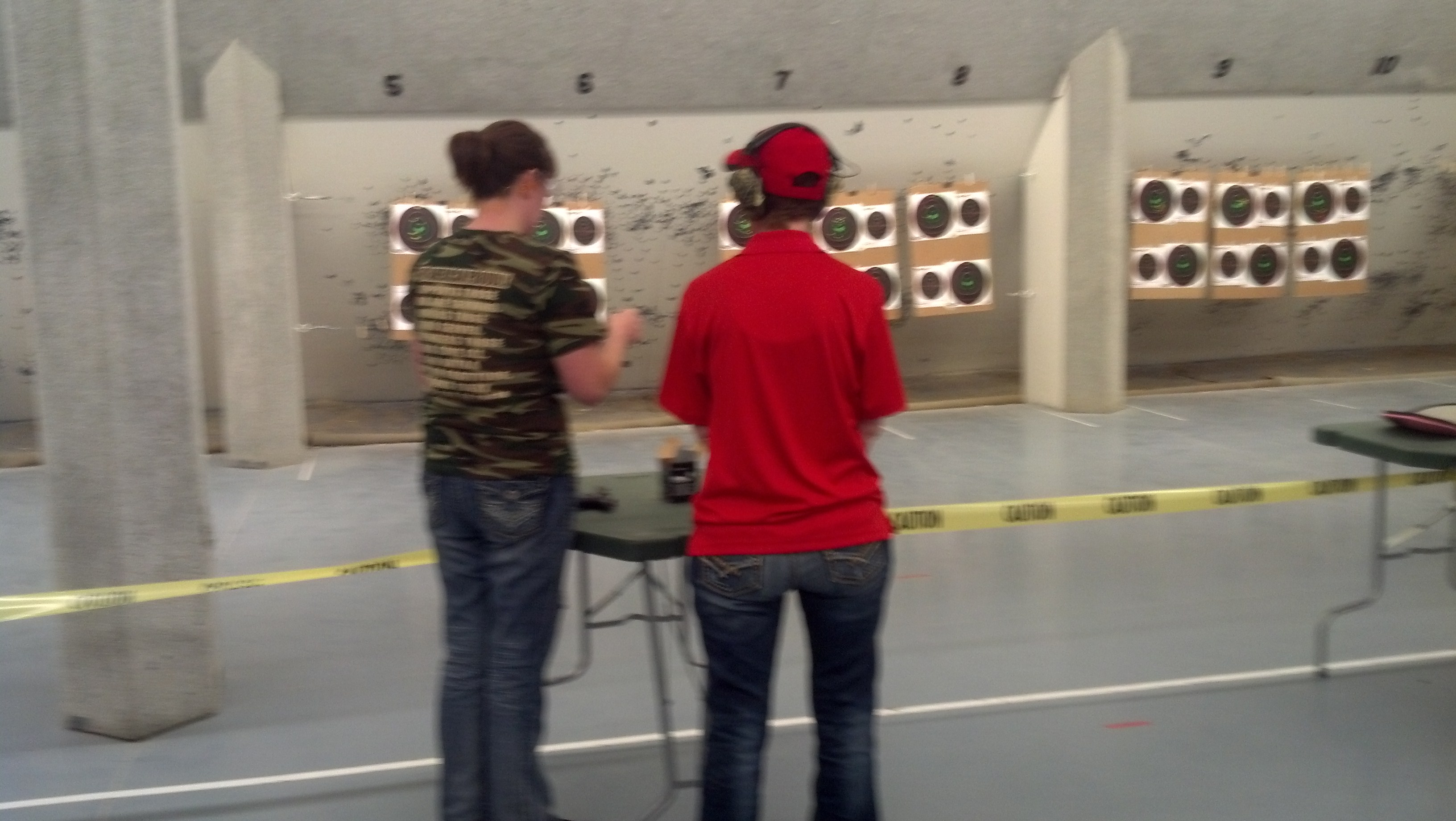
Our husband’s stayed at home with our boys and we made a day of it, first in the classroom, and then in the range.

wpid-img_20141025_145152_701.jpg

We were not newbies to firearms. I had attended an Appleseed course and learned how to comfortably handle and fire a rifle. The handgun, however, is a different story.

I’ve shot a pistol 2 or 3 times. My husband and I took a conceal carry course in Michigan where we practiced some drills on the range, but that was awhile ago. I was a little nervous, but eager to try it out and get more comfortable around handguns.

The classroom portion was much like the initial half day at the Appleseed shoot. The first hour or so was spent discussing, repeating and learning all of the safety precautions on storing, handling and firing a gun as detailed by the NRA.

  1. Always keep your gun pointed in a safe direction.
  2. Keep your finger off the trigger ’til your sites are on the target.
  3. Keep your gun unloaded until ready to fire.

The three above rules are the most important for safe handling of a firearm. Ignorance of handling a gun and carelessness or negligence are two major causes of gun incidents/accidents.

I’ve heard and repeated these rules so much that I can chant them in my sleep. They were drilled in all of the classes I have taken: conceal carry, Appleseed and now the Women on Target class.

There are 8 additional rules on using and storing a gun safely:

  1. Know what is before and behind your target.
  2. Know how to use the gun safely.
  3. Be sure the gun is safe to operate.
  4. Use only the correct ammunition for your gun.
  5. Use eye and ear protection.
  6. Never use alcohol or drugs before or while shooting. (Seems like an obvious precaution to me).
  7. Store guns so they are not accessible to unauthorized persons.
  8. Be aware that certain guns and shooting activities require additional safety precautions.

After a half day of safety drills and learning how to handle a handgun, it was time to go to the range and learn the ins and outs of aiming, firing and hitting your target.

First, we determined which eye was our dominant eye.

I am cross dominant…I’m right-handed with a dominant left eye. While good to know for shooting long guns like rifles, it is not as important for shooting a handgun.

There are many ways to “fix” this…learn to shoot with your non-dominant hand, learn to shoot using the non-dominant eye. The method I chose was to use my right hand and cock my head so that my left eye was on the target.

Next, we loaded 10 rounds into the magazine, or cartridge. This is the storage and feeding device for the ammunition. We were using .22 ammo…the most common small “round”, or fully loaded cartridge.

wpid-img_20141025_153912_895.jpg

Finally, we learned how to aim and fire the handgun.

  1. Position and grip- There are 3: benchrest, one-handed or two-handed stance. For this class, we implemented the two-handed stance.
  2. Breath control – Basically, breathe. There is more to breath control than that, but since we were all relatively new to shooting a handgun, we focused on just breathing in and out slowly.
  3. Sight alignment – Dominant eye and stance.
  4. Trigger squeeze – You don’t “pull” the trigger, you squeeze the trigger so that your gun remains steady and pointed at the target. Pulling it could cause you to jerk it up or to the side and miss your target.
  5. Follow through – Don’t immediately lower the gun after firing. Keep it aimed at the target for a few seconds. Otherwise, you might start to lower it while you squeeze the trigger, thereby missing your target.

At first, my stance was kind of goofy. I had my hip out and my left leg bent and above my right leg.

wpid-img_20141025_154245_487.jpg

But after my instructor showed me the proper way to stand when shooting two-handed–feet shoulder width apart, left foot slightly behind the right and non-dominant hand bent for stability–I was more comfortable and hit my target more accurately.

wpid-img_20141025_154823_318.jpg

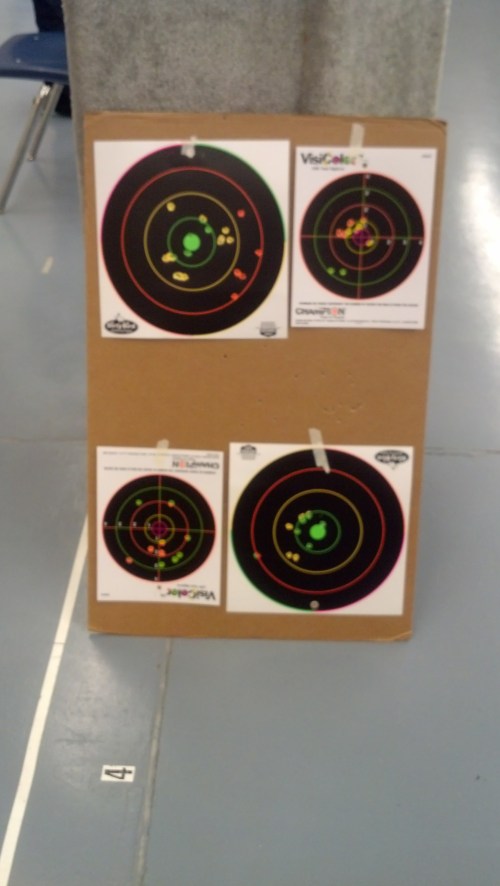
The targets we were using were kind of awesome. The color exploded and showed me exactly where I hit–instant feedback so I knew what corrections I should make before firing the next round. Pretty cool.

wpid-img_20141025_161045_004.jpg

I had some good “groupings”. This means that my shots hit the target very close together, telling me that I was hitting where I was aiming. Even on the smaller targets I was able to group my shots…for the most part.

Why did I take this course?

I wanted to learn more about handgun safety and handling so that I could be more comfortable around them. My husband and I plan to get our conceal carry licenses…not because we are afraid or paranoid of being in an active shooter situation, but because we want to be prepared in every way.

We store food. We practice fire drills, tornado drills and other safety drills. We make preparations for every eventuality–from the most possible to the most unlikely. We do this to stay prepared. Being comfortable using a firearm is no different.

Shooting any gun requires practice. It’s not like riding a bike, you have to practice continuously to keep your skill, comfort and knowledge fresh.


Fall. It’s here.

Fall is truly here. The fedge, orchard and vineyard have all accepted it so I guess I should too.
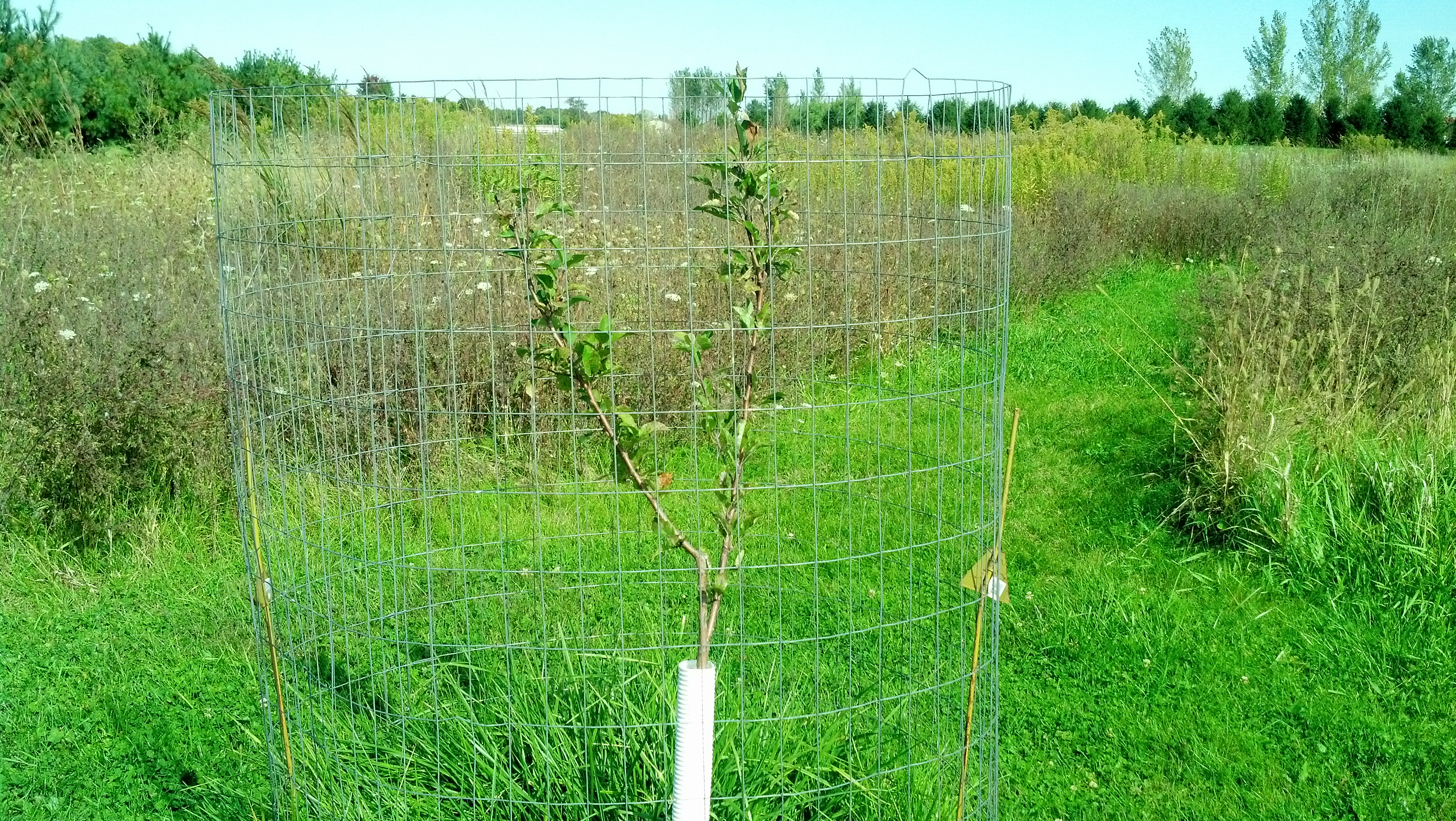
We started to put Irripan Weed Mats on our trees. So far, we have them on our apple and two mulberry trees. They seem to be doing a great job keeping the weeds down, and the grooves do a fantastic job funneling water right to the root of the tree.

We need to put these around all of our fruiting trees in the swale and maybe some of our fruit bushes in the fedge.

wpid-img_20141011_113514_582.jpg

Illinois Everbearing Mulberry

wpid-img_20141011_113525_974.jpg

Apple

wpid-img_20141011_113501_640.jpg

Weeping Mulberry

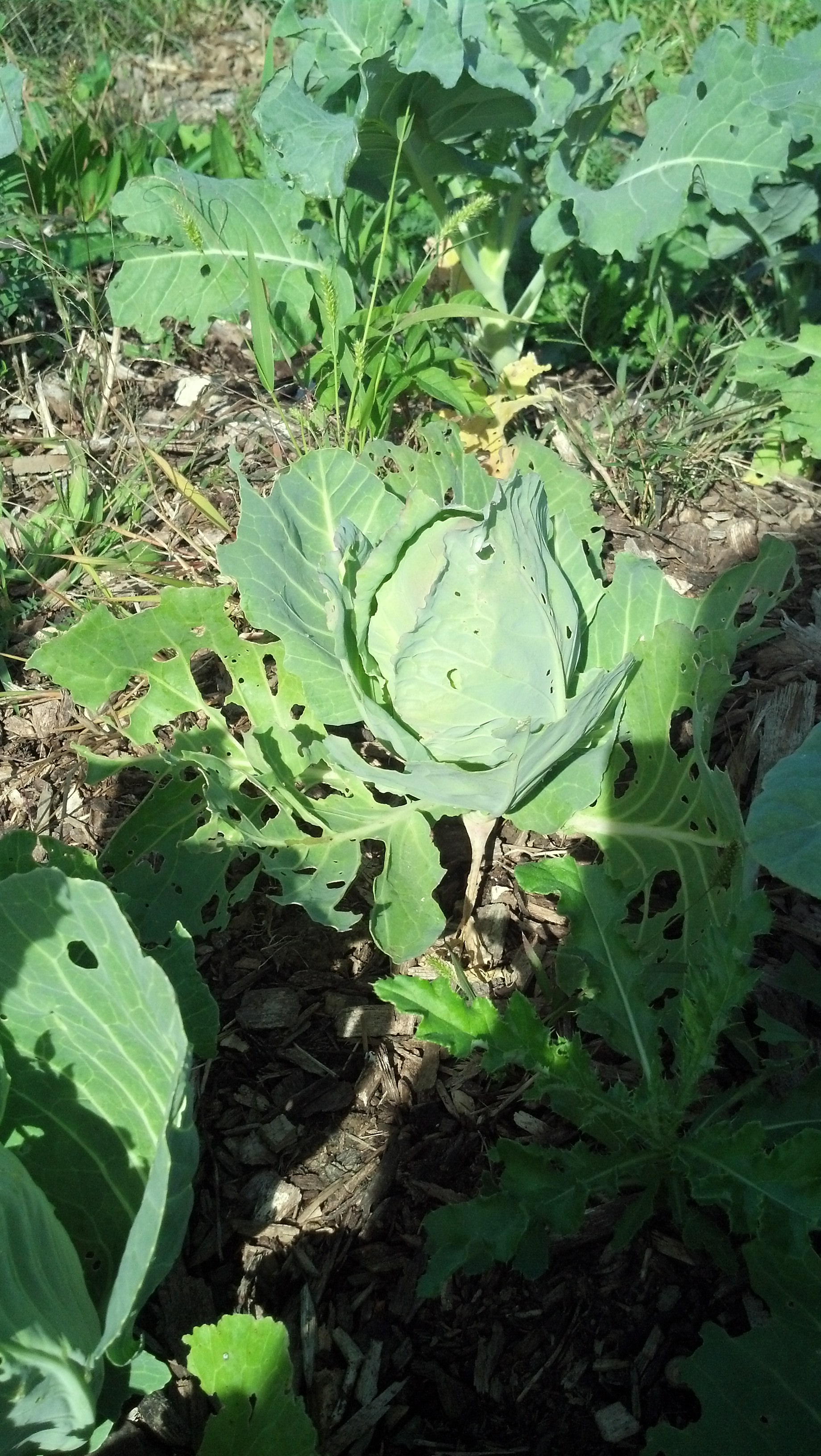
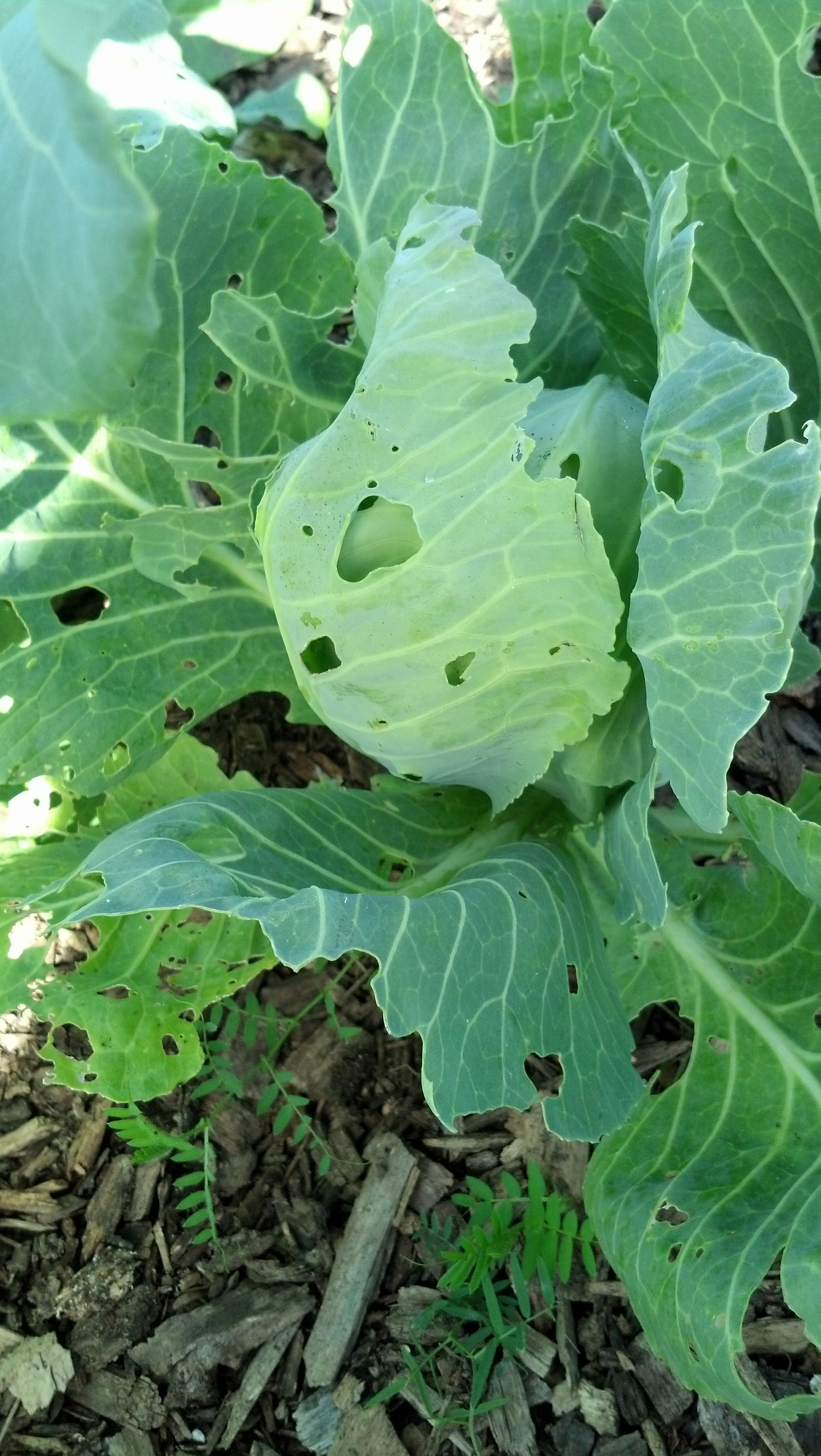
The cabbage patch is bursting with life! The heads of cabbage and brussel sprouts are looking good even with all the insect bites. Besides, I planted enough to share.

wpid-img_20141011_112636_895.jpg wpid-img_20141011_112805_977.jpg wpid-img_20141011_112756_889.jpg

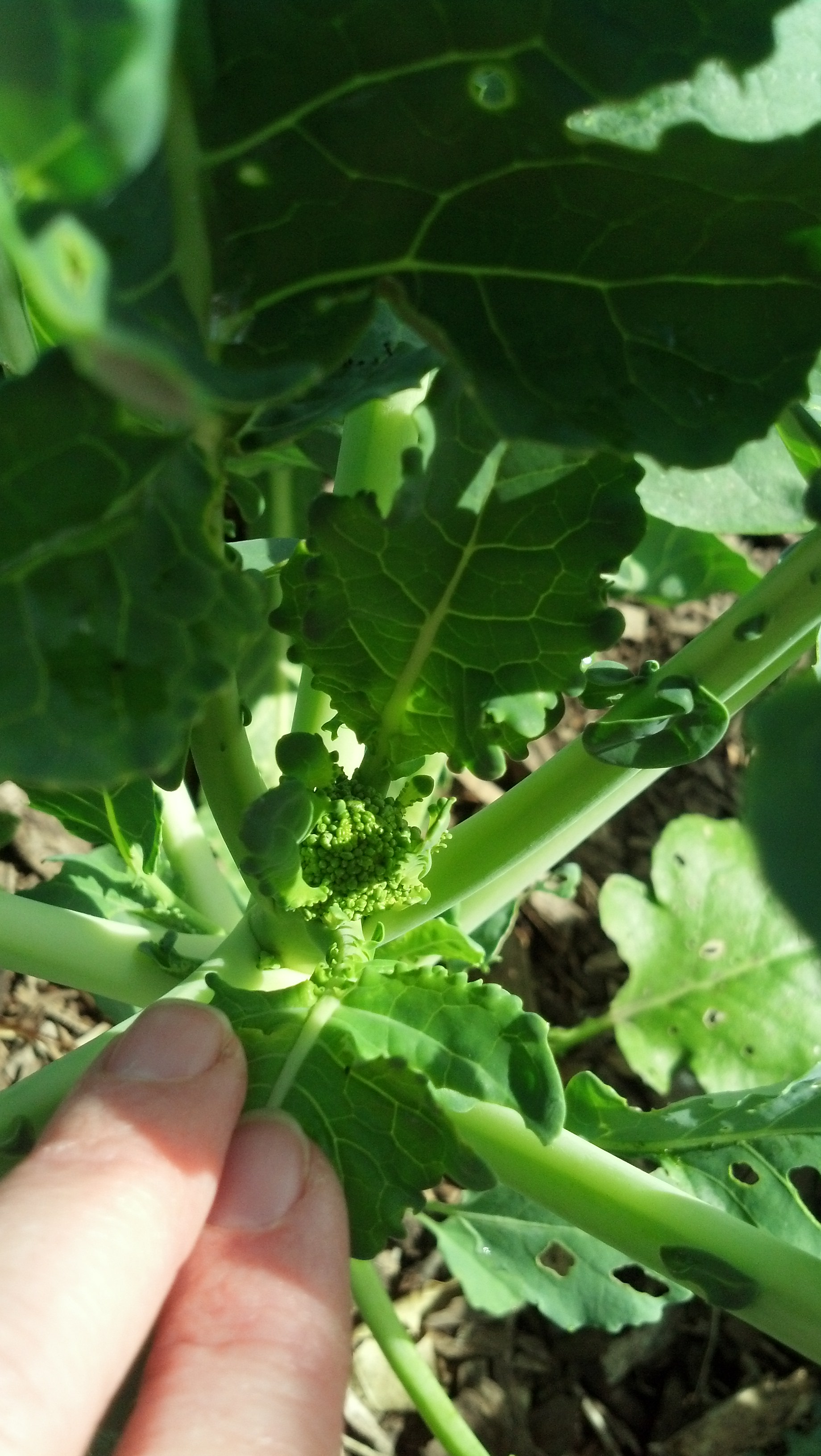
And…we even have the start of a broccoli head!

wpid-img_20141011_112734_698.jpg

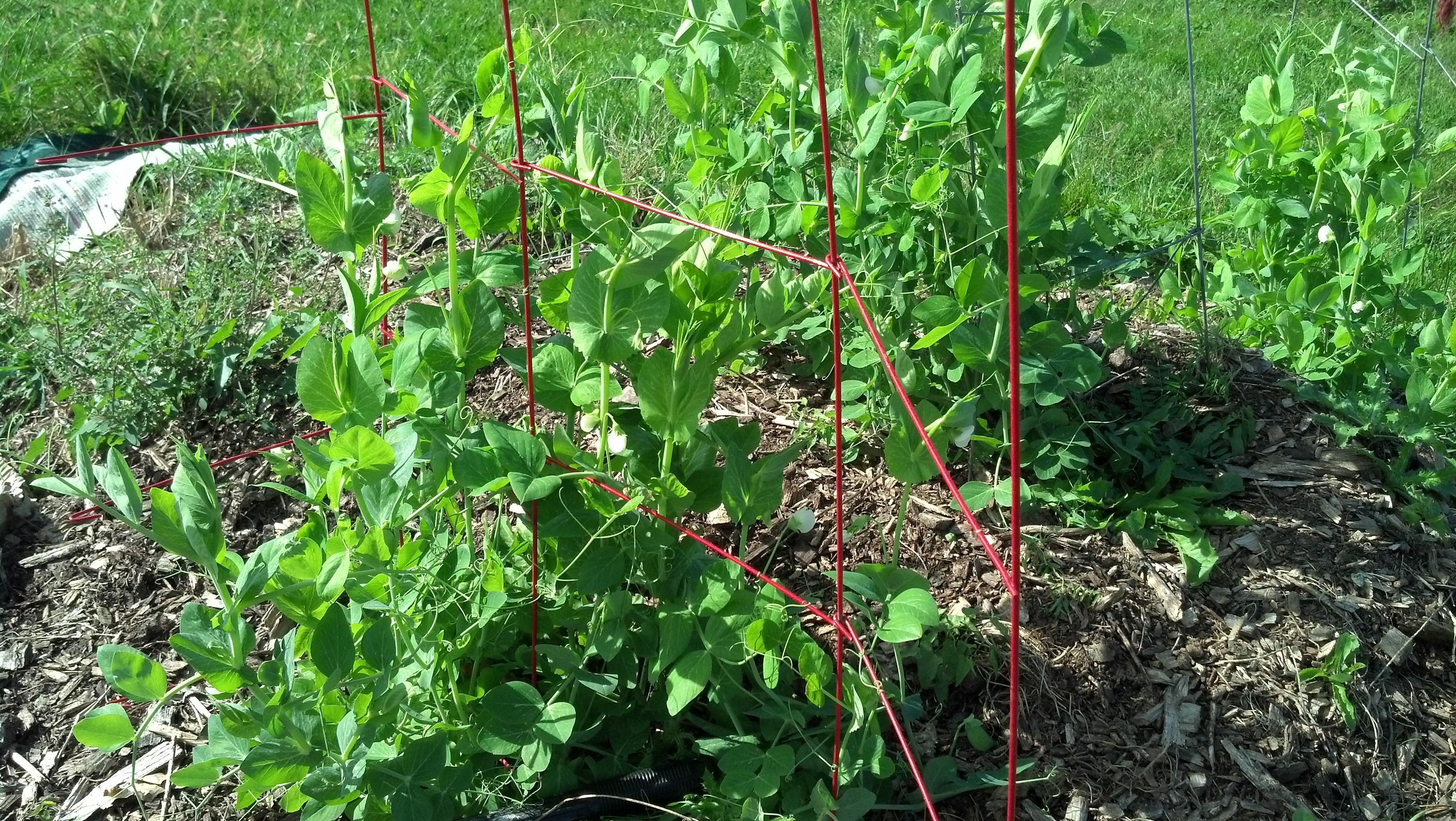
A few days after I trellised the peas, I came out to discover they had stretched and climbed like little cats. Little white blossoms dotted each vine as if the trellis was all they needed to start production.

wpid-img_20141011_112854_987.jpg wpid-img_20141011_112619_901.jpg

I found this little cutie growing in the pea bed. I’m not really sure what it is but the leaf is very pretty. I planted black salvia in the bed in the spring but the leaf on it is longer and thinner. Time will tell I suppose.

wpid-img_20141011_112843_774.jpg

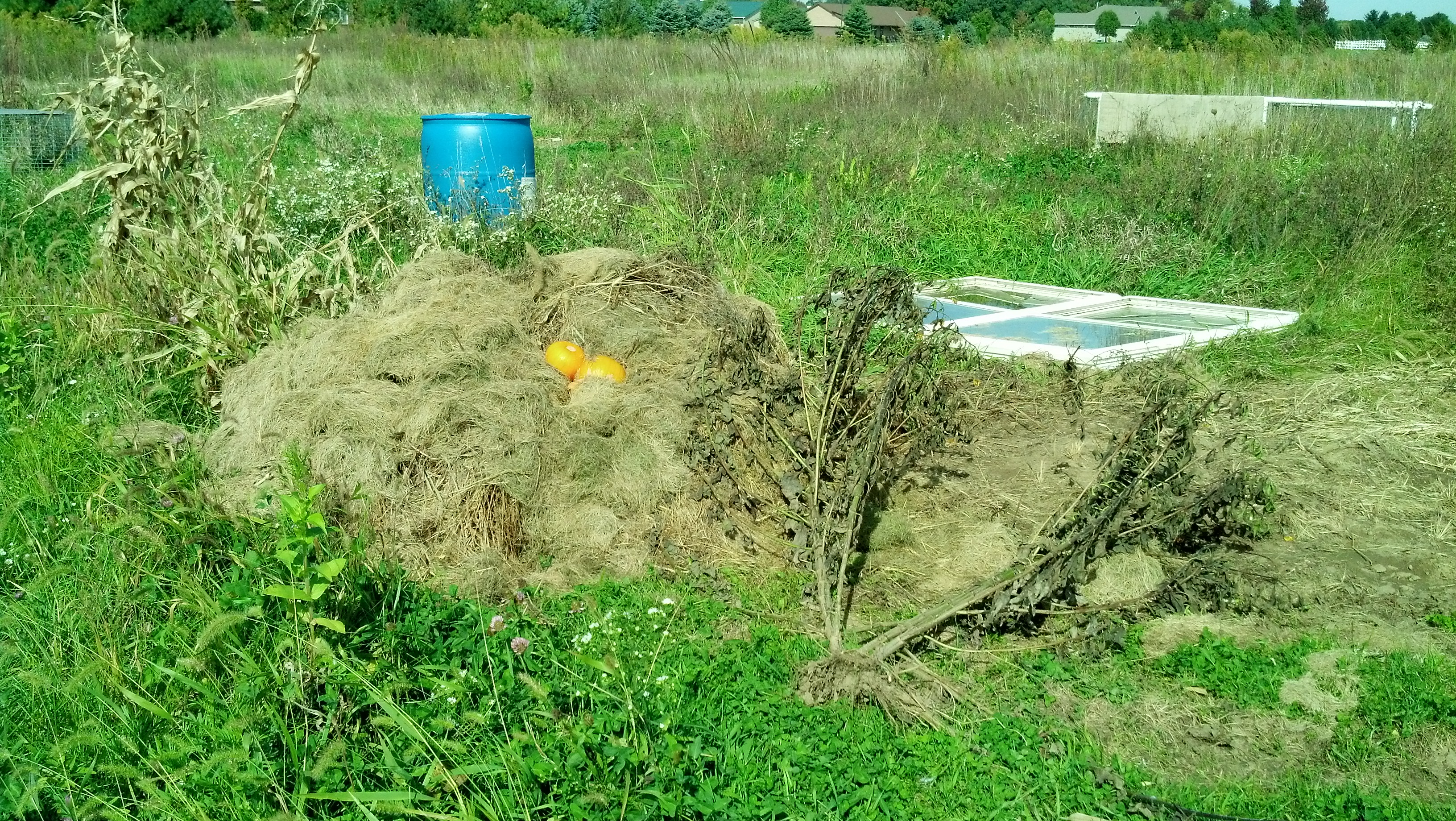
Composting is one goal that I haven’t talked about much. Most of our kitchen scraps go to the chickens so we don’t have a lot to add to the compost pile, but we’ve started a bigger one with grass clippings. We are careful to save all of the scraps the chickens aren’t allowed to have such as citrus, onions, garlic and coffee grounds to throw in the pile.

Now that we are well on our way to a productive homestead, we are going to put more focus on composting. The chickens will help quite a bit with that as we can add their used bedding to the pile.

wpid-img_20141011_113337_373.jpg

New, bigger compost pile started with grass clippings

wpid-img_20141006_105450_200-1.jpg

The Compost Crew

It’s fun to compost
Healthier soil, less garbage
Hens do their part too

Apple-Pear Mead

Our friends gave us some apples
Some jam, some jelly, some pears
Our neighbor supplied us with honey
An exchange for when we can share

wpid-img_20140927_183729_660-1.jpg

The mead, it will be delicious
Pear-apple and honey so sweet
We’ll share it with family and friends
Saved up for a special treat

wpid-img_20140927_183556_473-1.jpg

Garden 2014: Lessons Learned

Now that the season is drawing to a close, it’s time to look back and review what lessons I have learned from mistakes I have made.

Planting Schedule – I made a schedule this year so I would not plant too early or too late. I based this schedule off of the first and last frost dates for our area per the farmer’s almanac.

I followed this schedule so religiously that I panicked if it was 6pm and I hadn’t planted the seeds for that day yet. I learned that while it is important to use the first and last frost dates as a guide, it is just as important to pay attention to your environment and keep an eye on the weather. Just a few days can make a big difference. Next year, broccoli, okra and sunflowers will be planted much sooner.

Stagger Planting – One of the practices I did not take advantage of was stagger planting. I planted all of my squash at the same time so that, when the squash bugs and vine borers attacked, I lost all of my squash at the same time.

I will also take advantage of the space under the tomatoes. Late in the season, after pruning the bottom branches of the plants, I’ll plant peas underneath so that space is not wasted. An added bonus? Peas fix nitrogen.

Polyculture – I’m a big fan of polyculture –  using multiple crops to mimic the diversity found in nature rather than planting large areas with single crops. This practice served us well this year – in most areas at least.

The problem came when all of the cherry tomatoes from last year shouted, “Me, me, me! Don’t forget about me!” They sprang up all over the kitchen garden, choking out herbs and other smaller plants.

We should have dug them up once the sprouted and moved them somewhere else. Next year, if we have that many volunteers after the chickens get through with the garden, we plan to move these survivors out to the swales. We’ll plant them between our trees.

We also need to do a better job of the using polyculture principles in the swales using a video series called The Permaculture Orchard put together by Stefan Sobkowiak.

There are other minor setbacks here and there. Over or underwatering, over or under fertilizing, planting so that there is not a true walkway without soil compaction to name a few. Overall, I’d say we learned from last year’s mistakes and took steps to avoid making the same ones.

As I detailed in a previous post, we’ve also had some major successes and additions to the homestead. And, as I look out over the property…I feel pretty good about what we have accomplished.

wpid-img_20140923_144708.jpg

Of success, we’ve had so much
Of sorrows, we’ve had few
With every year, we will improve
And add more to the homestead too

Canning Tomatoes for the First Time

Yesterday, my sister-in-law and I canned tomatoes for the first time.

wpid-img_20140821_132044_826.jpg

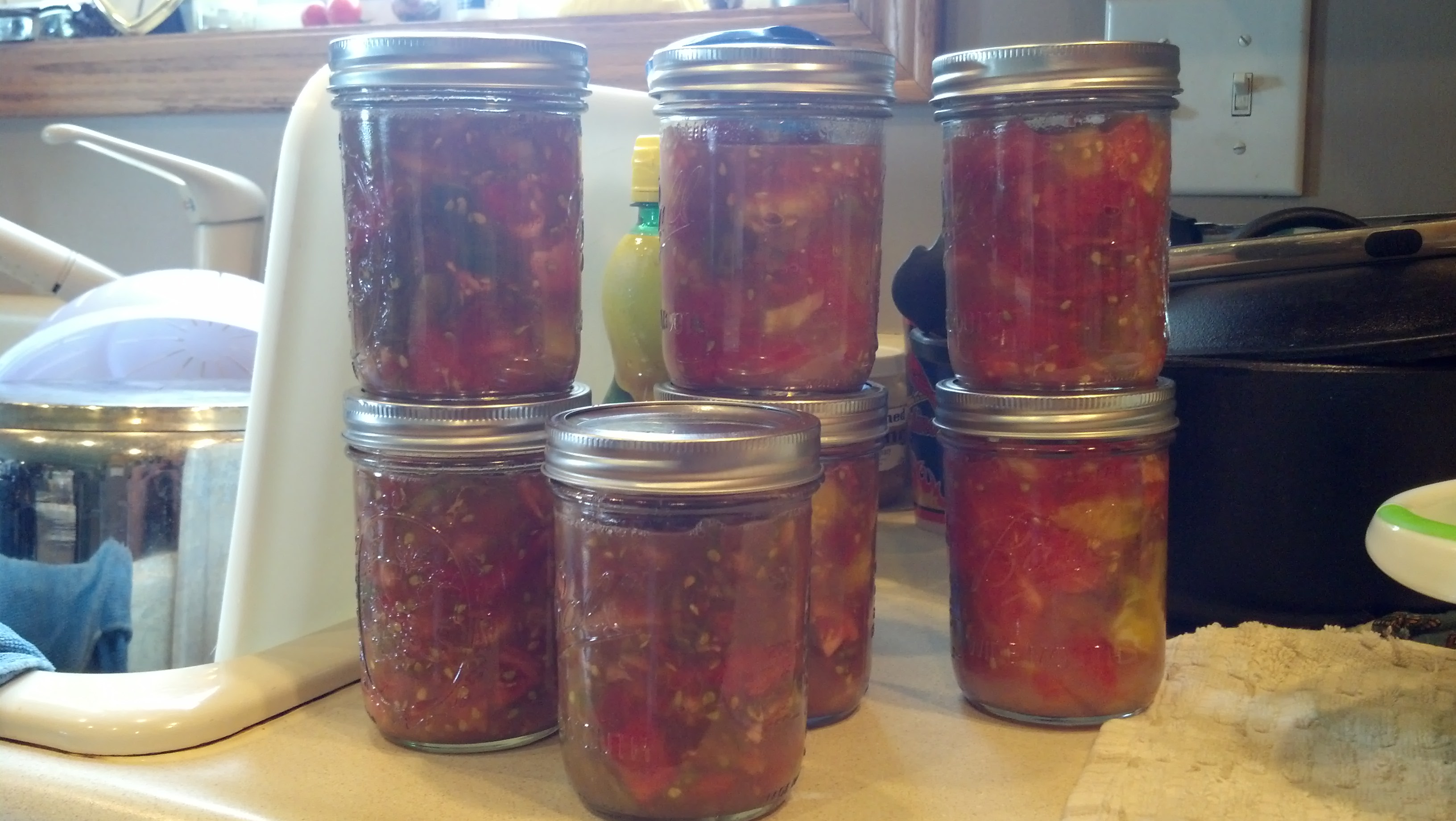
We used the recipe from the Ball Canning book for canning tomatoes in their own juice.

We had a variety of tomatoes: Mr. Stripey, Black Prince, Roma and some heirloom red tomatoes from our CSA share.

wpid-img_20140821_131233_346.jpg

We ended up with two big bowls of diced tomatoes after we had blanched them.

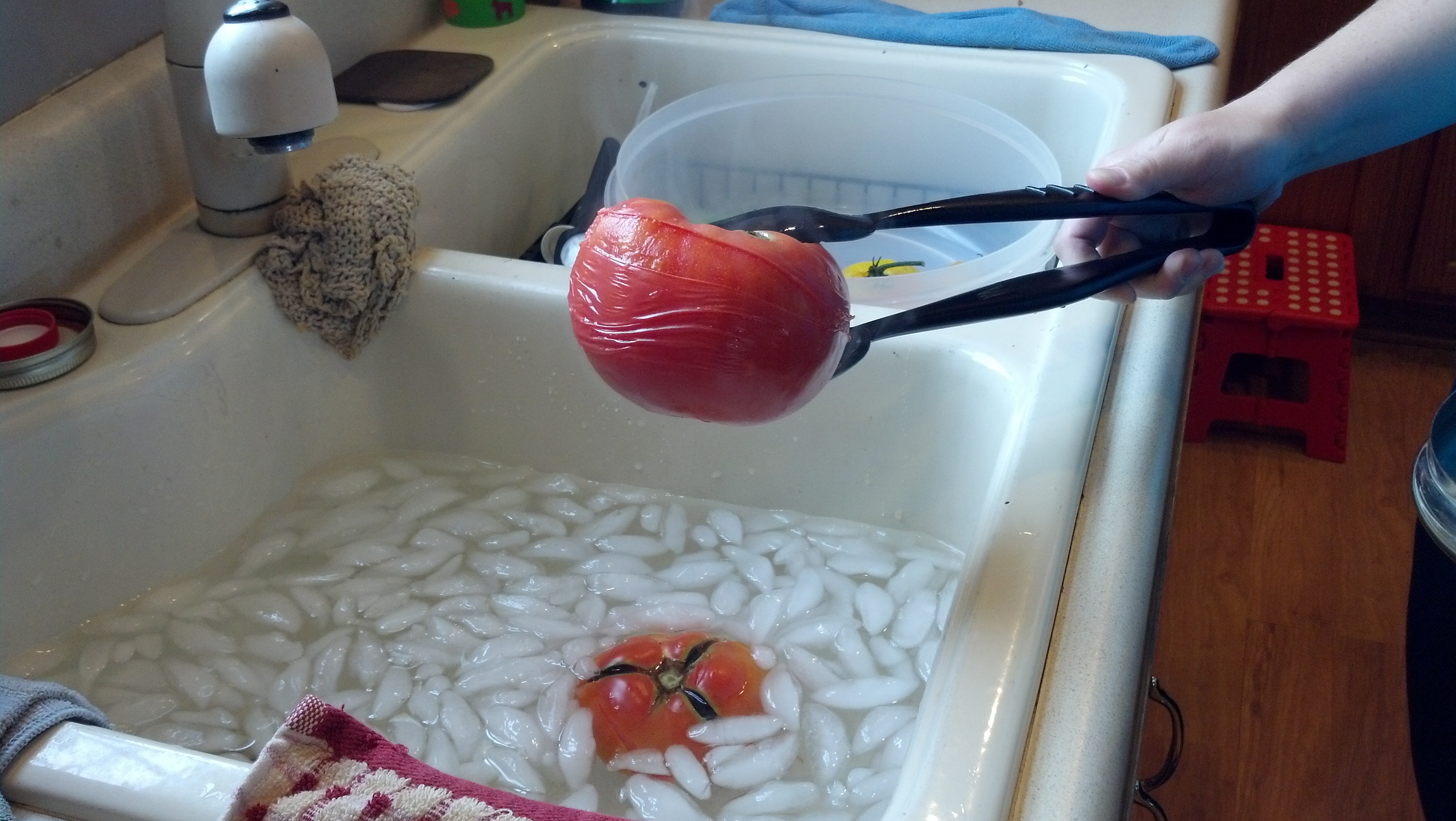
I was amazed at how easy it was to peel the skin off once the hot veggie was dunked in ice water.

wpid-img_20140821_140929_194.jpg

We started the whole process at 1:30 and had 7 jars in the water bath canner by 3. Then it was another two hours while the boiling water sealed the jars.

wpid-img_20140821_151758_049.jpg

Seven jars fit in the canner, but I was sure we wouldn’t have enough tomatoes to fill all seven.

wpid-img_20140821_152739_147.jpg

Boy was I wrong. We had an entire bowl left over. I think the jars look pretty with their red, yellow and dark red tomatoes floating around in the juice.

wpid-img_20140821_151929_164.jpg

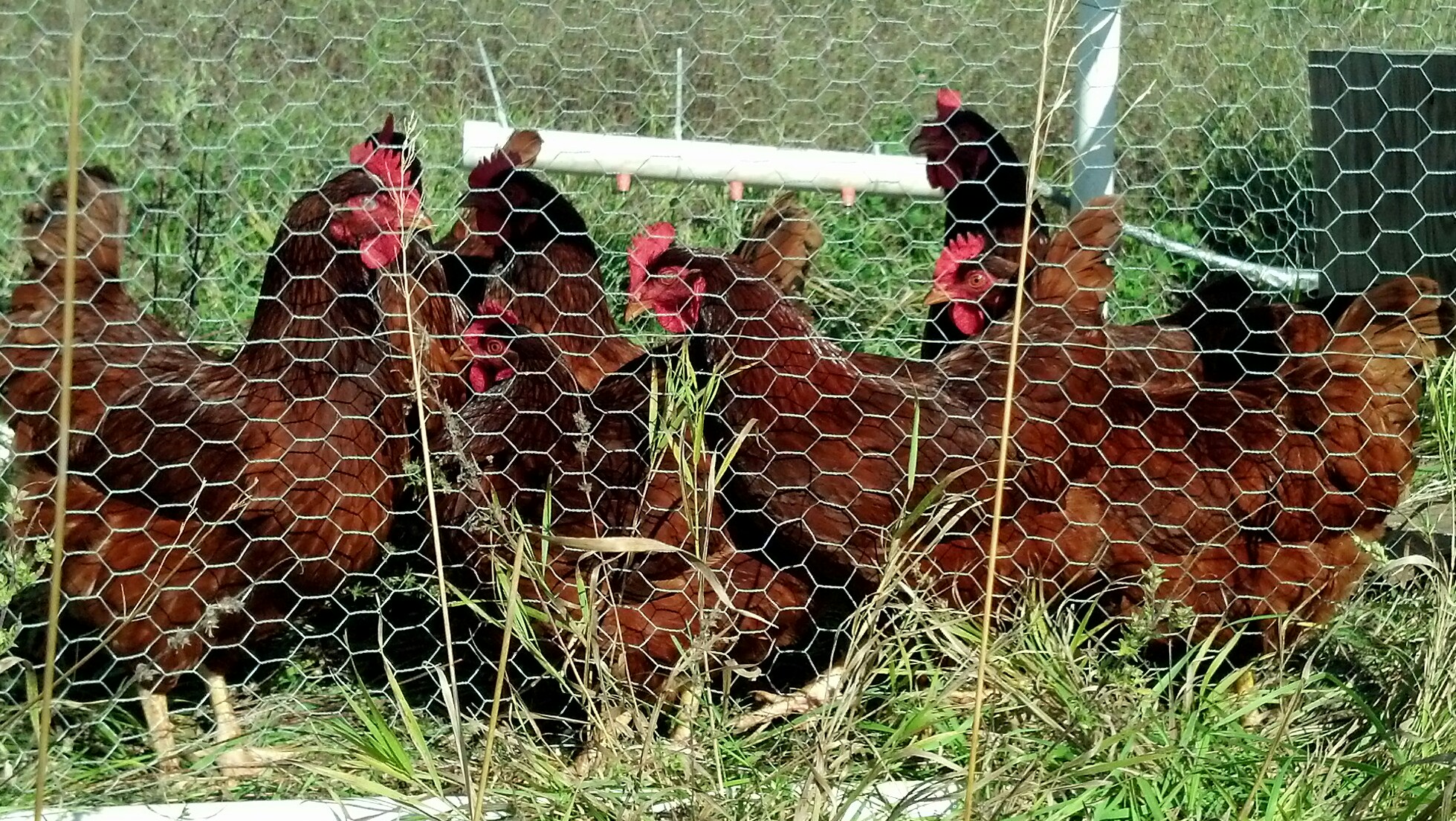
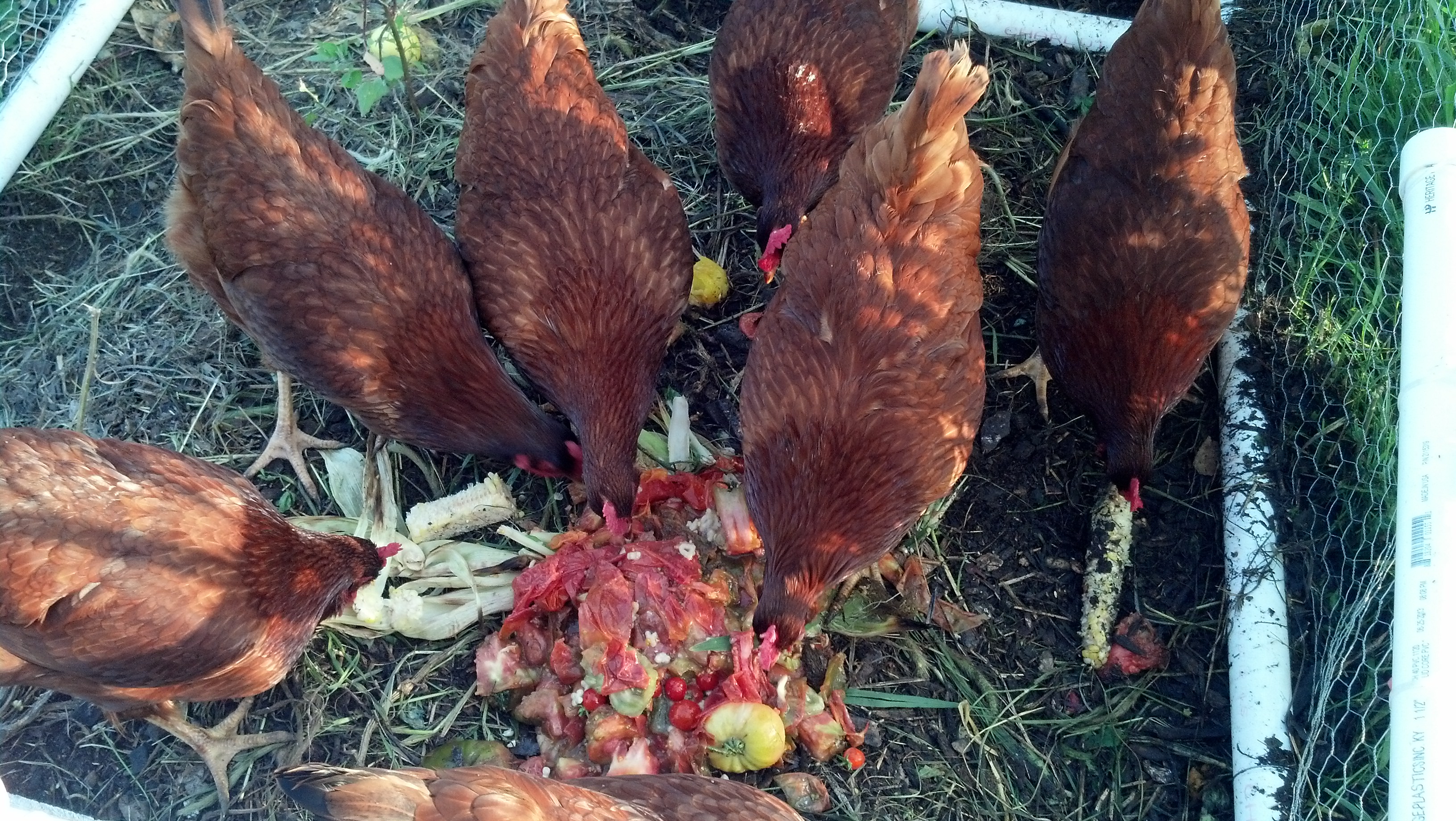
All of the tomato skins, seeds and cores went into the scrap bowl for the chickens. They were very happy with their evening snack. A few fights even broke out over the larger pieces.

wpid-img_20140821_184847_142.jpg

I’m a little skeptical about how these tomatoes will taste. Some of them were not quite ripe enough, so I just used the ripe part and cut off the rest for the chickens to enjoy.

We have so many more tomatoes in the garden that are ripening every day. I think I’ll try my hand at sauce and salsa.

13 in 14
Canning goal is almost done
Sauce and salsa next

Side by Side Comparison

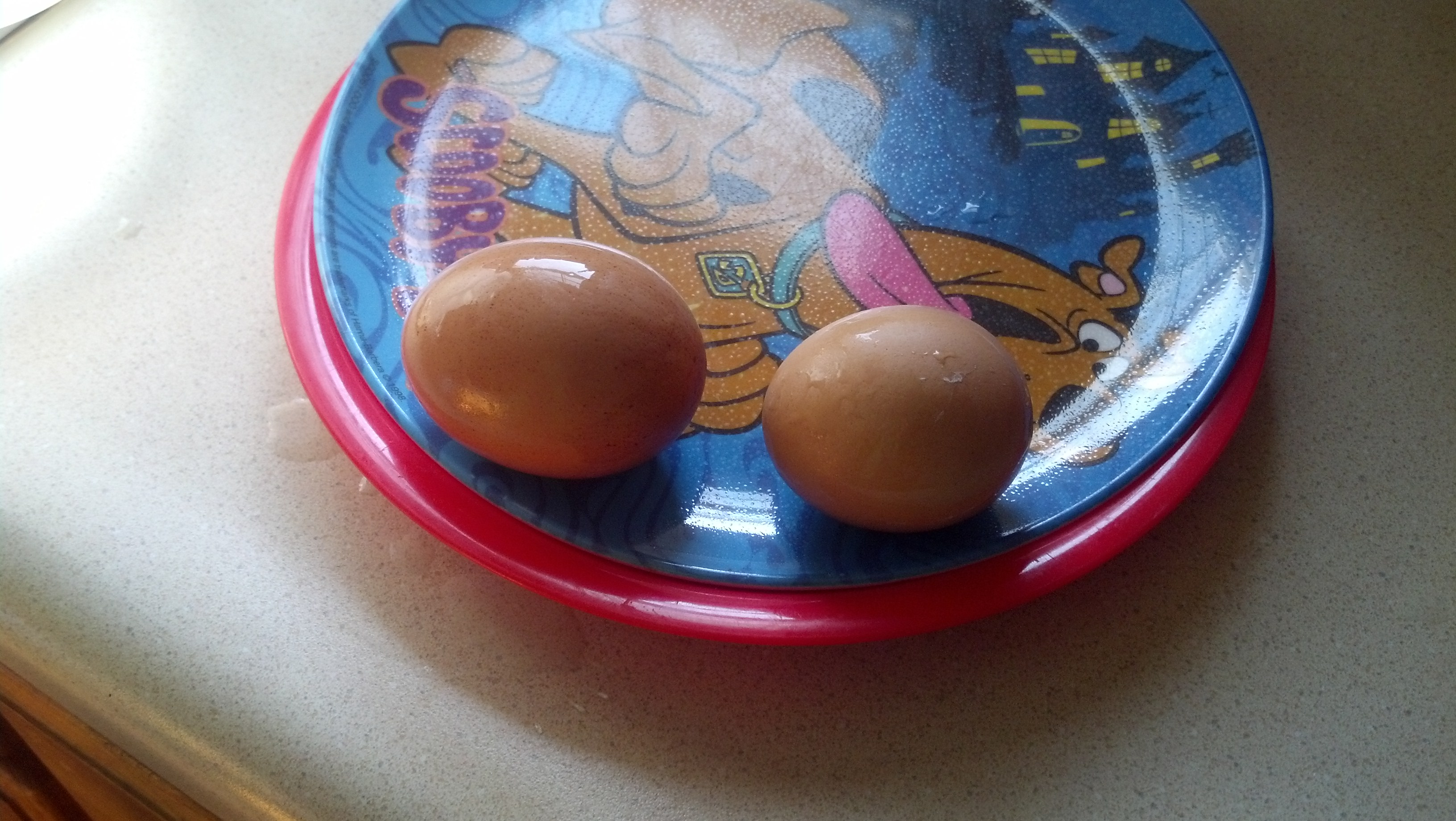
Happily, I came home from a long weekend to discover that my girls had given us two more eggs. So this morning, Joe and I decided to do a little experiment: store-bought vs. freshly laid.

wpid-img_20140728_083547_938.jpg

Store-bought (r) Fresh (l)

The one from the store was larger, but the yolk was not quite as yellow as the one from my girls.

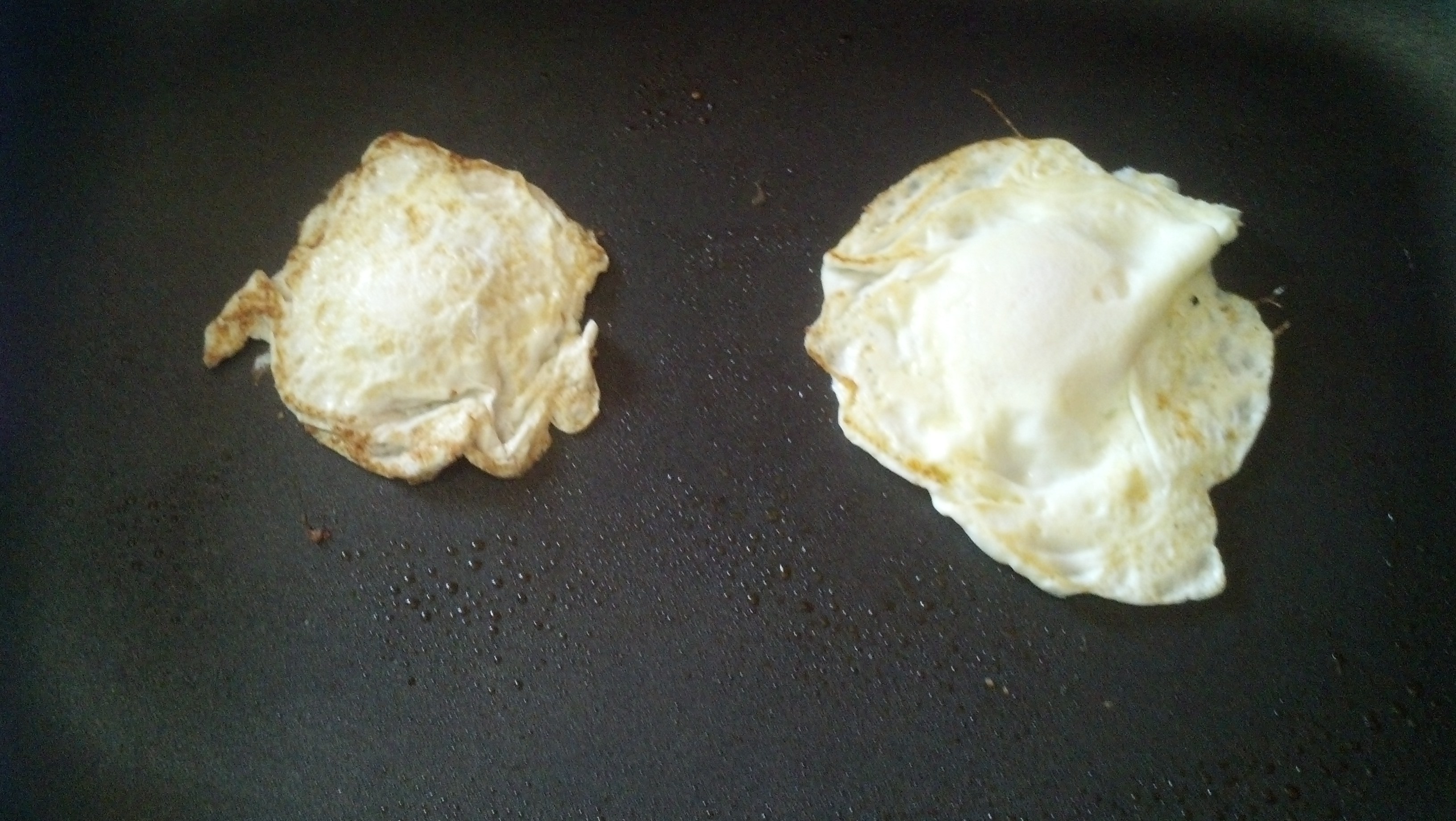
wpid-img_20140728_083802_191.jpg

Store-bought (r) Fresh (l)

They cooked up about the same; but, though smaller than the store-bought, the yolk on the fresh one was thicker and creamier with a much richer flavor.

wpid-img_20140728_083844_978.jpg wpid-img_20140728_084254_635.jpg

I believe Agnes laid the first couple of eggs. She was in the coop this morning making all kinds of racket. She must have tried to lay an egg again, but it was a soft-shelled egg. Near as I can figure, she was up in the roost when she laid it because it was broken underneath.

When I retrieved it, it was obvious that she hadn’t tried to eat it as the yolk was still intact. If they do start eating them, we will have to start over with new layers because once they get a taste for eggs, you can’t stop them from eating them all the time. The only cure for chicken cannibalism is the freezer.

If this becomes too much of an issue, we will try supplementing their food with more calcium…but the layer feed we have been feeding them is pretty balanced, so this may just be a natural part of the learning process for a new-to-egg-laying hen.

Our makeshift tunnel finally ripped to shreds so we used some caging material we had for our plants to create a new one. I think the girls really like being able to see when they go up and down the ramp because every time I’m out there, two or three of them are taking turns going up…and coming back down…going up…and down. They’ll stop in the middle of the ramp and the one behind will yell-squawk at the one in front. “Get out of the way Bertha!”

Kind of hilarious.

wpid-img_20140728_073803_500.jpg

Agnes laid some eggs
She squawked and made a racket
They were so yummy